
Up Close and Personal with Rachel Healy – CEO of Queensland Performing Arts Centre (QPAC)
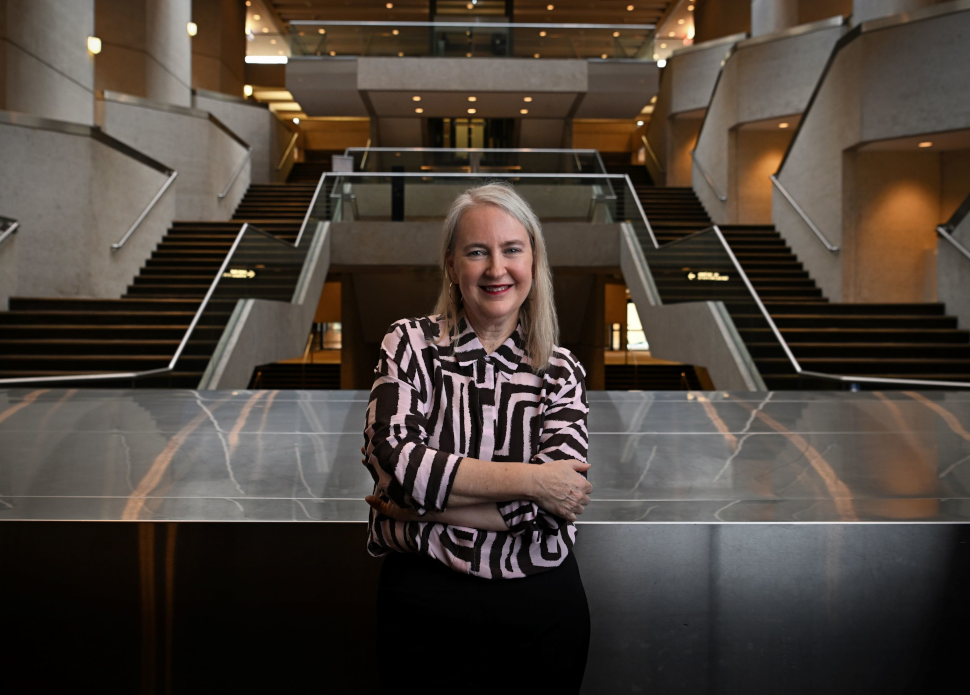
Rachel Healy
Congratulations on your appointment as CEO of QPAC! How have you have been feeling since you took office last December?
I’ve been in and out of QPAC for my entire working life, engaging with Out of the Box when working in the youth arts sector in the 90s, attending the opening of QPAC’s Playhouse Theatre with its fabulous production of The Marriage of Figaro in 1998 and later producing shows that toured into QPAC’s theatres. More recently I’ve collaborated on many Brisbane Festival events at QPAC while Joint Artistic Director of Adelaide Festival. I love QPAC’s location on the river, the scale of its presence in the cultural corridor and its centrality to the life of the city.
It’s an extraordinary moment to join QPAC, currently celebrating 40 years of providing transformative and joyous performing arts experiences to Queensland residents and visitors. I’m excited by our potential to grow our already impressive annual audience of over 1.5 million from all ages, backgrounds and walks of life. Our annual programme is diverse and brings varied audiences to our Centre, but I’m thrilled to see the team seeking to engage new audiences and ensure the arts is accessible to as broad an audience as possible.
One of the earliest performances I attended after starting at QPAC was our presentation of Singapore Symphony Orchestra which attracted 30% new attendees in the audience. A few months prior, Icelandic singer Laufey sold out in two hours to an audience all under 25, with 65% first time attendees. Podcaster influencers Luke and Sassy Scott and actor and activist Jameela Jamil also attracted more than 50% new audiences. We have a talented and dedicated team across the organisation, passionate about connecting artists and audiences through live performance and ensuring QPAC is for everyone. We aim to do this through thoughtful programming that considers generational interests and trends; our diverse, multicultural community; and new creative voices.
Importantly we’re also focused on how we can better engage with those who don’t live in Brisbane. Brisbane is the capital city of the state of Queensland, Australia’s second largest state with many regional centres a long way from Brisbane. We are very conscious that the ‘Q’ in QPAC stands for Queensland, and so we can’t focus solely on performing arts experiences for the people of Brisbane. Our Digital Stage is part of the answer to this challenge, a platform that provides access to live streamed and on-demand performances, behind the scenes content, and exclusive interviews from leading artists and arts organisations, and a special focus on Queensland artists and Queensland stories. Recently we partnered with 17 regional Queensland venues to host screenings of a Digital Stage streaming of French contemporary ballet company Ballet Preljocaj’s production of Swan Lake, performed as part of our International Series. We also made the recorded performance available for free for 48 hours to ensure that no matter where people live, they could access this special event.
So, I’m excited about being here, about the wonderful work that QPAC already does, but also about the endless potential to grow our audiences and our industry.
QPAC celebrates its 40th Anniversary this year – what role do you envision the centre playing for the Australian Community and the wider Asia Pacific region in the next 40 years ahead?
Birthdays are great but perhaps the most thrilling next venture lies just beyond our 40th birthday – our new performing arts venue.
Investment in cultural infrastructure is much rarer than it should be in Australia and so the investment in this spectacular new performing arts space for Queensland is both a symbolic recognition of the importance of performing arts experiences and an exciting opportunity to broaden and diversify the programming mix. It will enable us to bring even more must-see global performance events to Brisbane and broaden our engagement with new audiences and artists. It is QPAC’s fifth theatre – 1,500-seats – and will make QPAC Australia’s largest performing arts centre under one roof. Our current audience will be augmented by a further 300,000 following the venue’s opening.
And of course, just around the next corner is the Olympics and the Cultural Olympiad. A rallying call for Queensland’s creative community. The momentum of a deadline, all the major agencies working together to showcase the creative imagination of Queensland’s artists, and the professional development opportunities inherent in creating works of scale is a once-in-a-lifetime opportunity. It also provides avenues for deep community engagement and a generational legacy.
In the context of our South Bank precinct (which is where we are located alongside the Brisbane River), this represents a major strategic opportunity for QPAC to be a very active and supportive partner of the Cultural Olympiad, showcasing performing arts and creativity for the hundreds of thousands of visitors to the site. With a new, state-of-the-art theatre, Brisbane’s climate and riverside locale, great precinct partnerships and activations and a diverse and dynamic performance program showcasing important local, national and international talent there is no doubt that we can present as one of the great cultural boulevards of the world.
As I write this, we are in the throes of hosting our much-loved children’s arts festival, Out of the Box. Since it began in 1992, more than one million children have attended an Out of the Box event and we love seeing our venue literally taken over by thousands of kids throughout each day of the festival. Out of the Box is just one part of our commitment to the next generation of artists and audiences, supporting cultural literacy and guaranteeing kids and teens can experience live performance wherever they live in the state. QPAC will be celebrating significant birthdays for decades to come. Its magnetic pull on audiences will need recharging over time and that can only happen through maintaining its impact across generations, fanning those earliest flames of love for live performance.
With the opening of your fifth venue in 2026, QPAC will be the largest Performing Arts Centre in Australia under one roof. What opportunities will this new space bring to the local arts community?
In addition to the extraordinary new theatre we’ll soon open, one of the most exciting parts of the new building is the creation of two new flexible spaces in the undercroft of the theatre, fronting on to the street level. These spaces will provide further essential assets for QPAC’s future: intimate performance, event and rehearsal spaces. QPAC is not just a venue, we also invest in new productions, co-create and co-commission work, and we’re always looking for ways to nurture the growth of our arts industry. These flexible spaces will provide sorely needed space for companies developing new work, different options to present work that might not sit naturally on a stage and need an unconventional or more intimate space, or simply flexible rehearsal space for a range of artists and arts companies.
Unlike many other Australian capital cities, Brisbane does not have an abundance of independent theatres that can stage large scale or major touring productions and so there has long been a need for another theatre with a ‘Lyric’ sized stage and auditorium capacity over 1000 to cope with the demand for theatre space. Our audiences are hungry for more, from both our local and national artists and arts companies, as well as major touring productions, but we’ve not had theatre availability to keep up with demand. The new theatre will provide our world-class state arts companies (Queensland Theatre, Queensland Symphony Orchestra, Opera Queensland and Queensland Ballet) and our small to medium arts companies with another theatre option and will ensure Brisbane is included in the national touring circuit.
How do you think your 30 years professional experience across multiple artforms, venues, festivals have shaped you as a leader?
I have worked in the cultural sector for more than 30 years, and within my career – either through a fear of boredom or a fear of repeating myself – I have had the great fortune of working in a diversity of roles with each affording me new professional opportunities. In the early part of my career I worked closely with artists supporting them to do their best work, and helping to create a supportive, uncluttered and flexible environment for artists to take creative risks: from young dancers in the high-stress competitive world of the Australian Ballet to aging stage performers at the vanguard of Australian television in the 60s and 70s now at the end of their careers. Working with major names and unknown hopefuls was immensely rewarding, along with the sense that despite the ephemeral nature of the performing arts we were creating something important and lasting – uniquely Australian theatre and cultural expression that would live in the minds and hearts of audiences for years to come.
But as much as I loved working directly with artists and marshalling resources to help them flourish, my real passion and purpose is connecting audiences and artists. I’m endlessly interested in audiences: who comes, who returns, who doesn’t come, and why. I’ve spent significant time in previous jobs researching and tackling the barriers to attendance – the ticket price, the car parking, the cost of the babysitter, a fear of not knowing the rules, a fear of wearing the wrong thing, a fear of clapping at the wrong time; a fear of being bored, a fear of getting home in the dark. And so for me, a consistently high percentage of first-time attendees is just as important a marker of success as the vast and growing number of Queenslanders who return to QPAC regularly every year.
After 30 years in the cultural sector I’m very conscious of the shifts and changes in purpose-led organisations and the expectations we have of our workers. The arts community comprises teams of extraordinary, dedicated workers who aren’t always fairly remunerated and aren’t always encouraged to take time to rest and reflect before the next project takes hold. Burn out has been a real and present risk in the sector. I hope that I’m more attuned and responsive to these issues now, especially as there’s a new generation who have expectations of better work-life balance than the generations that came before them.
Share with us what your first encounter with the arts was like!
I know I was taken to lots of shows when I was young but it was a 1979 production of Annie (starring Hayes Gordon, Jill Perryman and Sally Bourne) that stands out as one of the most thrilling experiences of my childhood. I was also in raptures over Ariette Taylor’s Filthy Children in the Come Out Festival that same year. I would’ve given anything to have joined the cast of both shows! I also knew with absolute certainty that I wanted a career in live performance.
Tell us one thing interesting that most of your colleagues do not know about you.
I briefly appeared in Peter Weir’s 1981 feature film Gallipoli.