
UP CLOSE & PERSONAL – AAPPAC 30th Anniversary Edition: An Interview with Ken Hayashi
As part of our 30th Anniversary Celebrations in 2026, Up Close & Personal will feature individuals who have journeyed with AAPPAC over the years. From shaping professional careers to building long lasting friendships across borders, these prominent AAPPAC members share with us how AAPPAC has impacted them, and what hopes they have for the future.
An Interview with Kenjiro Hayashi
For many years, Ken led the Public Relations & Marketing at Aichi Arts Center and was a friendly and familiar face to the AAPPAC Community, supporting many of our AAPPAC initiatives in various capacities, enabling us to build closer ties with the artists and arts centres in Japan. In 2025, Ken took on a new position as Director of the Preparatory Office for the New Miyagi Performing Arts Center, set to open in the Spring of 2029.
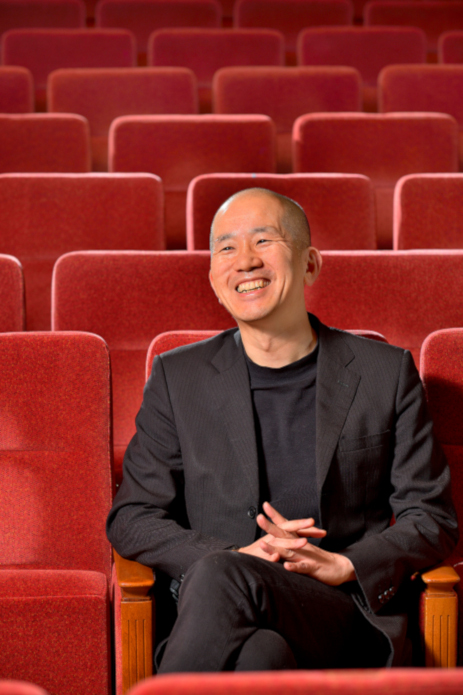
You have a colourful career in the performing arts – from programming at Fuso Theater, leading the PR and marketing at Aichi Arts Center, lecturing at various renowned arts colleges, and now preparing to open a new centre in Miyagi. What motivates you to keep going every day?
My friends say that I’m like a tuna. If I don’t keep going, I’ll die. As a matter of fact, once I have given everything I have, I prefer to seek out the next place where I can dedicate myself. This creates an opportunity for growth for the performing arts centre I’m leaving and for myself. Performing arts centres must constantly evolve.
Having worked at 3 performing arts centres for over 30 years, I have gained many invaluable experiences in every department. I want to share my knowledge, experience and human network with as many people as possible so that, together, we can create better performing arts centres and environments in Japan. It’s not about what I want to do but rather what I need to do.
Especially, for my age, the New Miyagi Performing Arts Center will likely be my last opportunity to work on the front lines. So, I would like to put everything I have into this final project of my career.
Miyagi Prefecture, where I lived as a child, is in the Tohoku region. 14 years ago, the area experienced a devastating earthquake and tsunami that killed over 10,000 people, and more than 1,000 are still missing. To complete this project in success is very important to the people here, and I would like to be part of it.
What is one project you have worked on that you’ll always carry with you and why?
Among hardware, software, and human resources, I am most interested in human resources. For the performing arts industry, human resource development is the most difficult task yet most powerful asset. However, I have witnessed countless young production staff members burn out and leave the industry. How much talent has been wasted over the years? I hope to dedicate myself to passing on the knowledge I’ve earned over the past 30 years to the next generation. It’s terribly wasteful for young people to repeat the same trial and error that I once endured. Monopolising knowledge to elevate one’s own standing serves no one. To truly thrive, we must work collectively to strengthen and revitalise the performing arts industry as a whole.
Another one is the environment – I spent my high school and college days in the United States, where the arts were accessible to everyone at everywhere and at any time. While it is easy to bring musical or theatrical works from the U.S. to Japan, the environment that nurtures them cannot be imported. That’s why I decided to return to Japan, determined to help create the kind of cultural environment I once experienced.
People who encounter the arts from a young age will further enhance the environment. Moreover, the next generation who are raised in this strengthened environment will create new sophisticated Japanese art form that we haven’t seen before. This is a long project that will not be completed within my lifetime. I hope that generations to come will carry it forward and they can experience what I encountered 40 years ago.
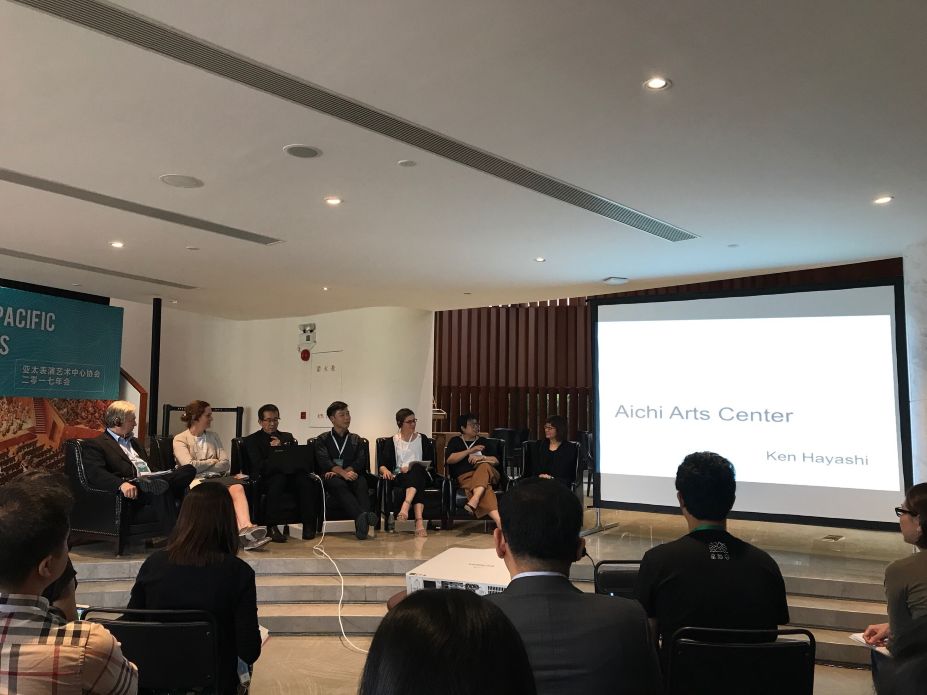
Ken’s presentation at 2017 AAPPAC Conference in Guangzhou
As an active participant and supporter of AAPPAC, tell us how your involvement in the network influenced your work or perspective on managing arts centres over the years?
Japan is an island nation and quite insular. Of course, its island status has allowed us to develop unique art forms that captivate many people around the world. However, Japan currently faces declining birth rates, an aging population, and shrinking population. These issues have led to widespread pessimism in the country including the arts industry. In contrast, the Asia-Pacific region is more future-oriented. Being connected with AAPPAC reminds me that I am a part of the world.
Tokyo is Japan’s capital city, and many people live there. Many artists live there, and many works are created there. Tokyo is the center of the arts in Japan. However, in the context of international projects, Tokyo, Miyagi, and Aichi are just another city in Japan. Geographically, they are indistinguishable. Japanese performing arts must strengthen their collaboration with the Asia-Pacific region to maintain their vitality. It was AAPPAC that helped me realise this.
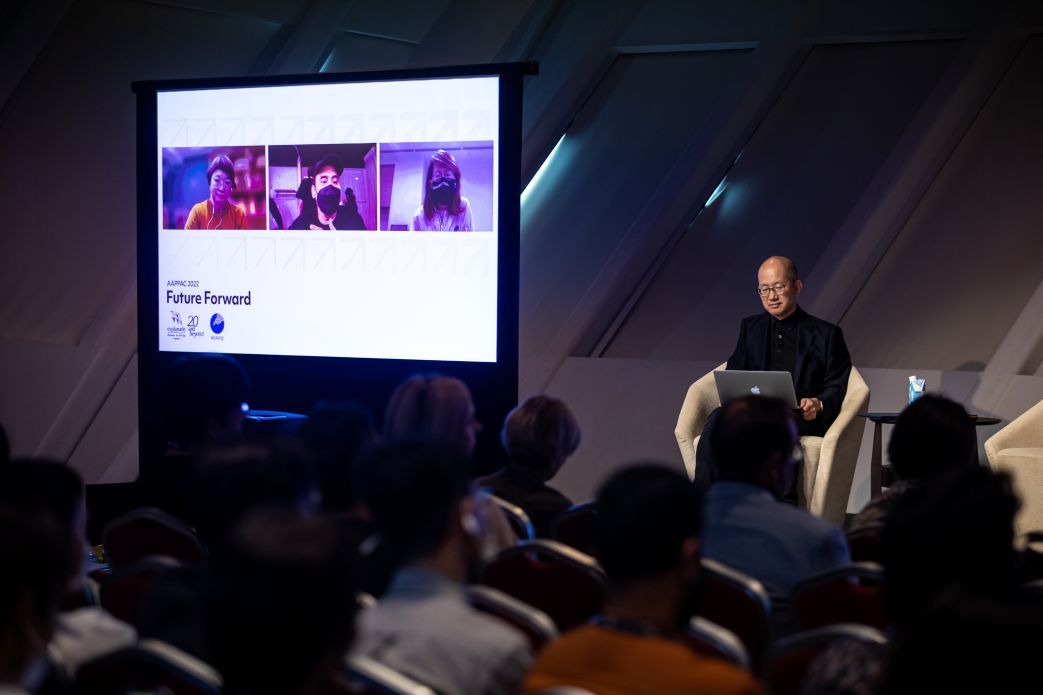
Ken as the moderator for Connecting Series at 2022 Singapore AAPPAC Conference.
What hopes do you have for the performing arts in Japan for the next 10 years, and how do you see AAPPAC playing a role in that future?
Many young Japanese artists now create works overseas, establishing an international presence and gaining recognition. New technologies are now breaking down language barriers, allowing these artists to continue disseminating new Japanese culture. I hope they will captivate people all over the world by blending globally renowned contents, such as anime, with centuries old distinctive art forms, such as kabuki. However, the exchange of artistic works alone is not enough to heal a world increasingly divided by geopolitical tensions. Beyond understanding and mutual respect, we must also encourage and support one another as we would members of the same family.
The AAPPAC conference is, in a sense, a family reunion. We meet once a year to catch up on what’s going on. We share newer thoughts and ideas to deepen understanding the performing arts in Asia-Pacific region today. We also spend time getting to know not only one’s project but also one’s intention, purpose, goal, and mind so that we can strengthen our bonds. Knowing that there are like-minded families overseas gives me courage and strength to be a staff member of a performing arts centre in the Asia-Pacific region.
Describe AAPPAC in three words!
A door to the World
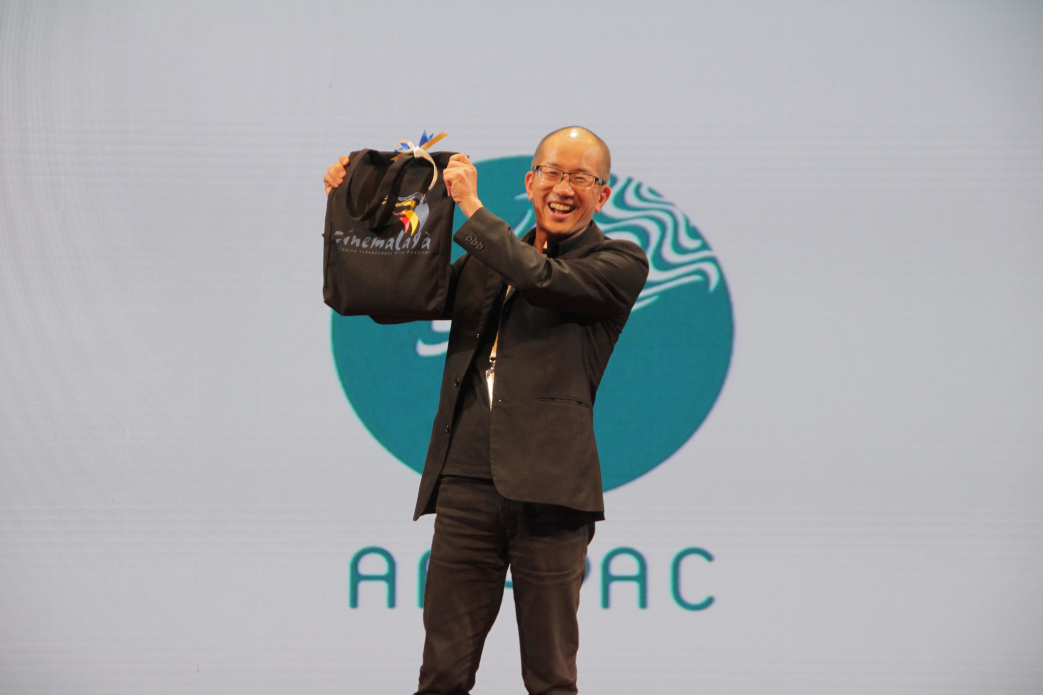
A Birthday Present from Ariel Yonzon of CCP at the 2019 Manila AAPPAC Conference