
UP CLOSE & PERSONAL – An Interview with Exchange Trainees from Taipei Performing Arts Center (AAPPAC 30th Anniversary Edition)
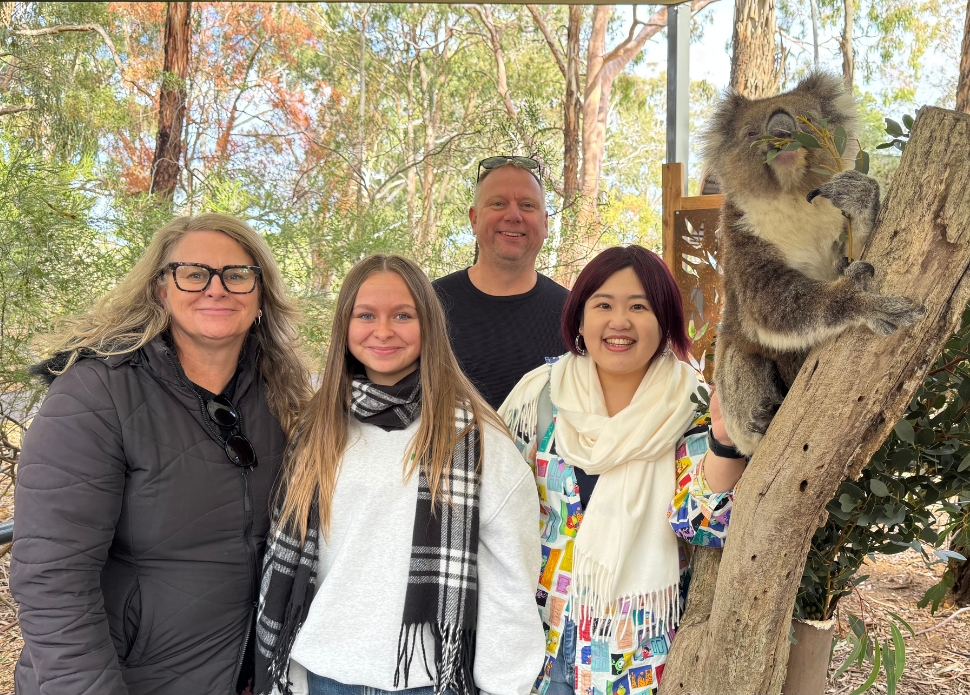
A warm Australian-style welcome for Yuting by the AFC’s Team
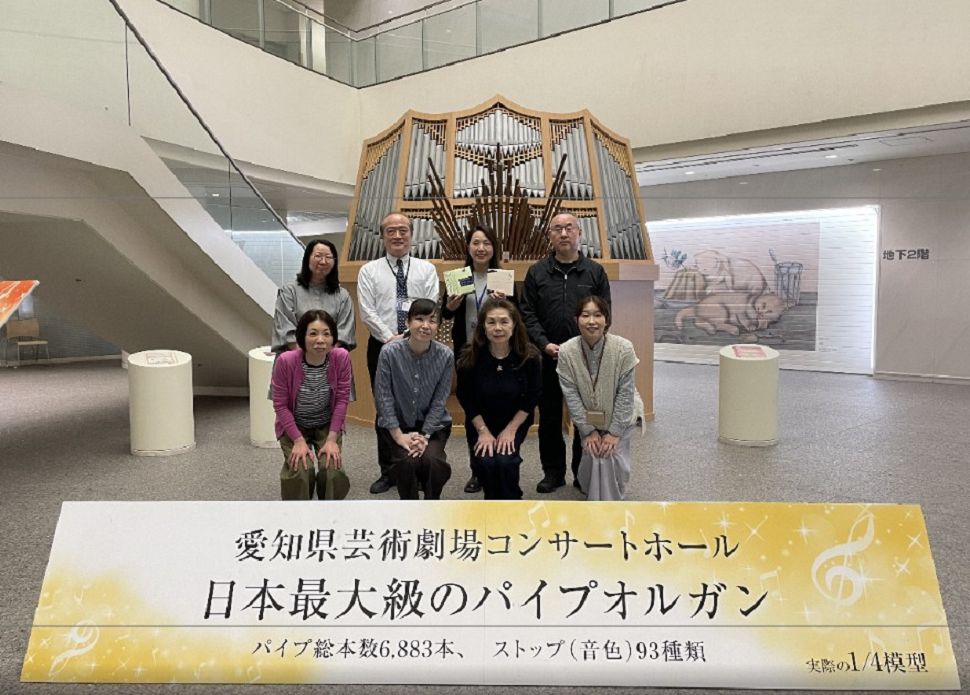
Ivy with colleagues from AAC’s Theatre Operations Team
What motivated you to apply for the AAPPAC Grant for Training Exchange?
Yuting Jhang: Before joining a performing arts venue, I worked as a stage manager and as part of the technical team for international festivals. Moving between productions, cities, and cultures, I became increasingly aware that while each performance is different, the rhythm behind the stage is often shaped by how people communicate, collaborate, and make decisions.
When I later joined TPAC as a technical coordinator, I found myself standing at a different vantage point—not only participating in productions, but observing how an institution itself operates. I began to wonder what shapes these systems, and how they, in turn, shape the work we create.
The AAPPAC Training Exchange offered me a way to step beyond familiarity and enter another working environment from within. What I was seeking was not simply a comparison of methods, but a deeper understanding of how everyday practices—communication, planning, and coordination—quietly construct the culture of a theatre.
Ivy Tseng: Working in audience services at a performing arts center in Taiwan, I have always been interested in how different venues create their audience experience. When I learned about the AAPPAC Training Exchange, I saw it as a rare opportunity to step outside my daily routine and observe another institution from within. I was especially curious about how a venue in Japan balances precision, hospitality, and efficiency, something I hoped to experience firsthand and reflect on in my own practice.
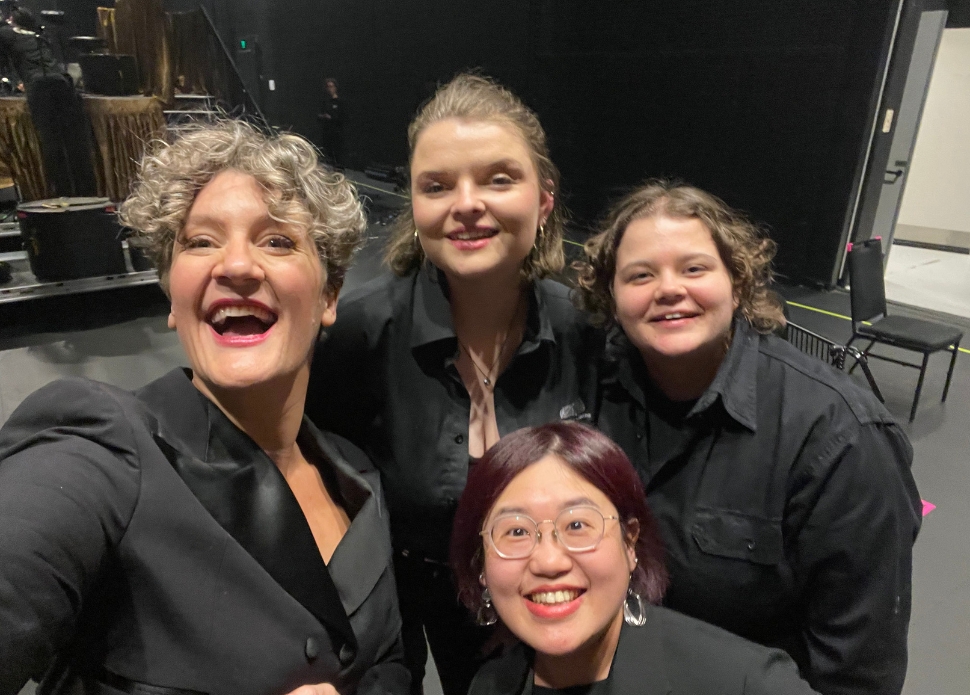
Cabaret Girl Power
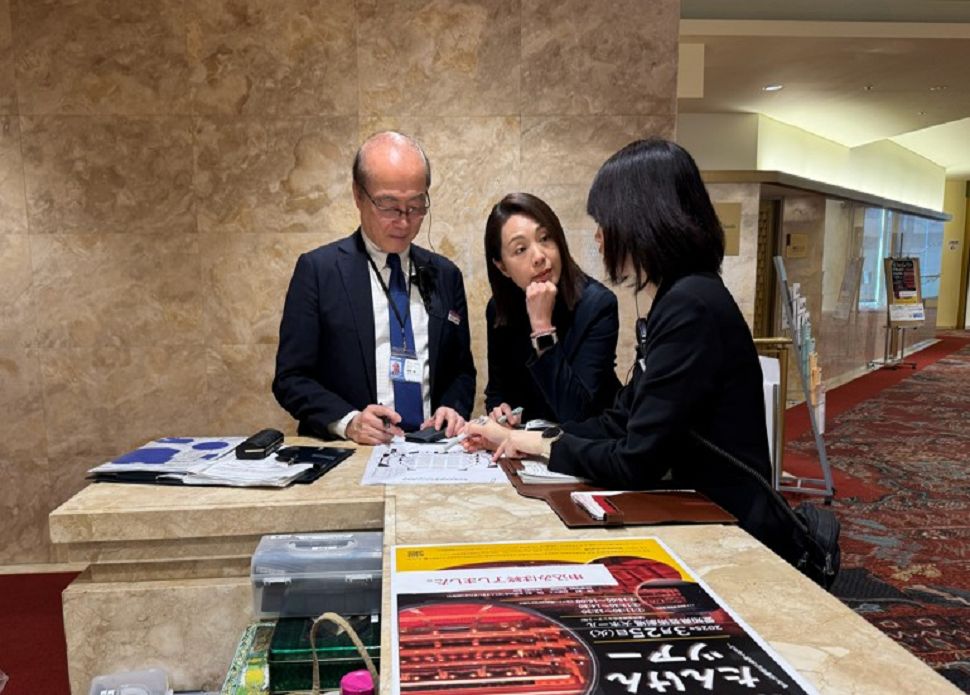
Ivy in deep discussion with AAC Front-of-Houe Team
What value did you find in connecting with peers and practitioners from another AAPPAC member institution?
Yuting Jhang: What I found most meaningful was not simply learning different ways of working, but understanding the thinking behind them.
At the Adelaide Festival Centre, I observed how structured systems—email communication, shared platforms, and regular meetings—support clarity and collaboration. Yet beyond the systems, what stayed with me was the openness of the people: the willingness to speak honestly, to question, and to solve problems together.
Through these interactions, I began to realise that a theatre is not defined only by what happens on stage, but by how people work together behind it.
Ivy Tseng: Through working alongside the team, I experienced a kind of communication that often went beyond words. Even with language differences, there was a shared understanding built through observation, timing, and mutual support. It made me realise that in audience services, sensitivity and awareness are just as important as verbal communication. This connection felt quiet but very strong, and it stayed with me even after I returned home.
How has this AAPPAC-supported experience shaped your professional outlook or aspirations?
Yuting Jhang: This experience shifted my focus from simply responding to immediate challenges to thinking about the systems that make work possible.
I began to see that careful planning, clear communication structures, and alignment across departments are not constraints, but foundations that allow both efficiency and creativity to coexist.
It also reminded me that growth does not always come from doing more, but from understanding differently.
Ivy Tseng: This experience not only changed how I noticed details but also led me to re-examine my role within the larger system of audience services. Having worked on the front line for many years, I have developed certain assumptions about what good service looks like. Through this exchange, I found myself reflecting on these habits and questioning whether they were shaped by efficiency, convenience, or truly by the needs of the audience.
What stood out to me was how consistently the team approached even the smallest interactions with intention, awareness, and shared understanding. From the way staff positioned themselves in space, to how timing, tone, and coordination were carefully aligned, it became clear that audience experience was not left to individual judgment but supported by a well-integrated system and team culture. This shifted my perspective from focusing on individual performance to thinking more about how systems, communication, and team alignment shape the overall experience. Since then, I have been more conscious of not only what we do on the front line, but also how we can build a shared approach within the team so that thoughtful audience experience can be sustained, rather than relying on individual effort alone.
What was the most memorable or surprising moment during your exchange?
Yuting Jhang: What stayed with me was not a production, but a way of believing in the work.
While participating in the Cabaret Festival Opening Show was an important part of my exchange, it was not the most memorable aspect for me.
In many ways, technical execution in theatre—regardless of the uniqueness of each production—follows a certain shared structure. What left a deeper impression was something far less visible, yet far more lasting.
It was in the conversations with colleagues at the Adelaide Festival Centre.
What I remember most vividly is the light in their eyes when they spoke about their work—the quiet pride, the sense of purpose, and the way they saw their roles not merely as jobs, but as part of a larger cultural mission. Even when they spoke of challenges, there was no sense of complaint—only commitment.
That presence was powerful. It was not something written in policy or procedure, but something lived in everyday practice.
Looking back, what continues to resonate with me is not a specific production, but this shared belief: that working in theatre is not only about delivering performances, but about contributing to something meaningful—something that connects people, culture, and imagination.
Ivy Tseng: I observed one performance day that felt like an idol concert. The venue was quite busy, with a large crowd, merchandise sales, and various related activities happening at the same time. The space felt slightly crowded, and there was a sense of time pressure.
However, what impressed me was that throughout the entire process, from audience entry, purchasing merchandise, and participating in activities, to queuing and the post-show exit, the overall flow remained calm and smooth. There were no rushed instructions or chaotic moments. Instead, everything moved forward through subtle guidance and strong team coordination.
At one point, it almost felt like a very quiet scene. Standing there, I realised that this kind of smoothness doesn’t happen by chance, it comes from countless carefully considered details, many of which go unnoticed.
What would you say to fellow arts professionals who are considering applying for the AAPPAC Grant for Training Exchanges?
Yuting Jhang: Be open to what you may not yet understand.
Not everything you encounter will be immediately applicable, but every experience will shift the way you see your own work—and that shift is often where real learning begins.
Ivy Tseng: I would say, be open and allow yourself to experience fully. Sometimes the most valuable learning does not come from formal training, but from observation and reflection. This exchange may not feel dramatic, but it will slowly and deeply influence how you see your work.
Share with us one change that you hope to see for your local arts community.
Yuting Jhang: Change does not begin with systems, but with how we choose to see them.
I hope to see a stronger culture of communication and safety—one that is not only defined by systems, but shared and practiced by people.
At the same time, I recognise that Taiwan’s working culture has its own context. The goal is not to replicate another model, but to create space for change from within.
During my exchange, I observed that technical teams in Australia tend to work more as partners than within rigid hierarchies. Open dialogue, constructive disagreement, and collective problem-solving are part of everyday practice. This made me reflect on whether Taiwan’s theatre environment could allow more room for communication, mutual understanding, and co-creation.
Taiwan’s arts community is already evolving. What matters now is whether we are willing to approach these changes with a broader perspective and an open mindset—especially those of us who have been working in the field for a long time.
Because ultimately, a sustainable arts environment is not built only on great productions, but on how we care for the people who make them possible.
Ivy Tseng: I hope to see more attention given to the emotional experience of the audience. Beyond efficiency and operations, creating a welcoming and comfortable environment can make people feel truly connected to the arts.
Describe your training exchange experience in one word!
Yuting Jhang: Resonance
Ivy Tseng: Reframing
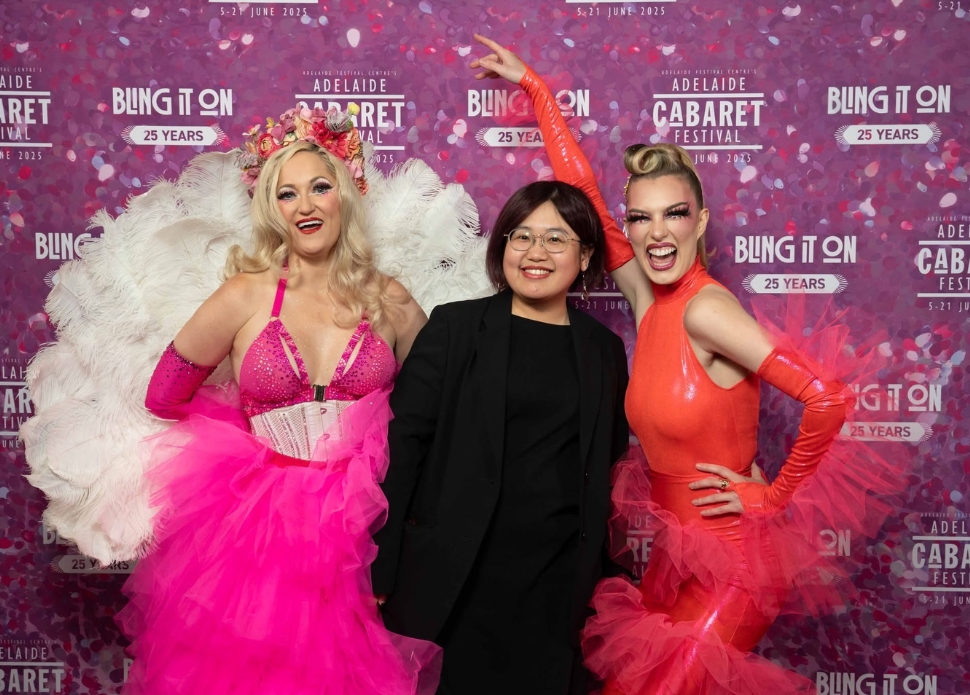
Cabaret Opening Night
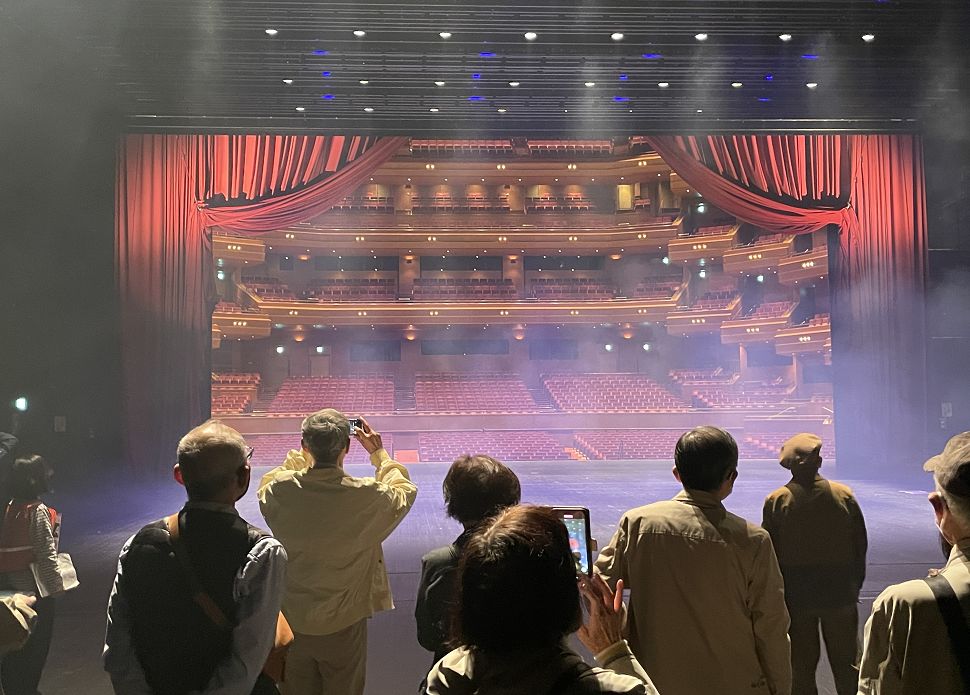
Ivy participating in AAC’s Annual Theatre Tour