
Beyond the Walls – The City as a Stage
For more than 35 years, Auckland Live has been New Zealand’s largest performing arts organisation. Its foundation has been the operation and programming of some of the city’s most iconic venues, from the 2,300-seat Kiri Te Kanawa Theatre in the Aotea Centre to more intimate spaces like the Herald Theatre, seating up to 180. Alongside these venues, Auckland Live has long held responsibility for Aotea Square, situated within the Aotea Arts Quarter and surrounded by key cultural infrastructure including the Auckland Town Hall and The Civic.
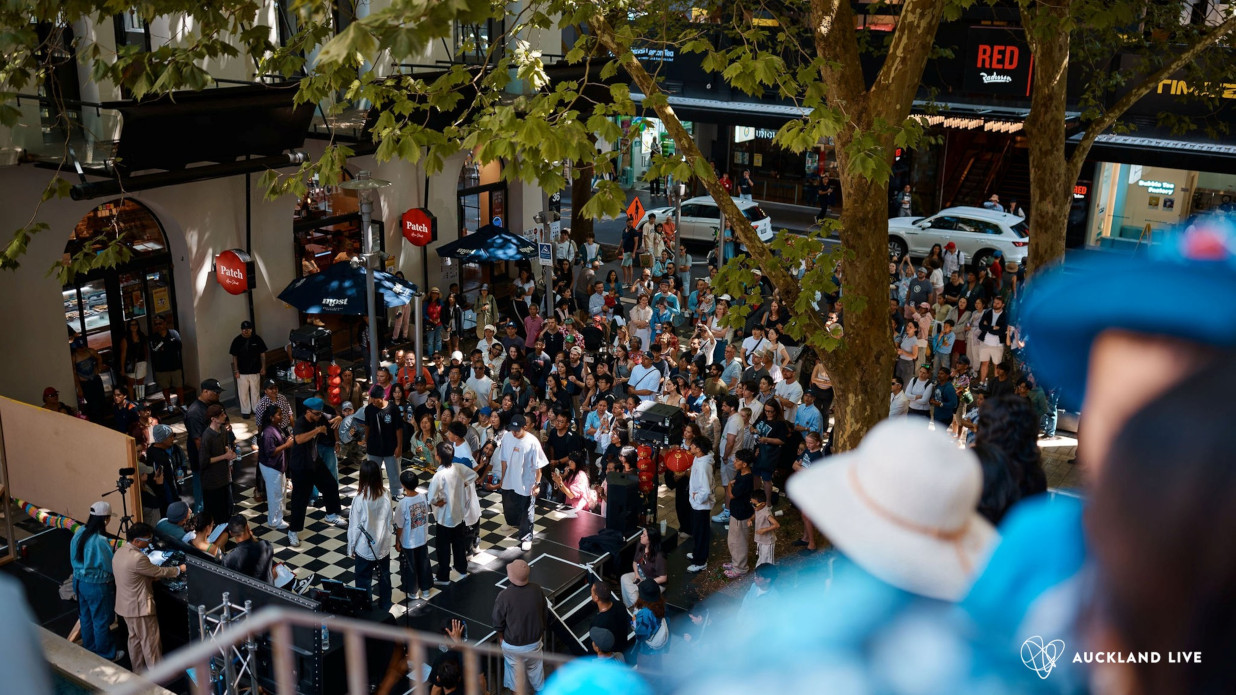
Lunar on Lorne
Historically, Auckland Live’s programming model has centred on a mix of venue hire, commercial activity and curated artistic work. It is home to many of the city’s leading arts companies and festivals, while also presenting major international musical theatre productions. Through this model, Auckland Live has consistently delivered a rich annual programme, reaching approximately one million people each year.
In recent years, Auckland Live has undergone a significant evolution, from a venue-based presenter of performing arts to a city-wide curator of cultural experience. This shift reflects a broader ambition: to help shape Tāmaki Makaurau (Auckland) as a globally celebrated city of creativity, where arts and culture are embedded in everyday life, connect people and place, and reflect the diversity of its communities.
Today, Auckland Live’s role extends well beyond its venues and Aotea Square to encompass a broader responsibility for programming across the city centre. This includes oversight of the public square Te Komititanga and a leadership role in the curation and delivery of arts, cultural experiences and activations across the public realm, effectively positioning the city itself as a stage.
This evolution reflects a shift in thinking: from programming within defined walls to imagining the urban environment as a canvas for artistic expression. It is about creating opportunities for people to encounter arts and culture in unexpected places, whether through temporary installations, outdoor performances, festivals or immersive experiences, and in doing so, strengthening connections between audiences, communities and the city.
A key enabler of this expanded role has been investment through the City Centre Targeted Rate, a fund paid by property owners and businesses in the city centre to support initiatives that enhance the area as a place to live, work, visit, and do business. This has provided a dedicated “attraction and activation fund” to support a more vibrant and culturally rich city centre over a five-year period.
The intent of this investment is clear: to deliver a connected, year-round programme of events and experiences that attract both Aucklanders and visitors. Success is measured through a number of KPIs including economic impact, visitation, dwell time, spend, perception of city centre and impact of event on the attendee. There is a strong expectation that this new programme of arts and cultural events can act as a catalyst for urban transformation, driving increased activity for local businesses, hospitality and accommodation providers.
For Auckland Live, this has meant rapidly scaling its operations and redefining how it works. It hasn’t been without its challenges, particularly in adapting traditional venue-based systems to the flexibility required in public space. New teams have been established, systems and frameworks developed, and new approaches to programming and investment introduced, all while continuing to deliver a full programme within its venues. The organisation is now simultaneously a venue operator, presenter, producer and city activator.
This expanded scope has brought both opportunity and complexity. Programming across diverse public spaces requires a nuanced understanding of how different sites function, how audiences move through the city, and how to create experiences that resonate in open and dynamic environments. It also requires deeper engagement with with many additional stakeholders, including mana whenua, iwi and hapū with ancestral authority in Tāmaki Makaurau, ensuring that that programming reflects the cultural identity and narratives of place.
At the same time, Auckland Live is refining how it measures impact. This includes both quantitative data -such as attendance, visitation, and economic contribution -and qualitative insights into audience experience, cultural value and legacy. The organisation is effectively learning in real time, adapting its approach as it builds a more comprehensive understanding of what works in the public realm.
Early results are promising. In a relatively short period, Auckland Live’s city centre activations have attracted hundreds of thousands of people, contributing to a dense and dynamic events calendar. Through its marketing capability and reach, the organisation has also supported event producers to grow their audiences and increase visibility.
Importantly, this activity is translating into broader economic benefit. Survey data indicates that 85 percent of attendees at public realm events go on to spend money elsewhere in the city centre, whether in hospitality, retail, or other activities. This reinforces the role of cultural programming as an economic driver, as well as a social and cultural one.
Where Auckland Live previously connected with around one million attendees annually through its venues and programmes, it is now tracking toward a reach of 2.5 million attendances across its expanded portfolio of activations, events, and experiences. This figure reflects in-person engagement alone, excluding the additional reach achieved through digital and media channels.
Ultimately, Auckland Live’s transformation signals a broader reimagining of what a performing arts centre can be. It is no longer defined solely by the walls of its venues, but by its ability to shape the cultural life of the city as a whole. By treating the city as a stage, Auckland Live is helping to create a more vibrant, inclusive and dynamic urban environment; one where arts and culture are not destinations in themselves, but integral to the everyday experience of Auckland.
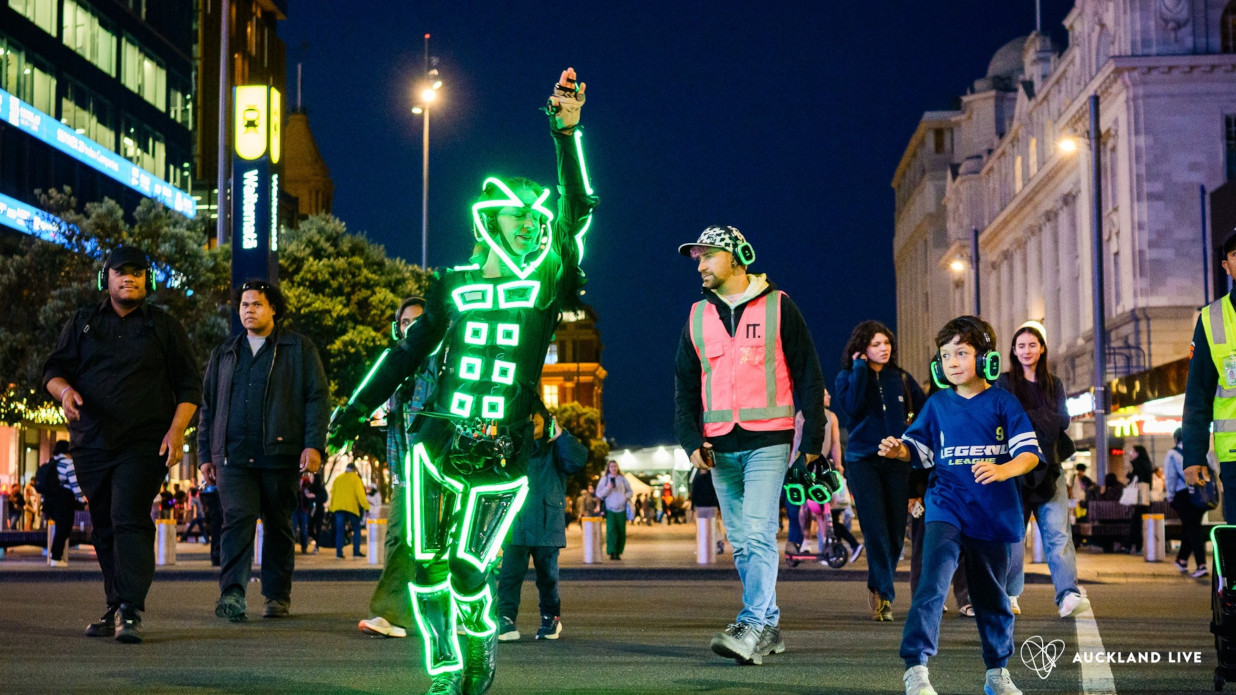
Vospertron in Te Komittitanga