
The Cultural Center of the Philippines hosts AAPPAC 2019 Manila Conference
The Cultural Center of the Philippines (CCP), the country’s premier showcase for the arts, hosts the Association of Asia Pacific Performing Arts Centres (AAPPAC) Conference in September 2019.

Photo credit: Cultural Center of the Philippines
The AAPPAC conference forms part of the Manila International Performing Arts Summit (MIPAS), a multi-platform meeting and trade fair that brings together the arts and business sectors from all across Asia Pacific and the world. The Summit aims to leverage excellent Performing Arts productions and talents in the Philippines and the Asia Pacific Region to raise awareness and broaden the market for the performing arts.
Three other events included in the MIPAS are the Federation of Asian Cultural Promotion (FACP) Conference, the Manila International Performing Arts Market (MIPAM) and CREATE Philippines.
The theme for this year’s AAPPAC Conference is Epicenters of Creativity: Generating Waves, Harnessing Crosscurrents.
The conference is divided into six sessions which will cover key topics such as cultural diplomacy, arts philanthropy, smart technology for the performing arts, the importance of partnerships between the academe and the performing arts centres, the rise of small, independent performing arts spaces and the rise of arts and culture districts.
This three-day conference will commence from 20 to 22 Sep at the CCP and other select partner venues.
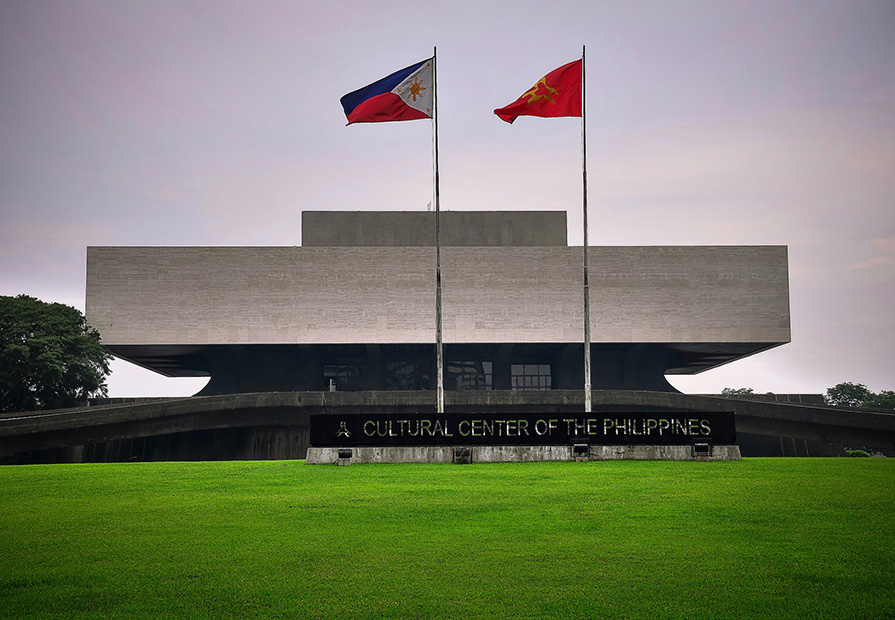
Photo credit: Cultural Center of the Philippines
Register here!
You may also check out the link for our partner hotel/s here.
For more information about the AAPPAC conference, please email to aappac2019manila@gmail.com
Here’s how to register:
- Go to the CCP Events Page at https://events.culturalcenter.gov.ph
- Click the registration link to the AAPPAC 2019 Manila Conference
- It will direct you to the conference details page:
- Choose US DOLLAR as your desired currency
- In the SESSIONS LIST (right side), select “FULL CONFERENCE” or “FULL CONFERENCE + FACP CROSSOVER”
- In the TICKET TYPES MENU, select “FULL CONFERENCE (EARLY BIRD)” or “FULL CONFERENCE + FACP CROSSOVER”. This will be changed to FULL CONFERENCE (REGULAR) after the set deadline for early bird payment.
- In the TICKETS MENU, click the same option as item c.
- Type the VERIFICATION CODE emailed by CCP
- Click “ADD TO CART”
- Click “CHECK-OUT”. This will direct you to the Registration Form
- Fill-out the Registration Form. Please take note of the required fields.
- Click the “PLACE ORDER”. The summary of provided information will show on the page for your review. You may also print the page for future reference.
- Below the page, choose your PAYMENT OPTION.
- Click “PAY NOW”. You will be directed to a CONFIRMATION PAGE confirming receipt of your registration. Another confirmation will also be sent to your registered email address.
- Also in the Confirmation Page, choose the OFFICIAL HOTEL, Hotel Jen by Shangrila. It will direct you to the Hotel Jen’s direct booking hyperlink created just for our event.
**Creating an account and logging-in is optional should you want to review your purchase history.
About the Philippines
The Philippines, composed of 7,107 islands, lies in the heart of Southeast Asia and is considered to be the gateway to the region. With its unique location, the nation is known as the commercial, cultural and intellectual hub of Asia from the dawn of history.
The country roots its influences from Asian, European and American cultures. From early trading with the Chinese to the colonisation of the Spanish, American and Japanese, the Philippines has one of the most unique mix of cultural influence in the region.
The Philippines is very proud of its pristine beaches. Most tourists visit Boracay Island, Palawan and Siargao during the summer. Other tourist destinations are the Banaue Rice Terraces, Mayon Volcano and Cebu.
Climate
November to February is the coolest months and a good time to visit the Philippines as far as weather is concerned. Meanwhile, March to May is the summer months in the country and are classified as hot and dry. June to October is rainy, with the months between July and September characterised by typhoons.
The average temperature in the Philippines is 86F / 30C; average humidity is 77%. Some parts of the country such as Cebu and its neighboring provinces in the Visayas are warm and comfortable in all seasons and can be visited throughout the year.
Visa
Tourists can visit the Philippines without a visa if staying in the country for 21 days or less; provided tourists have a passport that is valid for at least six months and a return ticket or a ticket to another destination outside the Philippines. If you wish to stay longer you must obtain a Visa Extension either before your trip from a Philippine Consulate or Embassy. Or, once in the country, you may obtain it from the Bureau of Immigrations.
Customs
Upon arriving, Visitors are allowed to bring in duty free personal belongings, two cartons of cigarettes or two tins of pipe tobacco and up to one litre of alcohol. Balikbayans have separate rules and should check with the Embassy or Consulate in their home city. You may bring in unlimited amount of foreign currency. Upon Departure, any antiques you may have acquired during your stay must be accompanied by a certificate from the National Museum. You may not take more than PhP5,000.00 (five thousand Philippine pesos) out of the country.
Currency
The currency in the Philippines is the Peso (PHP) and the Centavo. 100 centavos = P1. Coin denominations are: 1, 5, 10, and 25 centavos, P1, and P5. Bill denominations are 10, 20, 50, 100, 500 and 1, 000 Pesos.
Foreign currency may be exchanged at your hotel, and in most of the large department stores, banks and authorised money changing outlets. Exchanging money anywhere else is illegal and the laws are strictly enforced.
Most large stores, restaurants, hotels and resorts accept major credit cards including American Express, Visa and Master Card. Traveler’s cheques preferably American Express are accepted at hotels and large department stores. Personal cheques drawn on foreign banks are generally not accepted.
Travel Taxes and Airport fees
Philippine Nationals are expected to pay for the Philippine Travel Tax upon departure from the Philippines. It is usually paid at the airport upon departure or; oftentimes, already included in the cost of the ticket when purchased. US Nationals and Permanent Residents (Green Card Holders) are exempt from the Philippine Travel Tax. US Permanent Residents need to secure a Travel Tax Exemption Certificate from the Philippine Tourism Authority at the Department of Tourism Building at TM Kalaw Street, Ermita Manila. The Philippine Travel Tax is PHP1,620.00 (approximately $35.00).
All passengers departing from the NAIA (Ninoy Aquino International Airport) are expected to pay the Airport Terminal Fee of PHP750.00 (approximately $17.00). No one is exempted from paying the Airport Terminal Fee.
TOUR OF “BAHAY NI KUYA”
19 Sep (for early arrivals)
Managed by the Ramon Obusan Folkloric Foundation, Inc., the “Bahay ni Kuya” is the home of Philippine Folk Heritage and Resource Center for Philippine folk arts, traditions, performances of the Ramon Obusan Folkloric group, and the works of Ramon Obusan Arevalo Obusan, National Artist for Dance. Fondly known for opening his home to his local community and to folk dancers, artists, and members of the indigenous groups all over the country, Ramon Obusan, commonly called as ‘Kuya Mon’ because of his programme, Bahay ni Kuya, pledged to be of “full service to the Philippines and the generations to come.”
Led by the Board of Directors composed of Obusan family members and the ROFG members, “Bahay ni Kuya” operates to revive, safeguard, preserve and make the National Artist’s collections readily accessible, and provide service to the cultural education needs of artists, youths, students, scholars, teachers, and art enthusiasts.
A token performance from the Ramon Obusan Folkloric Group shall form part of the tour.
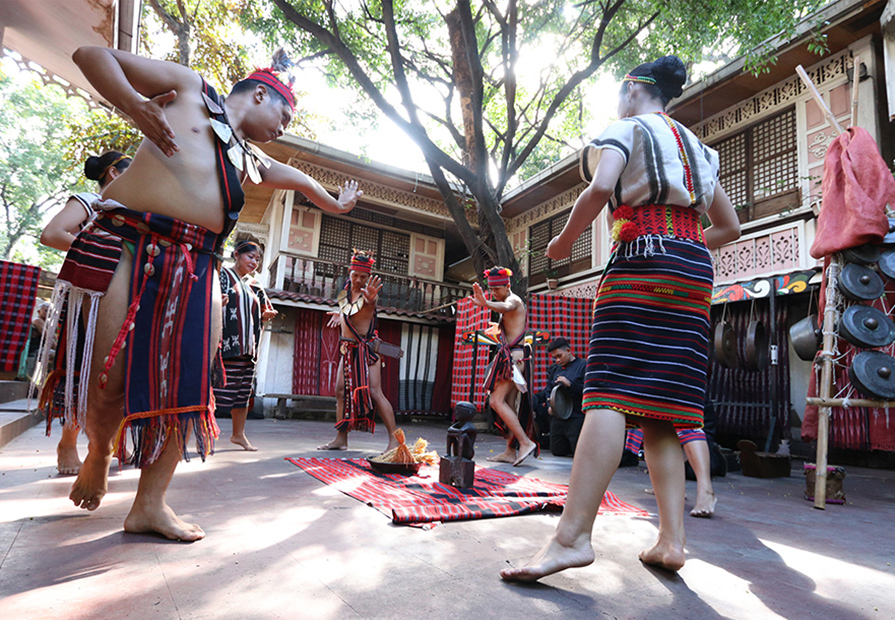
Photo credit: Cultural Center of the Philippines
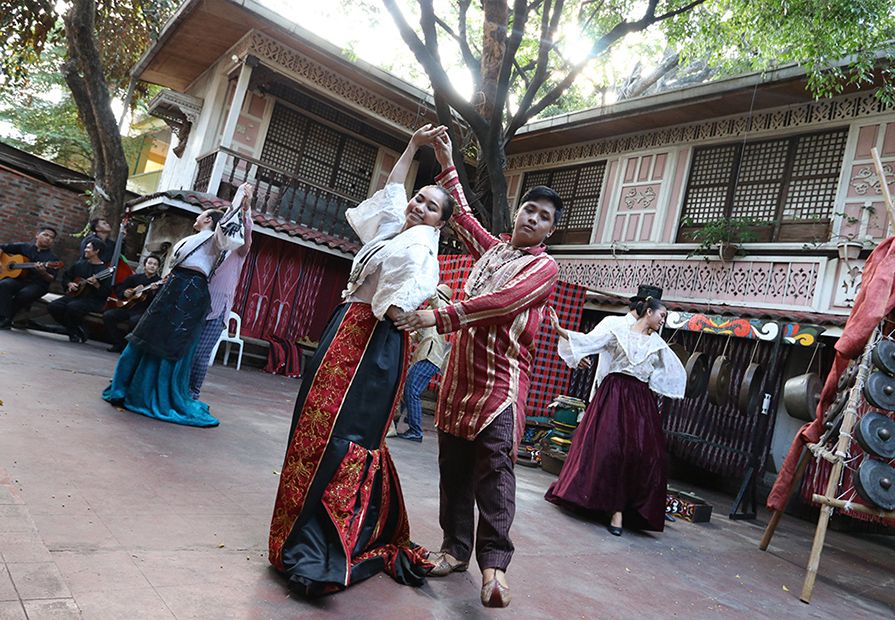
Photo credit: Cultural Center of the Philippines
CASA MANILA, INTRAMUROS HERITAGE DISTRICT TERTULIA AND FAREWELL DINNER
22 Sep
https://theculturetrip.com/asia/philippines/articles/the-history-of-manilas-walled-city-of-intramuros/
Located in the heart of Manila’s historic Intramuros district, the seat of culture and government of Manila in the 1800s and 1900s, Casa Manila is a colonial lifestyle museum which features the domestic life of the upper class in 19th century Philippines. The walls of the ground floor are made of adobe or volcanic tuff which was used as the main building material in the colony during the late 16th to late 19th century.
Casa Manila Patio is one of the most recognisable event venues in Manila because of the old-world charm of its Spanish-inspired design. The genteel nostalgia evoked by the open gardens of Casa Manila Patio make for a truly unforgettable event.
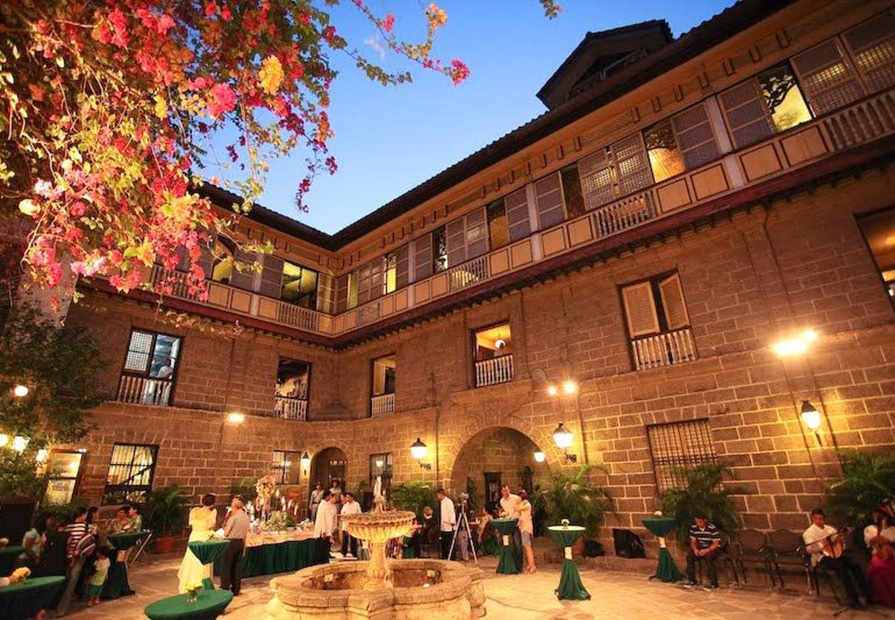
Photo credit: Cultural Center of the Philippines
HARD HAT TOUR OF THE MANILA METROPOLITAN THEATER
22 Sep
https://ph.asiatatler.com/life/inside-the-manila-metropolitan-theatre-restoration
After more than eight decades of existence, the Manila Metropolitan Theatre, a National Cultural Treasure, is undergoing a comprehensive conservation programme. As the only existing Art Deco building of its scale and integrity in Asia, the Met is culturally significant in its expression of a Filipinised style of ornamentation that melds indigenous icons and Art Deco elements, creating a stylistic language that resonates with the Filipino. The architecture of the Met is energised by a mélange of ornaments with allure and fantasy.
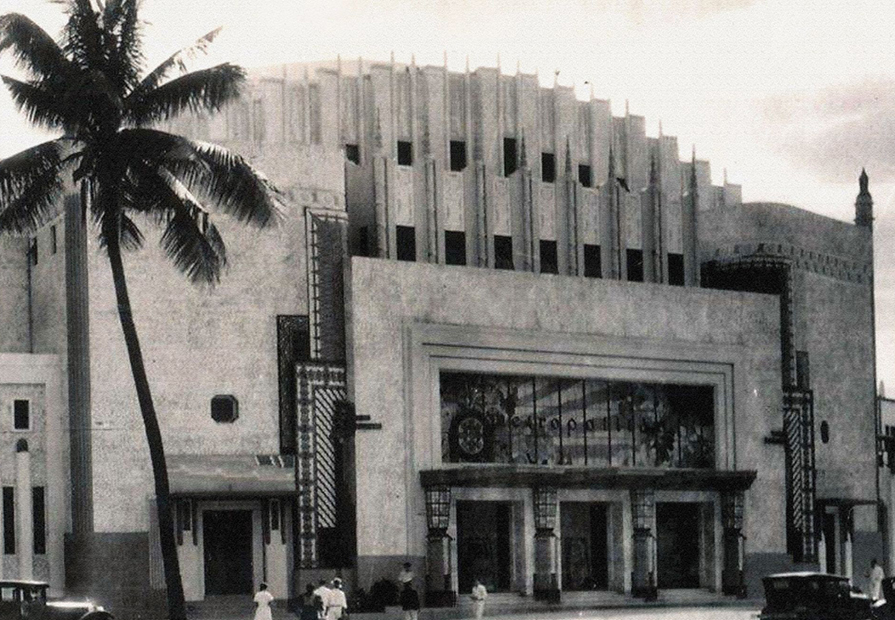
Old MET
Its historical significance lies in its connection to Filipino pioneers in the arts, with many art and theatre personalities having launched their careers at the Met. Its scale, as the largest theatre then constructed within the Philippines, led the Met to be accepted as the country’s first “national theatre,” hosting cultural performances, social events, and artistic endeavours. As a socio-civic structure, it has been integral in the development of civic pride.
The Met was formally inaugurated on 10 Dec 1931 but was sacrificed at its prime in the Battle for the Liberation of Manila. Through the Philippine Rehabilitation Act of 1946, partial restorations were made after World War II, but the lustre was gone from the Art Deco gem. In 1978, the old Metropolitan Theatre had undergone a complete restoration after its destruction in the Battle for the Liberation of Manila in 1945 and Post-War decline and misuse. The cultural renaissance it enjoyed since it reopened in 1978 was short-lived as political change marred its very existence and was finally forced to close its doors in 1996. The curtain went up again in 2010 but financial constraints and contests over ownership forced it to dim its lights once more.
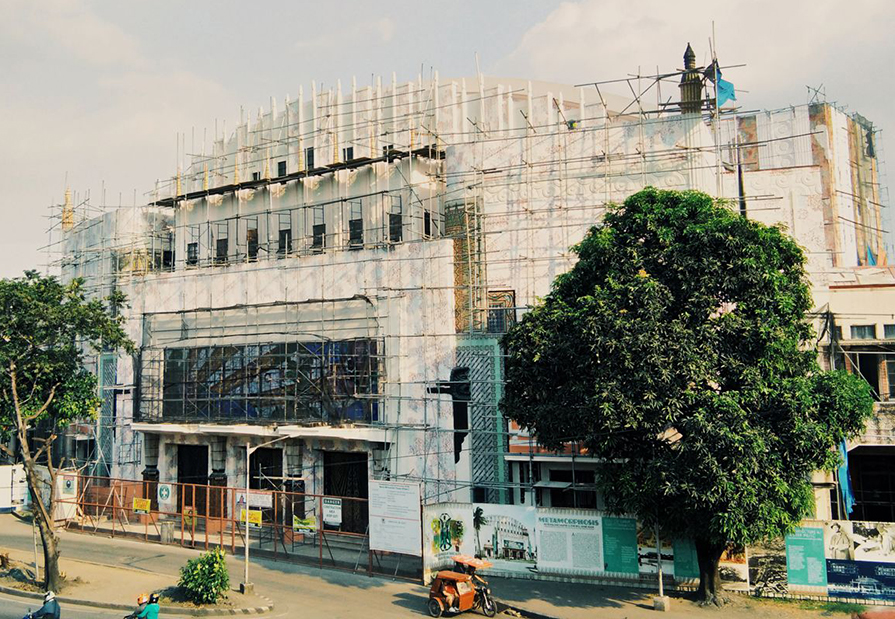
MET Restoration
Finally, in May 2015, the NCCA was authorised by the government to purchase the Metropolitan Theatre for 270 million pesos to jumpstart the rehabilitation procedure and breathe new life to the once neglected cultural landmark.
Click here to visit CCP’s website.
Back to News