
Five Minutes With Hans Graf
We recently interviewed Austrian maestro, Hans Graf, who assumed the role as Chief Conductor of the Singapore Symphony Orchestra (SSO) this year. Having served as Music Director at distinguished orchestras like the Mozarteum Orchester Salzburg, the Basque National Orchestra, and the Orchestre National Bordeaux Aquitaine, Hans took the time to share with us more about himself as well as the world of Classical Music.
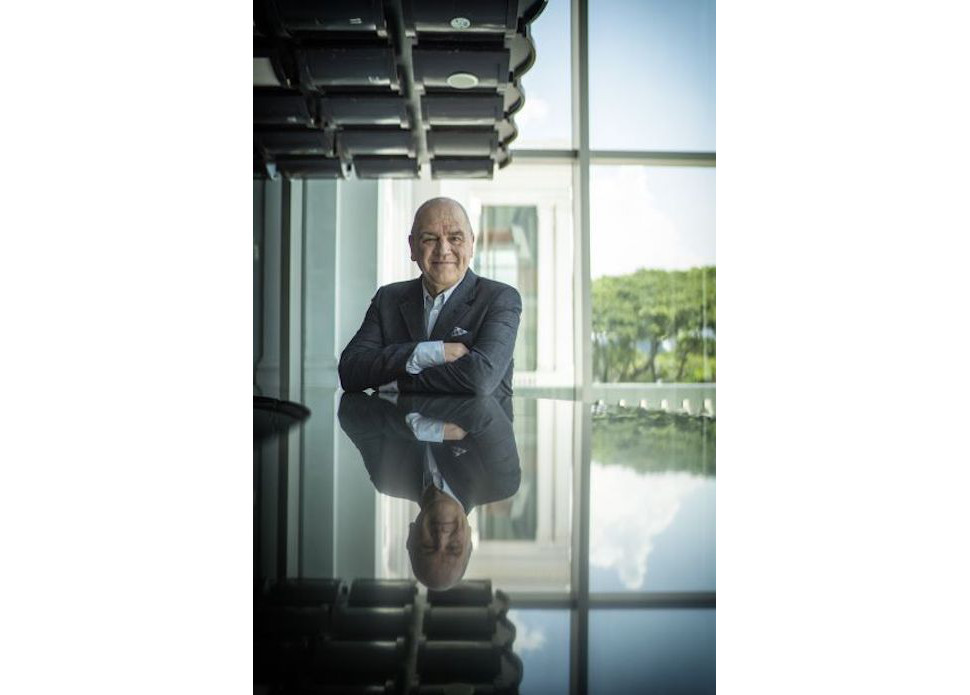
Image Courtesy of the Singapore Symphony Orchestra
Tell us a little bit about yourself and your career. What made you fall in love with music and why did you choose to make it your life’s work?
Hans: I was born into a family of musicians — my father was a violin teacher at the Linz Bruckner Conservatory. We often had house music. He had his own string quartet and he gave me my first violin lessons. At age eight I switched to the piano, but it was only after my father’s early death that I found that music was my love. The first real joy of music came from Bach pieces, quite simple ones but of a beauty and perfection causing my real “awakening”, from thinking about the music rather than playing through.
As my piano repertoire expanded, there were more pleasures, more discoveries. But then, at age of 15, my discovery of the great music written for orchestra really made the difference: Brahms’s Fourth, Bruckner’s Seventh and Eighth, and very soon Debussy, Ravel, Bartók and Stravinsky captured my full attention. I was fascinated by so different things like the whole Firebird ballet music, the Debussy Dances for Harp, Ravel’s Jeux d’Eau and Bartok’s Second-String Quartet, much more than by the piano repertoire.
At age 17 I knew more and more that I would spend my life with this music — especially after a stay in Paris of six weeks which was in many ways eye–opening. I came home with all the scores of Debussy and Ravel that I could afford with my little pocket money: they are still a beloved part of my music library — after more than 50 years!
After my last piano recital (with the sonatas Beethoven op 109, Scriabin No. 9 and Prokofiev No. 4), I decided to concentrate fully on conducting, knowing that I probably would never be able to earn a dime with it. I just wanted to dedicate my life and work to this kind of music no matter in which function.
What do you think are the most important qualities of an outstanding orchestra?
Hans: The primitive but correct answer is that a truly excellent orchestra consists of truly excellent musicians. Truth, but not the full truth. An excellent orchestra is like a Brilliant-cut diamond. It takes great skills and efforts of all constituents to bring out that kind of musical greatness which you can distinguish, and which is the goal of a good orchestra every day.
Great orchestras have not only their own actual merits but they are also usually anchored in a noble tradition: this means that many qualities of their playing and style are built in them like a DNA, like an unobtrusive artistic discipline, a classy behaviour that is the result of a healthy self–confidence and a quiet pride — grown over a long time: you may not always see these qualities immediately but they are in everything.
The most important things for reaching and holding a high level of orchestral play seem simple: humble work on playing basics but at the highest level!; playing the great repertoire often, with deep and inexhaustible love and joy; playing serious, important and well–built concert seasons with that well–balanced blend of the necessary well–known and also enough of the (equally necessary) fresh, new and unknown.
Thus, our own curiosity and love for the new should spark a similar curiosity in our listeners, to invite them to follow with pleasure and amazement. Great orchestras play great programmes. Seems simple but is not.
A truly good orchestra can only grow in a good musical home: the concert and rehearsal halls are the instruments which allow a great orchestra to develop its sound and nobility. And Singapore has, proudly, two of these great “instruments” which are a vital part of our beloved orchestra’s well–being, success and glory.
You need a great management. They work hard, but often with little recognition yet they are the invisible blood platelets in the orchestra’s veins.
And sometimes a good conductor can also be of help.
You’ve performed at many different renowned Concert Halls worldwide. Which would you consider your favourite and why?
Hans: Among all the concert halls I have seen and where I worked, there are many outstanding ones, and it would be a little bit too narrow to mention just the “usual suspects” like Musikverein in Vienna, Concertgebouw in Amsterdam, Carnegie in New York, Suntory in Tokyo, etc. I know them all, and they are all very good and prestigious, no doubt.
But there are more: the last 50 years have seen the construction of many outstanding concert venues in many countries, and you can distinguish certain styles, sometimes sensational, innovative and quite different from the standard form of the 19th century: but for me, most of the excellent modern halls follow the old form of the “shoe box”, and there are some good reasons why this is the right form: the orchestra has definitely a directional sound, so the audience has to be on one side, not around the stage. The reverb, which is an essential part of the musical pleasure and comfort, is more delicately controllable. Russell Jones was a master of good and music friendly acoustics.
The aesthetics are important, but the sound is determining the quality and ranking of a concert hall. And the quality of life for the orchestra.
There are many halls designed by Russell Johnson, and the first one I worked in was the Morton Meyerson Symphony Center in Dallas. But my first real and happy acquaintance was the Jack Singer Hall in Calgary: this was for eight years my work place, and it feels like a glove specially made for you — you are at home from the first moment, it is good in rehearsal and excellent in performance and you never get tired of it.
The Esplanade is a sister hall with all the same qualities. I am looking forward to spending lots of hours of sheer pleasure there! A precious privilege.
As newly appointed Chief Conductor, what about SSO’s upcoming season and the seasons ahead are you most excited about?
Hans: The most important thing in the life of a symphony orchestra like ours is the joy and challenge of playing at the highest level we can reach and imagine, where this joy will be shared by our audience.
I want to find new and exciting programmes, new music written recently but also older “new” pieces hitherto unknown, new to orchestra and audience alike, left in the shade but more than worth to be brought up to new light.
This can be anything from a less familiar, fresh Haydn or Mozart symphony, a composer who was either neglected or not yet presented in our programmes, new soloists and conductors, to freshly commissioned pieces or maybe also just some new ways of presenting music, and trying some new and attractive venues.
I am simply just looking forward to the many colourful and challenging programmes of our next season and to the pleasure of working with this orchestra in these two gorgeous halls: the glorious Esplanade and the precious and intimate Victoria Concert Hall.
Like everybody in the whole world of music we will celebrate the 250th anniversary of Beethoven’s birth in 2020. We will feel the joy and honour to pay tribute to the memory of this real hero of humanity. We never exhaust the depth and universality of his music and we always will have to strive to find new and deeper understanding and beauties in it and to do it justice our way — a never ending beautiful duty.
And we will be happy to have you with us to share, celebrate and refresh our admiration.
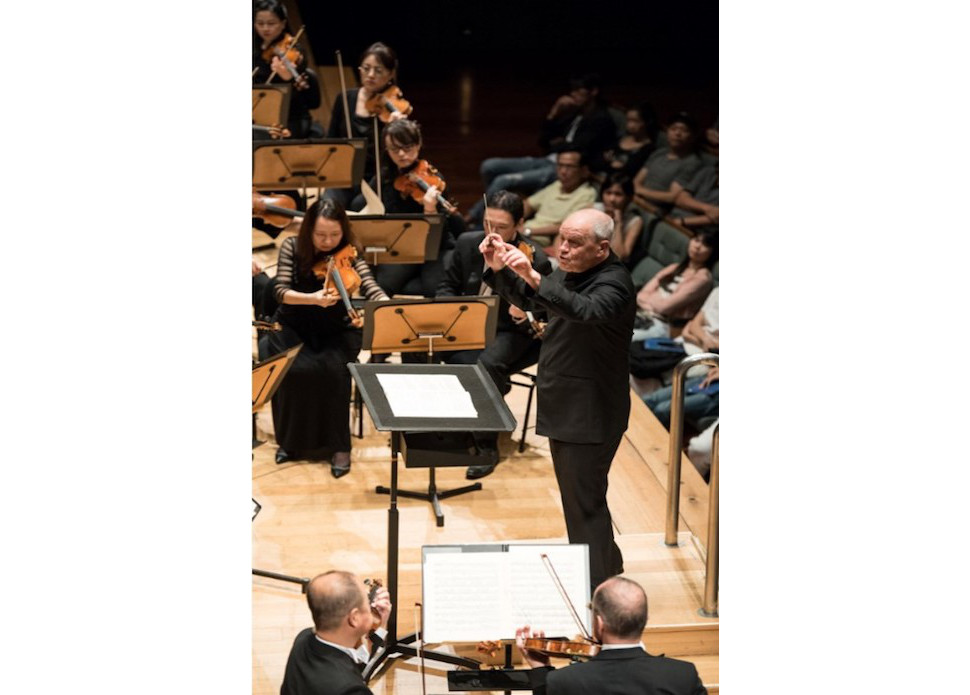
Hans Graf with the SSO (Image Courtesy of the Singapore Symphony Orchestra)
What is your fondest memory of Singapore to date?
Hans: The most pleasant memories outside my work are several walks together with my wife through many parts of this city (Tree Top walk, Gardens by the Bay, Botanic Gardens), the discovery of excellent restaurants but most of all the sincere and easy friendship with many people from town and from abroad. This hospitality, warmth and openness is quite remarkable and special.
If you could have coffee with a composer from any period, who would it be and why?
Hans: This would be really awkward: I would in the best case feel intimidated but more likely just dumb and speechless. How do you talk to a Beethoven, posing questions you first deem intelligent which appear silly as soon as they leave your mouth?
Maybe ask Beethoven about the wine he had yesterday evening? He was a great drinker but also a very informed wine lover. (Like Goethe, by the way…)
If someone made a movie of your life would it be a drama, a comedy, a romantic-comedy, action film, or science fiction?
Hans: A well-meaning documentary with a touch of drama?
Back to News