
Five Minutes with… Lee Hyun-Jung
We caught up with Lee Hyun-Jung, newly appointed CEO of LG Arts Center in Seoul to find out more about her and her plans for the centre.
You can also read more about Ms Lee’s appointment here.
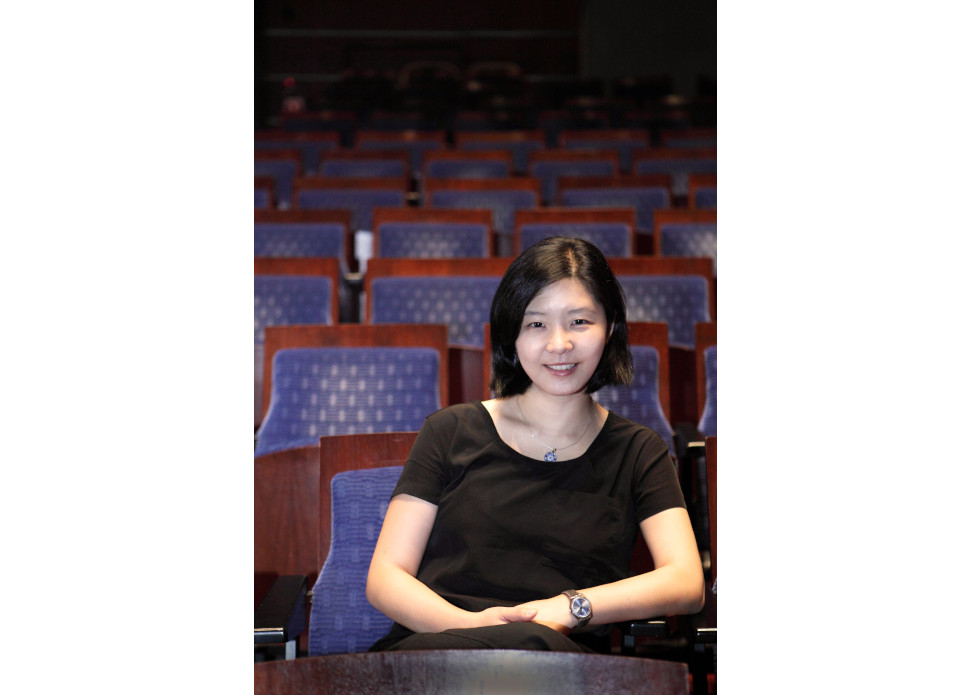
Lee Hyun-Jung
Congratulations on your new appointment! You’ve played such a key role in the growth of the centre over the years as Head of Programming. Tell us what your proudest achievement to date was.
LG Arts Center is a non-profit theatre, entirely funded by LG Group. Despite operating on an incomparably smaller scale compared to the larger national and public theatres, LG Arts Center is now beloved by the Korean audience as the best performing arts centre because of its programming and is now perceived as the representative theatre of Korea. Many industry insiders even say that the Korean performing arts industry is divided into before and after LG Arts Center. LG Arts Center has contributed to pioneering the contemporary performing arts market and has played a key role in developing Korea’s musical industry into the world’s third-biggest market.
I believe that we were able to do so because we have always placed our priority on providing excellent arts programmes to our audience with consistent objectives in programming for the past 22 years. As a private theatre funded by a corporate, we have faced many hardships depending on LG Group’s financial conditions and the economic ups and downs of the nation. Despite all that, I am very proud that we have devoted ourselves to maintaining our values in the long term without changing direction.
We know that LG Arts Center would be reopening its doors at a new location in Magok, western Seoul next year after 22 years in Yeoksam, southern Seoul. What are you most excited about as you lead the center into a new physical space and the next stage of its journey?
Magok, our new home is a newly developed region in Seoul. It is more than 20km away from the current Yeoksam LG Arts Center and downtown Seoul and in need of new audience development. Located near the entrance of the public park Seoul Botanical Garden, the centre will be twice as large as the current LG Arts Center, with two theatres and educational facilities. The center will experience a lot of changes in its role and programming as its geological and environmental conditions change. Considering that the habit of theatre attendance and even the notion of the theatre itself has changed post-COVID, the changes we would face will not be limited to the physical aspect. Audience’s psychological and mental changes will need to be taken into account as well. As a newly opening theatre, audience development is the task of utmost importance, especially the development of family and young audiences.
Another reason that LG Arts Center is moving west is that LG Group’s massive R&D centre is located there. The connection with the parent company LG Group will also increase, as the theatre is directly adjacent to the workplace of around 25,000 LG researchers. LG Arts Center’s role is expected to have a greater impact on the group’s brand image.
You’ve been vital in shaping the brand image of LG Arts Center through the development of your seasonal programme brand CoMPAS. Tell us more about some of the key considerations you make in your programming decisions.
The most important values I’ve placed on programming so far were contemporaneity, creativity, and diversity. Before LG Arts Center’s opening, Korea’s performing arts scene in the 1990s was polarised; either large-scale ballet and symphony orchestra productions mostly from North America or Korean artists’ small-scale productions. It was difficult to find contemporary works of various genres around the world.
Therefore, I wanted to help broaden the values and perspectives of Korean audiences through works of different genres with different values. LG Arts Center introduced contemporary works from many different countries and genres such as contemporary theatre, dance, acrobatics, physical theatre, contemporary music, and world music as I believed our theatre’s responsibility is to support cultural diversity, and the audience returned enthusiastic responses. Masterpieces of great artists leading the global performing arts scene such as Pina Bausch, Lev Dodin, Robert Lepage, Matthew Bourne, Romeo Castellucci, Peter Brook, Lloyd Newson of DV8, Ivo van Hove, and Thomas Ostermeier were first introduced in Korea through LG Arts Center. I think a single work holds diverse meanings and values, such as the originality of direction, the novelty in the interpretation, the social message it conveys, the excellence in acting, and the creativity of production design… If the audience with various perspectives could sympathise with and be inspired by any single aspect among these values, I find the work meaningful and try to introduce it to our audience.
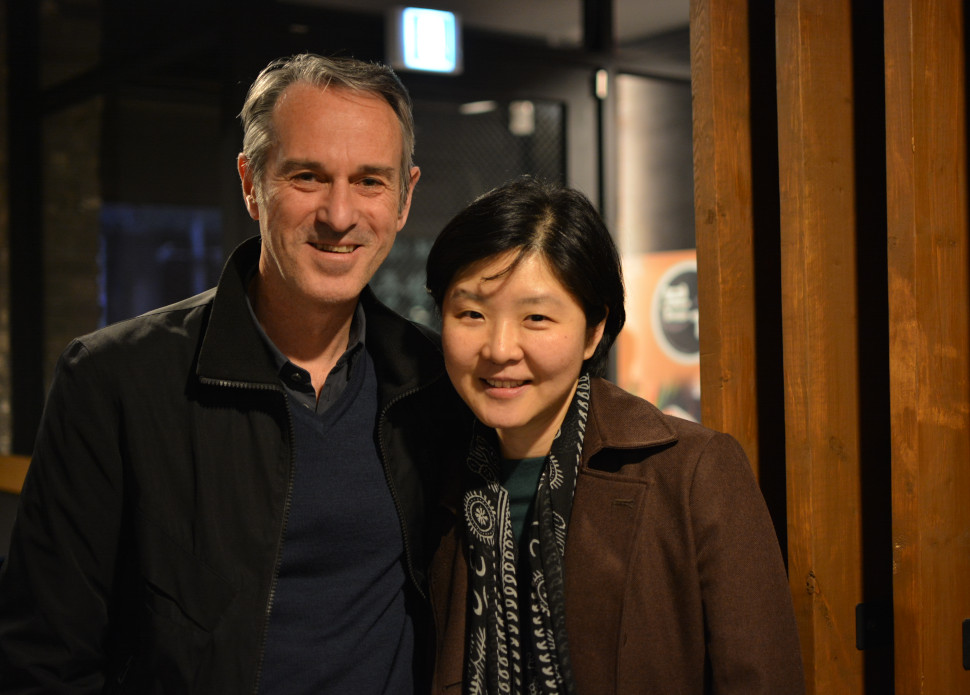
With Ivo van Hove
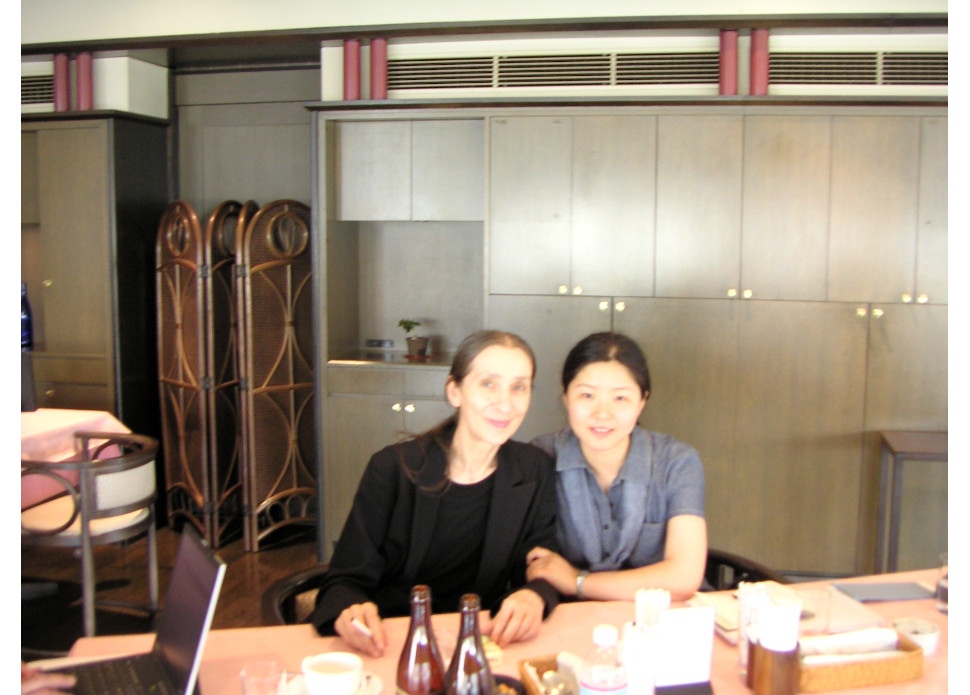
With Pina Bausch
As you know, the pandemic has been tough on all of us in the performing arts. Share with us what your greatest struggle at work was these past two years.
We cancelled all of our programmes except one as the theatre had to shut down in 2020. When the theatre opened temporarily in June, the only performance we brought was the concert presentation of The Tiger is Coming, performed by Korean folk music pop band LEENALCHI and Ambiguous Dance Company. The work helped promote the rhythm of Korea globally via YouTube after performing at LG Arts Center. Although they performed only a single piece of work at LG Arts Center, we were very proud that both companies received global spotlights after the performance.
While the theatre was closed, we launched the online streaming program CoMPAS Online (CoM ON) and offered free streaming of 16 shows online in collaboration with the performing arts companies from all over the world that has played at LG Arts Center, garnering 420,000 views in total. It was a chance to meet the audiences who hadn’t had a chance to visit LG Arts Center for many reasons. We struggled to turn apparent challenges and hardships into opportunities.
I’m sure many of us can’t wait to travel to South Korea once international travel becomes more stable. Tell us about one place we must go to when visiting Seoul and why!
Seoul is divided into a northern and a southern part by a huge river called the Han River, and almost every sub-basin turned into a public park area, providing excellent space for leisure and relaxation for its citizens. I strongly recommend you to witness the sunset of the Han River on a sunny day. You can properly enjoy Seoul when you sit on a lawn by the Han River with a beer or wine, and fried chicken at hand from a nearby convenience store. Furthermore, the old downtown in the northern area of the Han River is full of pretty cafes and restaurants filling every small alley, and many young people love to visit. Among them, a small town called Ikseon-dong is one of my favorite recommendations, where it has many interesting restaurants.
What are three things you must have on you when you go for a night out at the theatre?
Usually, I hurry out in the middle of working, so it would be a snack to nibble on (a banana or a chocolate bar), my glasses, and my phone.