
Five Minutes with Faith Tan
The AAPPAC Singapore 2022 Conference hosted by Esplanade – Theatres on the Bay will feature an exciting line-up of activities and speakers over three days in October. We caught up with Faith Tan, Head of Dance and International Development at Esplanade and Project Co-lead for the AAPPAC Conference to find out more!
Hi Faith! Tell us a little bit more about yourself and the work you do at Esplanade!
Faith: For the last 19 years I have dedicated my work to programming, producing and advocating the performing arts, especially in the field of dance, which includes commissioning choreographers and work from Asia. Working in the national arts centre Esplanade – Theatres on the Bay, I am part of a team which has built a strong calendar of diverse programmes from scratch and developed it over time to support artists, grow audiences and deepen appreciation for the performing arts. Beginning for example, when a large majority of audiences here were unfamiliar with contemporary dance in Singapore, to establishing programmes such as the Esplanade’s annual da:ns festival and series, which today has over 60,000 audiences a year. I am also responsible for programmes which support international development and partnerships, and this year we initiated a new Contemporary Performing Arts Research Residency which encourages inter/trans disciplinary research and collaborations, situated in Esplanade. In 2020 I spent a year in Finland, heading up Programme Development at the Helsinki Dance House (Tanssin talo), where we supported the commission and mentorship for 6 new productions by Finnish artists for the opening of the new house. I am also co-founder of a new network for dance Asian Network for Dance (AND+), and am co-leading the programming for AAPPAC’s 25th Conference this year in Esplanade, Singapore.

Faith Tan, Head of Dance and International Development at Esplanade – Theatres on the Bay
The conference theme for this year’s convening is FUTURE FORWARD – tell us a little bit more about the motivations and reasons behind this theme.
Faith: Most of the AAPPAC members attending the conference run performing arts venues and companies in the Asia Pacific which depend on live audiences and live experiences, and international travel. Thus all of the members have been impacted significantly from the last two years of the pandemic, and had to manage not only very immediate operational concerns, but also navigate financial consequences and think quickly on our feet to support new approaches to continue presenting the arts in spite of rollercoaster lock downs and restrictions. The intent of the AAPPAC Conferences has been an information network to effectively share best practices, technical expertise, and management skills amongst arts centres. This year’s conference will be the first physical gathering of AAPPAC in two years, and we thus wanted its theme to respond to current considerations and re-examine possibilities for the arts in these times, for us to share inspirations which can help us renew directions and planning, and find new ways to remain relevant and rooted in what matters amidst all these global challenges for the future.
It has been more than two years since our members have gathered in person and we can’t wait to find out what the Esplanade team has planned for the conference! Could you share a few highlights that we should look forward to in the programme?
Faith: I’m personally excited by the two keynote speeches from two strong female artists. Margaret Leng Tan is a leading figure in experimental music, regarded as one of the foremost interpreters of revolutionary American composer John Cage’s music since the 1980s. Shubigi Rao is an award-winning artist who most recently represented Singapore in the Venice Biennale. Her art, texts, films, and photographs reference current and historical flashpoints as perspectival shifts to examining contemporary crises of displacement, whether of people, languages, cultures, or knowledge systems.
We have asked both speakers to address what the role of the performing arts is in current times and what strategies & advice can be given for periods of uncertainty, change and transition? What are the most pressing issues and opportunities in performing arts? What are their predictions and wishes for the future for the performing arts?
Which artist do you most admire and why?
Faith: I am fortunate that as part of working in programming I regularly meet and work with many artists, as well as dramaturgs and artistic directors who have influenced me, so I would say I am constantly inspired by many diverse people. When I first began programming dance, two artists which caused a great shift in the way I understood dance were Jerome Bel (France) and Pichet Klunchun (Thailand). Bel’s work addressed and played with conventions of dance productions, confounded audiences expectations and created new ways to experience intimacy in dance. Klunchun’s work has consistently been innovating and expanding classical dance with contemporary practices. Recently he’s been experimenting with VR and bio arts, and I’m looking forward to his sharing as one of the speakers in the AAPPAC Conference panel on interdisciplinary practices.
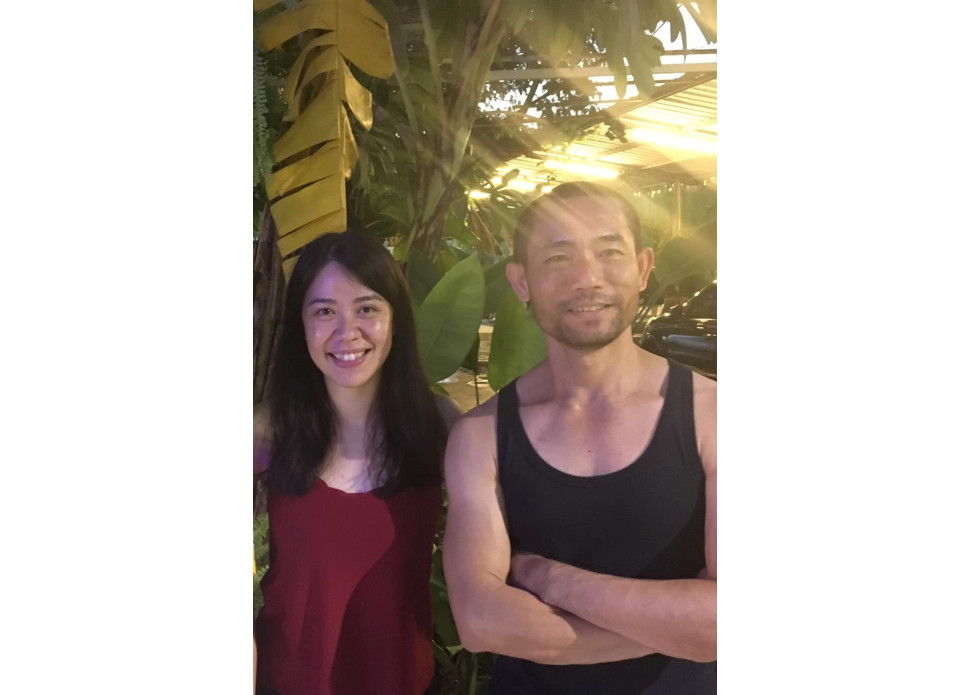
Faith Tan and Pichet Klunchun