
Five Minutes with Khushroo N Suntook
Get to know Mr. Khushroo N Suntook – Chairman of the National Centre for the Performing Arts (NCPA), Mumbai and Co-Founder of Symphony Orchestra of India (SOI).
NCPA Mumbai just turned 50 last year! Congratulations on this significant milestone. What do you think is the centre’s biggest achievement since its inauguration in 1969?
The NCPA is the culmination of the vision of its founder, Dr Jamshed Bhabha, a senior Director of the Tata Group of Companies, who established a cultural centre for promoting and nurturing the finest performing arts in South Asia. Over the years, five theatres, two major and three smaller, were built on land reclaimed over eight years, from the Arabian Sea.
When in 2000 I was asked by Dr Bhabha to join his prestigious Governing Council, I focused on introducing modern management techniques and practices and tackling the low occupancy of the theatres. The NCPA was and is privately funded.
Since my youth, my interest in music, especially Western classical, made me regret the lack of musicians who could provide the eager and music-loving people of Mumbai with a professional body of musicians that could fill this need. Certainly, there were several great musicians and orchestras that stopped in Mumbai on the way to the Far East: the Vienna Philharmonic with Herbert von Karajan, Minneapolis Symphony with Antal Doráti, London Symphony with Sir Colin Davis, London Philharmonic with Sir Malcolm Sargent, Czech Philharmonic, Los Angeles Philharmonic several times with Zubin Mehta, and recitals by Arthur Rubinstein, Rudolf Serkin, Isaac Stern, Benjamin Britten with Peter Pears and many more.
For classical Indian music, most of our great masters considered performing at the NCPA a major accomplishment — Ravi Shankar, Kishori Amonkar, Zakir Hussain, Girija Devi — and among dancers, Mrinalini Sarabhai, Aditi Mangaldas, Birju Maharaj, Malavika Sarukkai and so very many more. But they were not all nurtured by us.
While passing a prestigious concert hall in London, I believe in 2003 or 2004, I saw an attractive poster with young musicians and a young Marat Bisengaliev standing at the centre, all very smart. So, we went, and I was most impressed at their level of playing. My companion insisted we meet and invite them to Mumbai, and they came as a string ensemble and charmed our audiences. They were young, fresh, played with impressive technique and musicianship and were re-invited twice before I broached the topic of considering forming a locally based orchestra, but we had to settle a sensitive point. We must have Indian players in the orchestra. Marat agreed on one condition — they must pass his strict audition. Well, after about 10 years, 15 per cent are Indian, but the SOI Music Academy, which he established based on the Russian method, now trains over 50 students and about 10 young players who play with the SOI. And his pupils already play together at a good level in the SOI Academy Orchestra.
We have 20 top-class international and veteran Indian players carefully chosen by Marat who are resident and form an important part of the SOI. They are now the chamber orchestra in residence and teach at the Academy, all located in the NCPA and during the lockdown, continued teaching digitally when they could not assemble at the NCPA.
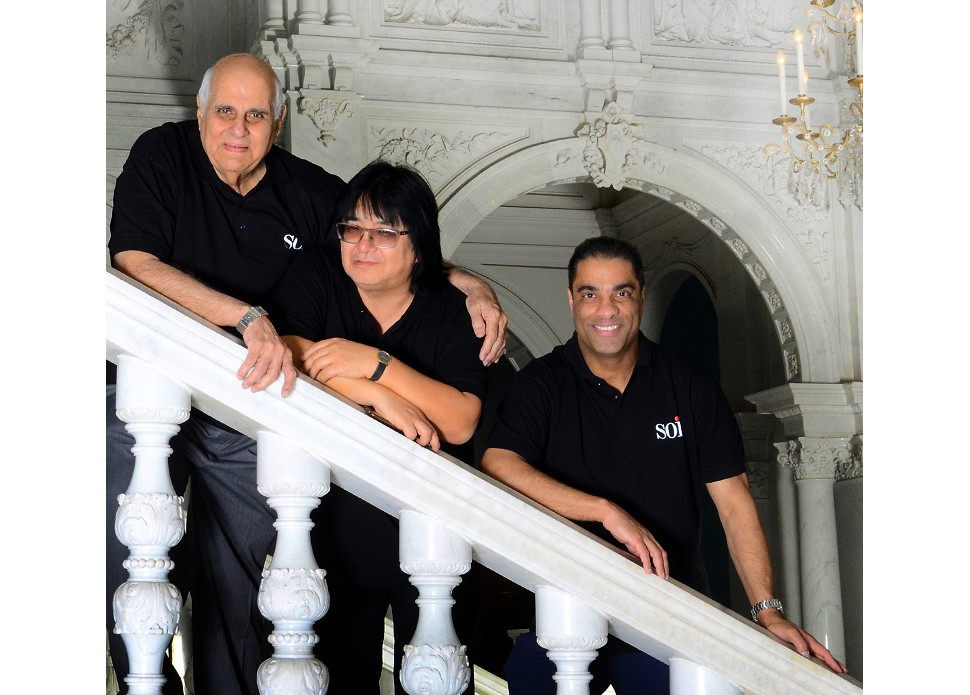
L to R Khushroo N Suntook, Chairman, NCPA, Marat Bisengaliev, Music Director, SOI, Zane Dalal, Associate Music Director, SOI
You co-founded India’s first and only Symphony Orchestra in 2006, together violin virtuoso Marat Bisengaliev. What was your fondest memory of that incredible journey?
Not a single only highlight comes to mind, but I would mention the recent La bohème, the Verdi Requiem, the Dutoit concerts, recitals by Maria João Pires, the tours of Switzerland and the UK and several others. Our Beethoven 9th in Moscow certainly is a fond memory as is Marat playing great concerti, and Zakir Hussain and Zane Dalal in concert. We have a wonderful team — what a joy they are.
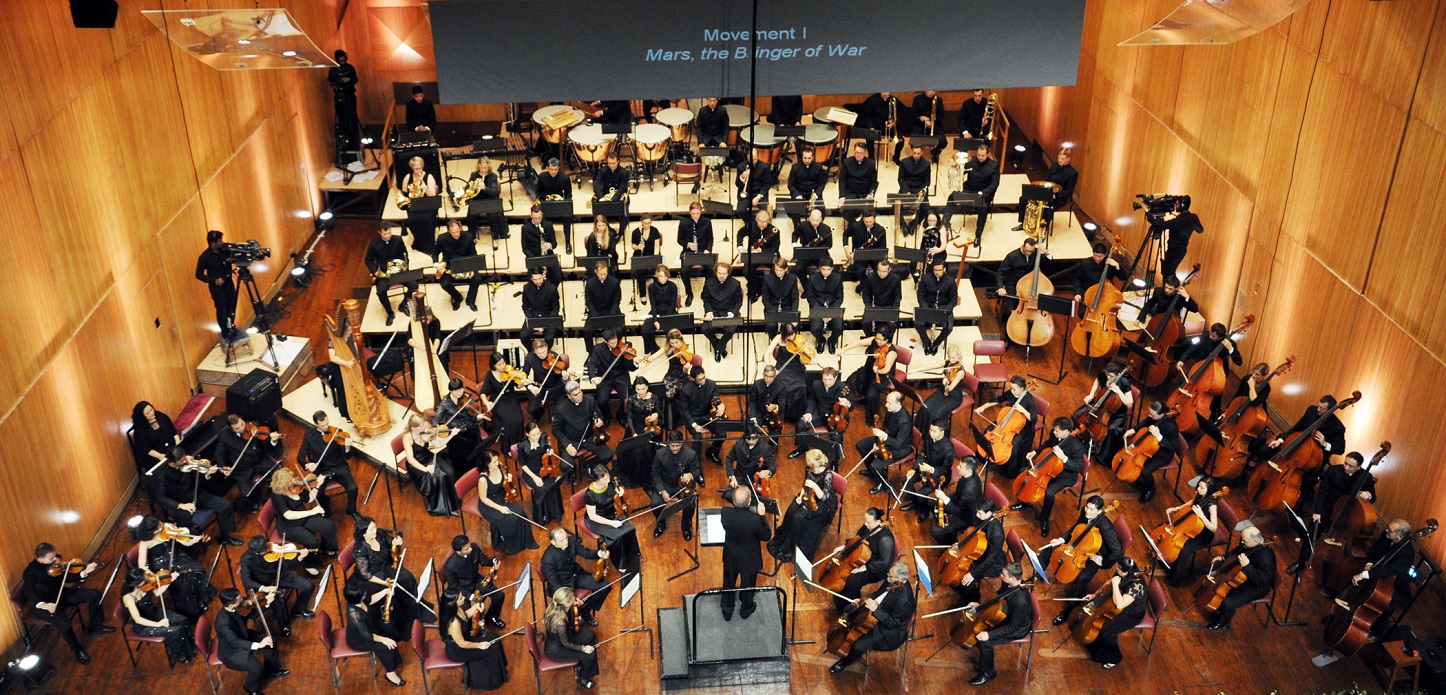
Symphony Orchestra Of India 10th Anniversary Season Conducted by Martyn Brabbins and Kristof Barati (Violin) perform at Jamshed Bhabha Theatre, NCPA (Photo by NARENDRA DANGIYA)
What do you find the most unique about South Asian arts and what do you think is its role in modern society?
The defining feature of the cultural aspects of India/Indian subcontinent (including present-day India, Pakistan, Bangladesh, Afghanistan, Tibet, Nepal and Bhutan) is unity in diversity. Each sub-region/state is distinct not only ethnically, geologically and biodiversity-wise, but also in terms of cultural aspects such as language, food habits, dress, belief systems and other social norms. Diversity seen in artistic traditions is an important facet of this feature. Therefore, it is said that politically India is a sovereign nation but culturally, it is a federation.
Referring to the arts in particular, Indian philosophy has, since ancient times, recognised the interdependence of various arts, visual as well as performing, appreciating the underlying aesthetics representative of the cultural unity amongst the stupendous diversity.
Musically speaking, it is perhaps the most musical and musically diverse region in the world. The extraordinary variety of musical types is probably unparalleled in any other part of the world. Besides a plethora of regional traditions, there are two well-recognised art (often erroneously referred to as classical) music traditions, which trace back their origin to Vedic times (1500 – 900 BC). These are identified as North Indian (Hindustani) and South Indian (Carnatic) traditions. Additionally, with various other types like light, devotional, folk and modern, music has a vital role in the religious, social and artistic lives of people. Despite supremacy accorded to voice and vocal music, there is also an abundance of musical instruments, thus further adding to the diversity.
It is this diversity that has sustained the artistic traditions for over three millennia and more. It seems to be the binding force that has, over many centuries, accommodated communities, which may be dissimilar in many respects and otherwise stand the risk of being divided. This philosophy of seeking to unite despite the diversity, as exemplified in Indian music and Indian arts, can bring about peace and harmony to communities, especially in today’s difficult times.
We hear you are pretty well known in the record collecting world! If you could only possess one vinyl record, which would it be and why?
It is a passion I inherited from listening to the family collection of 78 rpm records of vocal giants, singing opera, lieder, wonderful volkslied, and recordings of great personalities conducting and playing.
As we graduated to LPs and then CDs, etc., I found that the most perfect musical sound, the human voice, was least affected by the change in media. An original 1906 Caruso record properly reproduced sounds as good as a modern rendering, technically for the timbre and quality of the voice, except of course for the orchestral accompaniment. These wonderful old vocals from the turn of the century till LPs have been an obsession with myself, and with so many collector friends that not only has it been a great bonding experience, but also has resulted in lifelong friendships.
One of my closest friends, Mr Vivian Liff, just passed away in the Isle of Man last week and as a friend and benefactor, not only enriched my knowledge and collection but also donated 11,000 LPs and 6,000 books in 2015, and now in his will, 12,000 CDs to the NCPA.
Sadly, rich collectors like Paul Getty, The Earl of Harewood, etc., have now passed on and their heirs do not have much interest. However, there exists a valiant group of collectors, like my friends Larry Lustig who runs the great magazine the Record Collector and is also the inspiration behind the charming Vocal Record Collectors Society, Michael Henstock, who is an absolute perfectionist in his meticulously researched books and articles, and Alan Bilgora, a fund of information.
Since reproduction on much cheaper medium is now possible, the originals are no longer as valuable as they were. Imitation jewellery! Remember how labels were most artistically designed. They were the playthings of royalty. Indeed, there is a wonderful room in Warwick Castle reproduced by Tussaud’s where an aging Queen Victoria, the great composer Paolo Tosti, the Queen of Song Adelina Patti are seated most realistically while music plays. Ah, bliss.
One record I would love to possess — The Legendary Jean de Reszke Fonotipia. Nobody has really seen it.
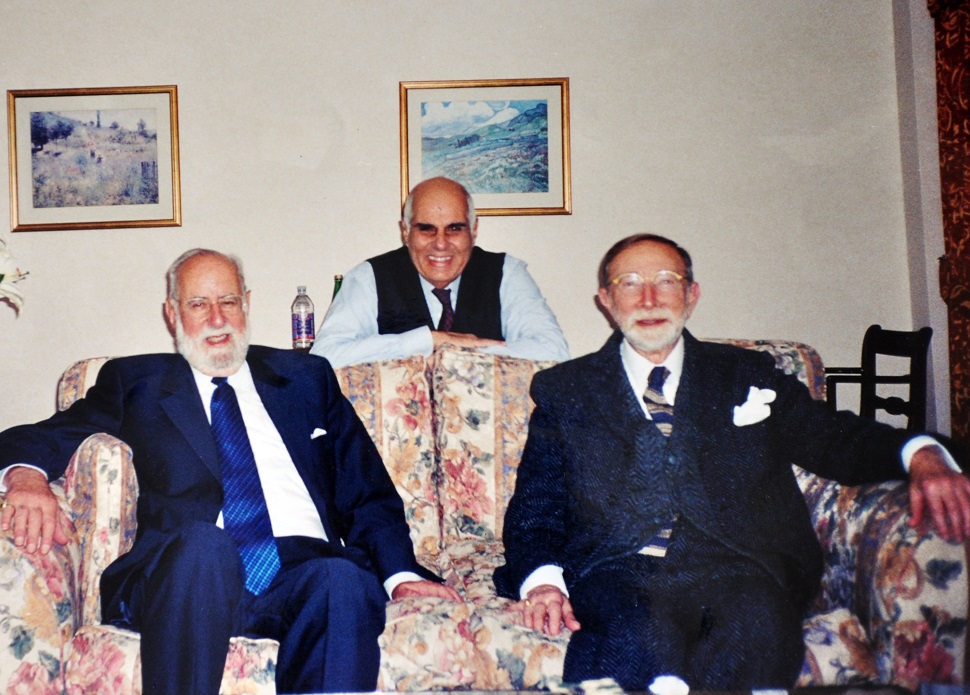
Khushroo N Suntook with George Stuart (left) and Vivian Liff
Back to News