
Arts Education & A New Museum Launch at CCP
Because Art Matters to CCP Arts Education
The COVID-19 Pandemic greatly challenged the performing arts industry all over the world with the closure of many performance and arts training venues. But the Cultural Center of the Philippines’ (CCP) Arts Education Department (AED) capitalised on the work from home and quarantine with the belief that art continues to matter during these times.
The Ramon Obusan Folkloric Group (ROFG), a resident company of the CCP in partnership with the CCP Arts Education identified to focus and redirect its effort to utilise the unrecognised strength and untapped assets of the company – the vast collection of research, production, and artifacts of the National Artists for Dance Ramon Obusan. All the legacies left by Ramon Obusan will be available as digital content for audiences to appreciate through the online platform Tatak ROFG.
The AED’s Cultural Management Division in its effort to contribute to the inclusive growth, the promotion of values for the common good, creative excellence and a globally competitive creative industry will be doing capability building webinars and online arts management workshops. The webinars and online workshops will be designed for the arts managers, cultural workers and the arts organisations. These offerings will be recorded in order to form part of the digital content and online resource material for audiences to appreciate.
The AED’s Audience Development Division will continue nurturing the next generation of audiences, aspiring artists, and teachers, through workshops, arts appreciation activities and online education resources. The division will implement and migrate its programmes virtually, covering the artistic calendar from April to June of this year.
SiningsaEskwela, one of its continuing programmes for the arts training of teachers in the arts, aims to offer workshops that would address the needs for the enhancement of skills and pedagogical knowledge, specifically amongst the teachers instructing elementary levels.
Following the impact and success of the Division’s virtual presence in last year’s online content, the Arts Online programme will continue reaching out to students and teachers nationwide in providing free access to learning resources for arts education.
The AED’s Artist Training Division in its aim to nurture the next generation of artists, will continue to conduct its programmes online. In June, the Division will be mounting the Virgin Labfest Writing Fellowship Programme, a two-week intensive for young aspiring playwrights on the study and practice of dramatic writing for the stage.
As part of its ongoing efforts to arrest the probable deterioration of skills, techniques and performance excellence of artists, the Division organised the CCP Professional Dance Support Programme. The programme provides training, masterclasses and performance opportunities to displaced professional ballet dancers. Among its objectives is to keep these talented dancers in shape and, provide them with continued artistic employment in time for the opening of the theatres.
The new normal may present many uncertainties. But CCP, through arts education, seeks to continue to evolve the arts with technology, heritage, and artistry.
–
21AM: a new museum launching at the Cultural Center of the Philippines
In early 2021, the museum 21AM opens and commences work as conceptualised for the Cultural Center of the Philippines (CCP): as an entity absorbed into the nature of cyberspace.
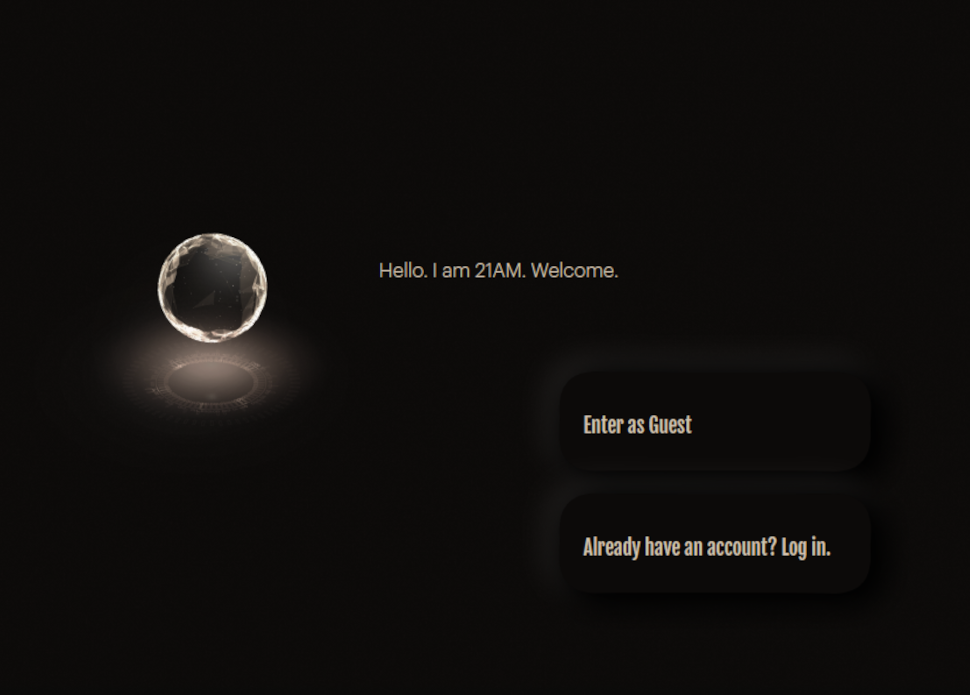
21AM landing page
The CCP staged its 50th anniversary in 2019 with a year-long roll-out of momentous performances and visual arts events. During the subsequent pandemic year, 2020, the CCP took the hiatus to further develop another anniversary project planned as early as 2018.
21AM — a 21st century contemporary art museum — is established to realise a curatorial brief for the CCP to both follow and lead artists and their public in the presumably dangerous, likely provocative, but potentially clarifying engagements inside the digital space.
The new museum has a particularly Filipino compass. Contemporary Art has been an animated field of cultural production in the Philippines’ archipelagic urban centres during the same half century that the CCP has existed. Recognised as the institution that seeded the mid-20th century Philippine visual arts and performative avant-garde, the CCP has maintained its spirit of collaboration with Filipino artists rethinking art.
21AM is therefore pitched to the future by a CCP that is institutionally cognizant of its history. That history is also widely known for its multiply-faceted past, including the circumstances of its birth within Cold War politics — which has since been, and continues to be, analysed and metamorphosed by artists. The new museum is expected to pursue this complex criticality, at this time within the deterriorialised “space” of cyberspace.
The establishment of 21AM museum is conceptualised, curated, and guided by Marian Pastor Roces in close collaboration with the Visual Arts and Museum Division, the Production and Exhibition Department, and CCP Vice President and Artistic Director, Chris Millado.
Roces, institutional critic and independent curator, with her team from the corporation TAOINC, developed the philosophical and administrative infrastructure for 21AM. Among the earliest tasks that Roces, TAOINC, and CCP attended to was the demounting of the Museo ng Kalinangang Pilipino, established in 1987, to mark the emergence of 21AM in its stead. Roces also curated the establishment of this 1987 museum at the CCP.
Presiding over its closure after 32 years, Roces incorporated two rituals involving communities that were literally and symbolically the original owners of materials exhibited, in the dismantling process. A small hog was sacrificed at the 4th floor premises, its liver divined, and supplications uttered by a ritualist who was the son of the individual who performed the rites in 1987, as they installed their pinaing, village guardian rocks, in the Itneg exhibit. Without a similar sacrifice, Islamic-animist were intoned over Sama gravemarkers before these were demounted.
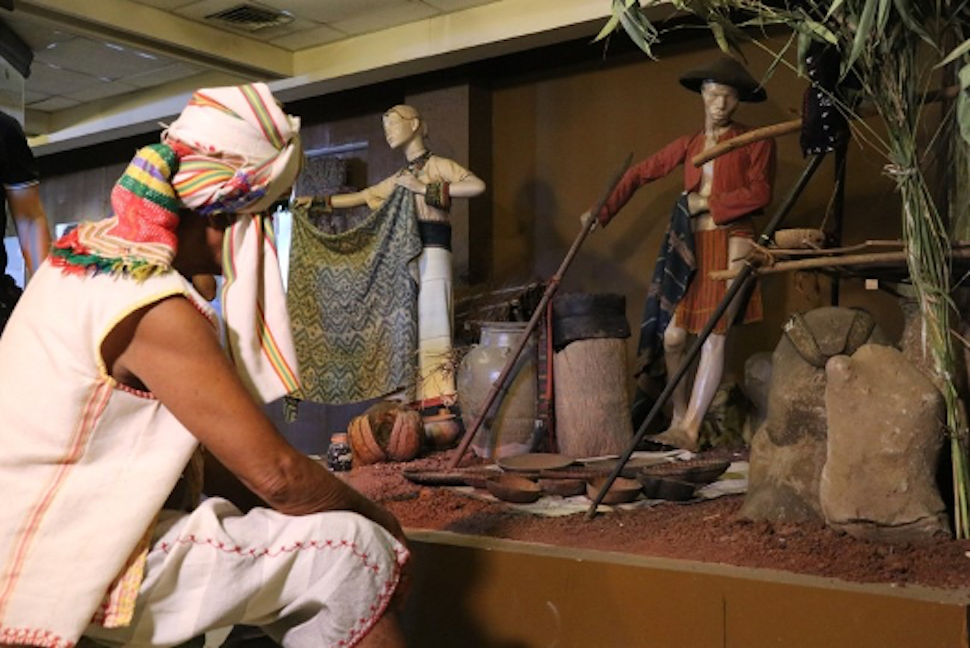
For the pinaing, the son of the ritualist who prayed over the transfer of the materials in 1987, was the central participant. Photo by CCP Corporate Communications Division.
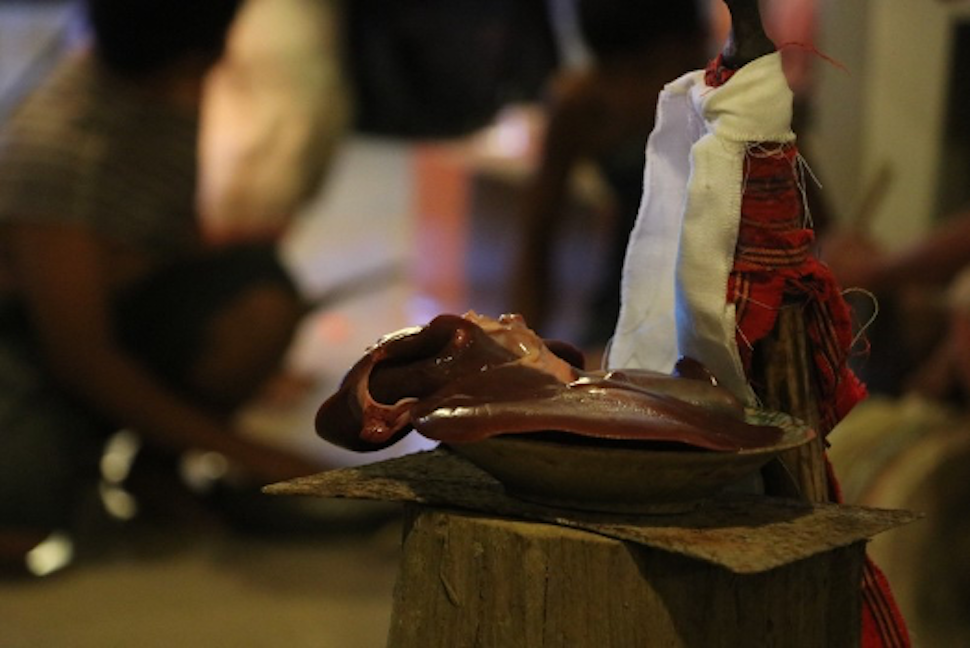
Photo by CCP Corporate Communications Division.
The collection of the now closed museum is part of the massive CCP Collection of Modern, Contemporary, ethnomusicological, and ethnographic art — acquired variously since 1969. 21AM consolidates this Collection in a new Accession Record System, custom-designed by TAOINC, which will universally be accessible through the 21AM site.
Custom-designing a museum record system is a pivotal shift in Philippine museology, in that the colonial period hierarchies embedded in the organisation of knowledge in the internal structures of museums have been modified to reflect the implications of postcolonial and postmodern studies. The CCP hopes that this system can be a contribution to global museology.
The exhibitions in 21AM will begin with its 2021 launch. The selected artists signal the new museum’s intention to interrogate digital media and its structures for organising knowledge, in relation to social forces abroad in the early 21st century. Artists are encouraged to engage in conversations with the CCP Collection, the CCP’s history, and those global forces.
For more information about 21AM, contact the CCP Visual Arts and Museum Division at vamd@culturalcenter.gov.ph and follow @ccpvamd on Facebook, Twitter and Instagram.
Back to News