
Five Minutes with Low Sze Wee (Singapore Chinese Cultural Centre)
We took time to get to know Low Sze Wee, CEO of Singapore Chinese Cultural Centre (SCCC), and hear what the centre has in store for us during the AAPPAC Conference this year!
Congratulations on SCCC’s 5th Year Anniversary! We’re really excited to be able to visit the centre this year during the AAPPAC Conference. Tell us a little bit about what our members can expect as first time visitors to the centre.
We are excited to host the AAPPAC members at our Centre too! Our centre aims to showcase what is special or distinctive about the Chinese culture in Singapore that makes us different from other Chinese communities around the world. We have a permanent exhibition in the Centre titled SINGAPO人: Discovering Chinese Singaporean Culture, which highlights the distinctiveness of our Chinese Singaporean identity through food, language and festivals. By presenting these aspects of daily life, we hope to throw light on how Chinese heritage, cultural interactions and public policies have shaped the Chinese community in Singapore over time.
We designed the exhibition to be highly interactive, where visitors may play games, watch videos and answer fun quizzes. Our free exhibition, which opened since 2020, has welcomed about 70,000 visitors to date. In addition, to welcome the Year of the Tiger, we invited contemporary art collective Vertical Submarine to create an art installation for our Centre’s public spaces and façade. The installation Funderland, based on a popular Chinese nursery rhyme and folktale, brings visitors on a journey to discover “tigers” hidden throughout our building.
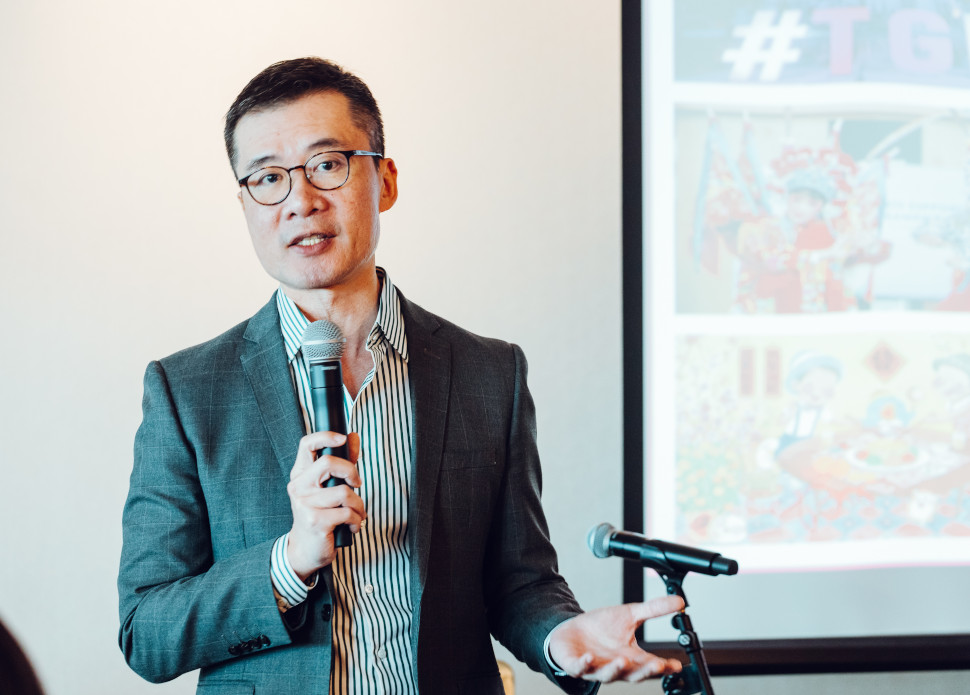
Image Courtesy of Singapore Chinese Cultural Centre
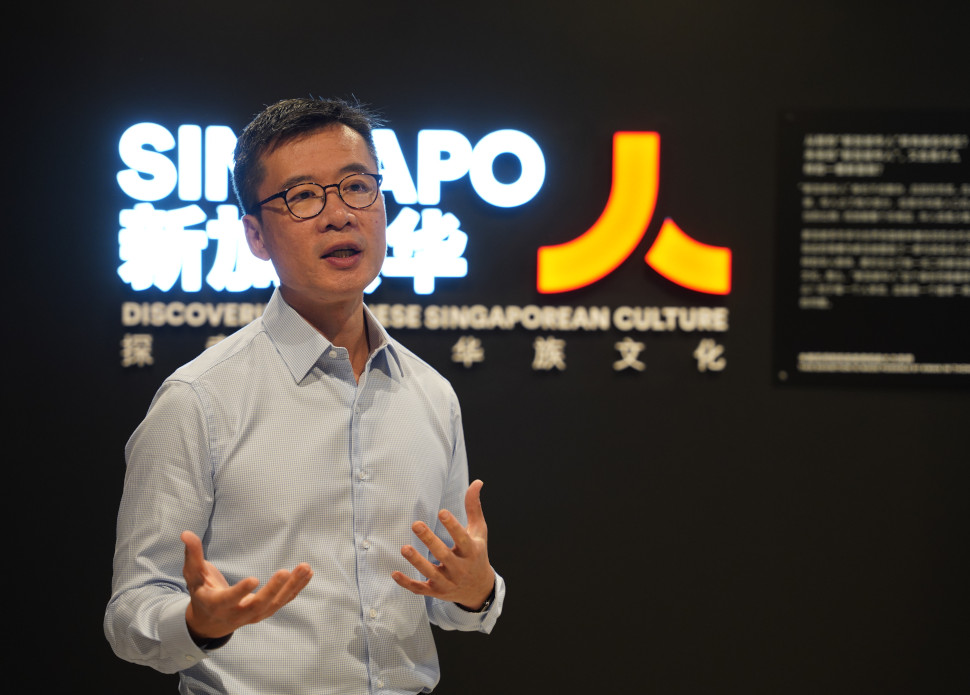
Image Courtesy of Singapore Chinese Cultural Centre
Could you share with us your fondest memory with the centre?
Some of my fondest memories are linked to how we made unconventional and imaginative use of our Centre’s spaces. For instance, in a recent commission, a local theatrical group took the unusual step of placing the audience on stage, and incorporated the vacant auditorium seats into their performance! That created a memorable experience for many, and it was judged as the best production of the year by a local newspaper.
In addition, due to the pandemic last year, we decided to convert our under-utilised carpark into a drive-through art exhibition space. We invited young local artists to create art installations with augmented reality effects and provided visitors with a guided drive-through experience using electric vehicles. This proved to be one of our programming highlights for 2021!
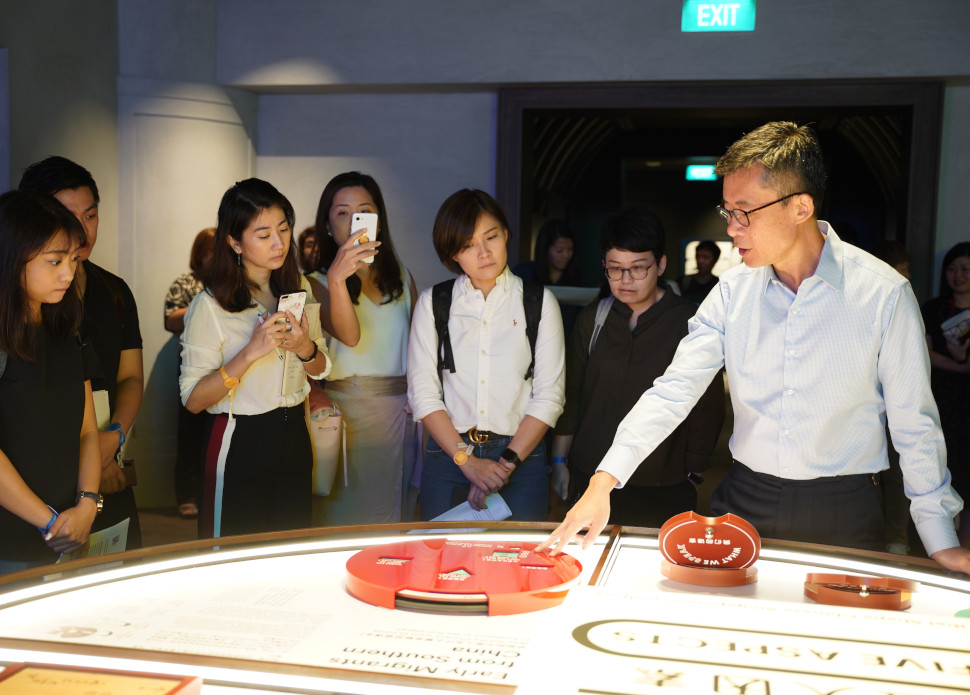
Image Courtesy of Singapore Chinese Cultural Centre
The past two years have been transformative for many arts organisations globally – what were some new practices, technologies, or learning lessons that SCCC would carry forward into its post-pandemic future?
In a way, COVID19 turned out to be a blessing in disguise for us. It gave us the much needed time and bandwidth to embark on creating digital content. As a result, our team gained the confidence and expertise in producing such content. At the same time, we managed to reach a much wider audience via online channels. Apart from livestreams on social media platforms like Facebook and TikTok, we also explored different formats such as infotainment videos, animations, radio plays and podcasts.
The pandemic has compelled us to be more resourceful and adaptable. We realised that the same content can and should be repackaged in different ways to reach out to different audience segments. For instance, a physical concert can have a video-on-demand version. Likewise, the content for a video series can be converted into a travelling exhibition. In this way, the use of scarce resources can be optimised and the lifespan of original content can be extended.
Singapore is known to be a melting pot of cultures – what do you think is the role of a centre like SCCC within such a culturally diverse and multi-racial community?
Through our programmes and promotions, we hope to highlight that multi-culturalism is a key reason why the Chinese culture and community in Singapore has evolved in such distinctive ways. Hence, we actively encourage and commission programmes that have cross-cultural components. For instance, our past commissions include a musical which combined traditional Chinese nanyin music with Malay songs and dance; as well as a performance which combined Indian bharathanatyam dance with Chinese ruan music.
Such works best exemplify the multi-cultural aspect of our local identity.
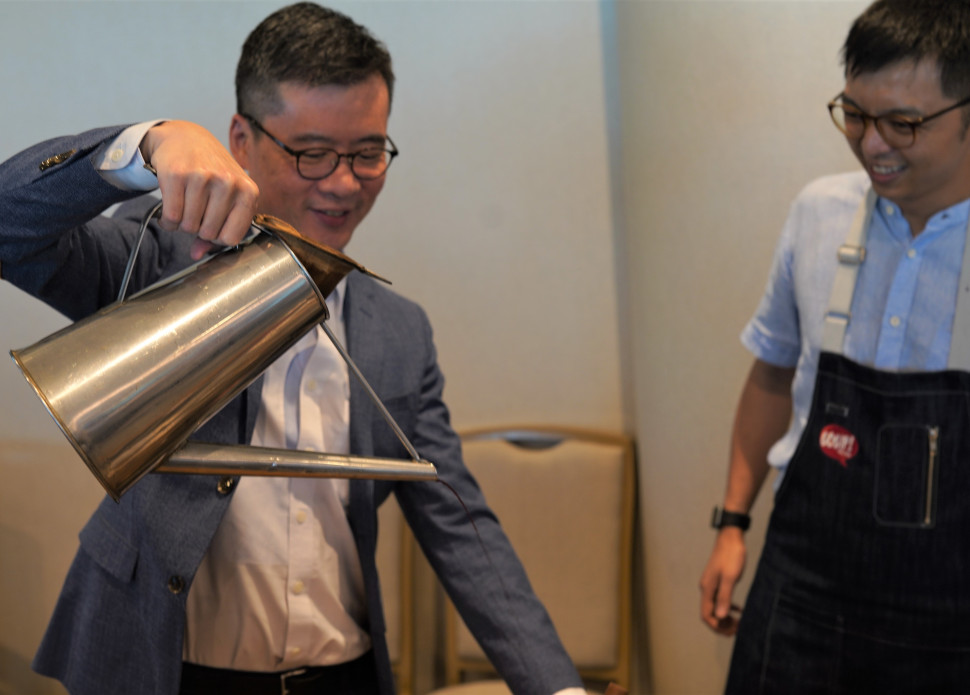
Image Courtesy of Singapore Chinese Cultural Centre
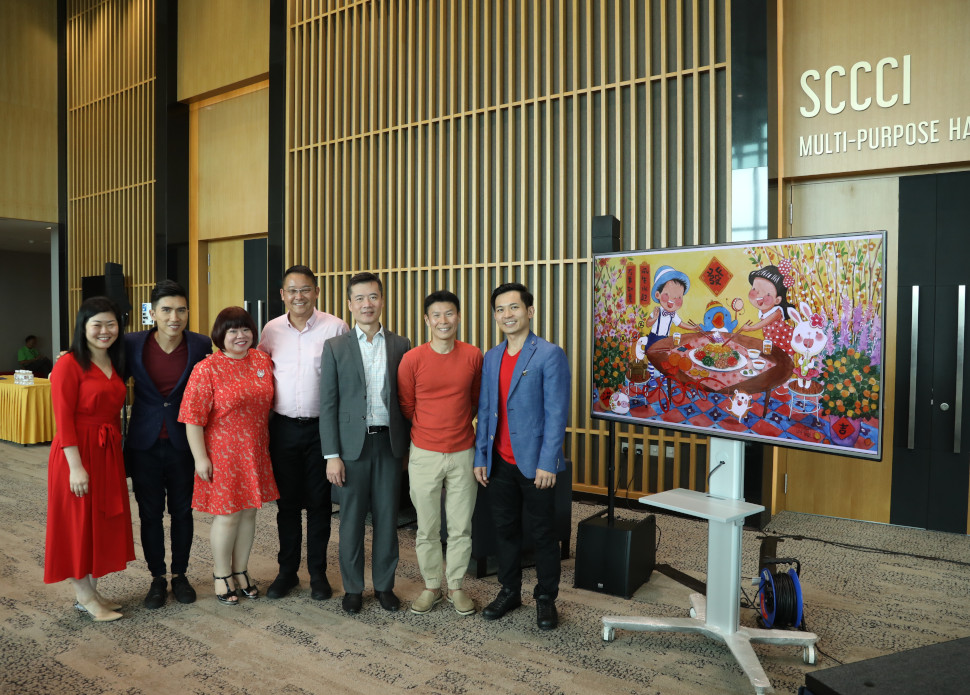
Image Courtesy of Singapore Chinese Cultural Centre
Singapore is famous for its hawker food – what’s your favourite and why?
I love satay – which is skewers of marinated meat barbecued over a charcoal fire and eaten with a spicy peanut and pineapple dipping sauce. I love the combination of succulent meats, smoky flavours and crunchy peanuts. This is best eaten outdoors at night over a cold beer with friends!
Can you still remember your very first encounter with the arts? If so, could you share that memory with us?
I have always enjoyed drawing since I was a young boy. My parents encouraged this interest by sending me for art classes and my interest soon extended to trying different media such as ceramics, watercolours and even Chinese calligraphy and painting. Although I did not eventually become a professional artist, I still ended up in the visual arts sector when I started work as a curator at a local art museum. Since then, I have always worked in the cultural sector, where I enjoy sharing my passion for the arts with the public.