
Composer Paul Dean unveils his new Concerto for Horn and Orchestra at Adelaide Symphony Orchestra (ASO)’s Symphony Series 6: Tragedy to Triumph
We sat down with two incredible creatives to talk about how the creation of new work, Composer and Clarinettist Paul Dean and Adelaide’s own Andrew Bain, Principal Horn of the Los Angeles Philharmonic who takes on the task of bringing Deans’ new work to life.
Andrew Bain Principal Horn for the Los Angeles Philharmonic returns home to Adelaide to perform the World Premiere of Paul Dean’s ASO commission and World Premiere Concerto for Horn and Orchestra at Symphony Series 6: Affirmation, 12 & 13 August, Adelaide Town Hall.
Q & A with Paul Dean
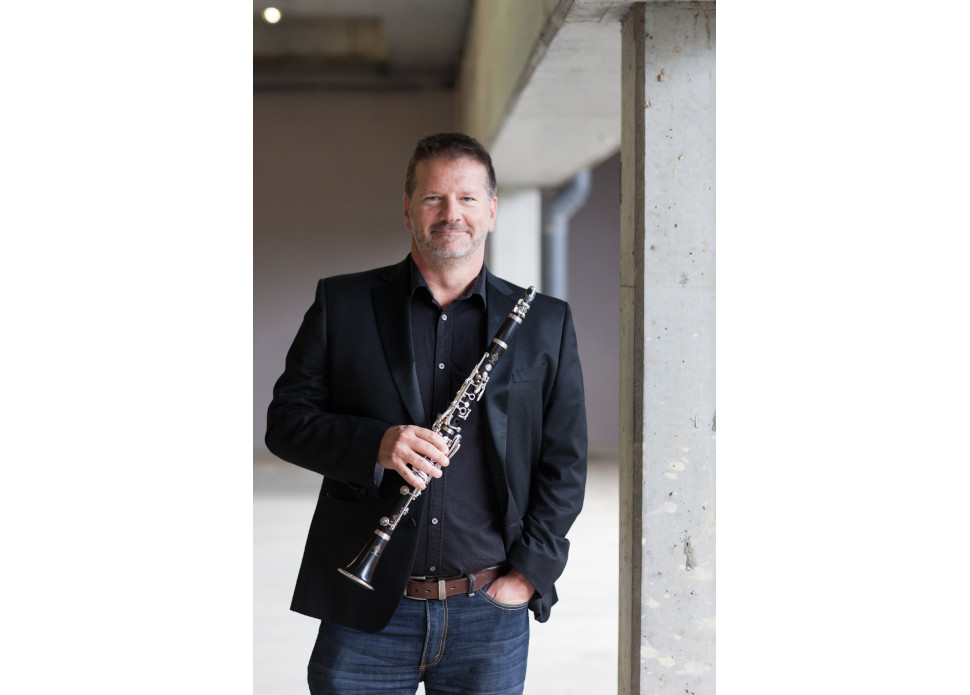
Paul Dean
You are regarded as one of Australia’s foremost musicians in multiple capacities as soloist, chamber musician, composer and artistic director. Which discipline brings you the greatest joy and why?
I get great joy from all the things I do in my life now I have to say. Probably the thing that makes me smile and get energised the most is my role as conductor of the QYO No 2…They are aged between about 10 and 19 and they are just beginning their journey in music and it is so special to be able to introduce them to some incredible music.
What drew you to classical composition?
I have been composing music since I was very young…and certainly dreamed of writing music. The lives of the great composers were very large in the mindset of our household and it seemed that to be a success in life when I was 15, there were two choices. Centre Half forward for Carlton or someone who wrote symphonies and concertos.
Your elder brother Brett has become one of the most celebrated composers of his generation, with your career hot on his heels. Growing up, what led the two of you to have careers in music?
Brett and I were lucky to grow up in a house where the record player was more important than the telly. Our mother was a very keen amateur singer and dad’s love of Mendelssohn, Tchaikowsky and Beethoven was incredibly infectious. On top of that, our grandmothers were both respected and successful musicians in Brisbane between the two world wars and two of our great grandfathers were respected band leaders in Birmingham. Seems like we couldn’t miss the bug really doesn’t it?
Is there any sibling rivalry between the two of you?
I don’t feel jealous of Brett in any way at all. His Hamlet has to be the greatest piece ever written by an Australian composer. I think the world is big enough for lots of composers so to be in rivalry with one’s brother seems like a massive waste of energy. And besides…our music is vastly different.
You have had an illustrious career having performed, recorded and composed with some of the world’s finest musicians, describe what you believe has been your greatest achievement?
Of course my real answer is that the next piece I write will be my greatest achievement. I am very proud of some of my pieces. My Symphony for the AWO last year had some of my best music in it, and my violin concerto for Jack Liebeck and the MSO was also something I felt proud of at the time. The piece I am most attached to is my concerto for cello and wind quintet as it was written for my wife and our close colleagues in Ensemble Q…that piece will always have a special place in my heart. In terms of playing, I will never forget playing the Weber Clarinet Concerto at the Gasteig – the home of the Munich Philharmonic with the Bavarian Youth Orchestra. And the success of Ensemble Q is a constant source of pride and inspiration to me. Every time we play together is such a wonderful experience. The Covid experience has made me appreciate being on stage a lot more.
Tell us about your Concerto for Horn and Orchestra? What inspired you to write the new work and what can audiences expect to hear?
Obviously the playing of Andrew Bain is inspiration enough to get going with. I have known Andrew for many years and of course, will always be in awe of his skill on the horn. But the horn concerto had two main external inspirations. I wrote the piece during the Black Summer bushfires and I think it is impossible to separate that event from writing this piece. In fact the last movement is based on the unstoppable march forward of a colossal firestorm, and the helplessness of man to be able to hold back nature at its most furious. Also, while I was writing the piece, the greatest Australian horn player ever, Barry Tuckwell died. I was writing the slow movement at the time so it became an elegy in his memory. The audience can expect to hear incredible gymnastics and brilliance from Andrew, and hopefully lots of in-depth colours and conversations going on beneath and alongside him from the fabulous players of the ASO.
Your father inspired your love of music and how it was ok to be emotional with music. What emotions are you wanting to evoke when audiences hear the concerto?
When it comes to the last movement I guess it is to be frightened by the oncoming firestorm. Perhaps some sadness and pride in the slow movement as we remember our great horn virtuoso, Barry. My main aim is to cover a wide range of emotions and colours to keep the players and audience engaged from beginning to end.
Have you given the concerto a title?
Concerto for Horn and Orchestra…pure and simple.
Have you spoken to LA Philharmonic Principal Horn Andrew Bain who takes on the responsibility for bringing your new work to life? Was it a collaborative process?
I have spoken to Andrew a lot throughout the process…and every time the Lions play the Power. As collaborative as it can be when we live so far away from each other.
Tell us about the composition process and how the work has evolved over time (the piece was originally scheduled for release in 2020 before Covid wreaked havoc)?
This is a strange thing…I wrote the piece in the summer of 2019. Got halfway through the parts before the world stopped for Covid. And forgot everything about it as I wrote my symphony, and several chamber works…and dealt with the locked down world of a musician…Then a message came from Simon Lord at the end of 2021 to get the score to the conductor…so I had to find the file and also find the latest version. (my filing system isn’t what it could be) Then I had to set about making it conductor friendly…that is when my composer mate James Ledger came in…he was completely disgusted by the mistakes in my score and basically gave me the rounds of the kitchen until I sorted it out. I fear I found the next to last version. However, now it is in prime condition…HAHA!
Will we find you in the audience for the World Premiere performance?
Not sure but I suspect I will be in the bar before the concert and at interval! Premieres do terrible things to the nervous system!
How do you feel on the night knowing that your work will be critiqued?
It’s odd…sometimes when I hear a piece in concert I hear so many things that I hadn’t heard in rehearsal. And sometimes, particularly since I wrote this piece a few years ago…I will ask myself…did I write that really? (sometimes in a good way and sometimes not!)