
Five Minutes with Kim Deok-kyu (President of Daejeon Arts Center)
We took the time this quarter to get to know Kim Deok-kyu, newly appointed President of Daejeon Arts Center! Find out more about her appointment here.
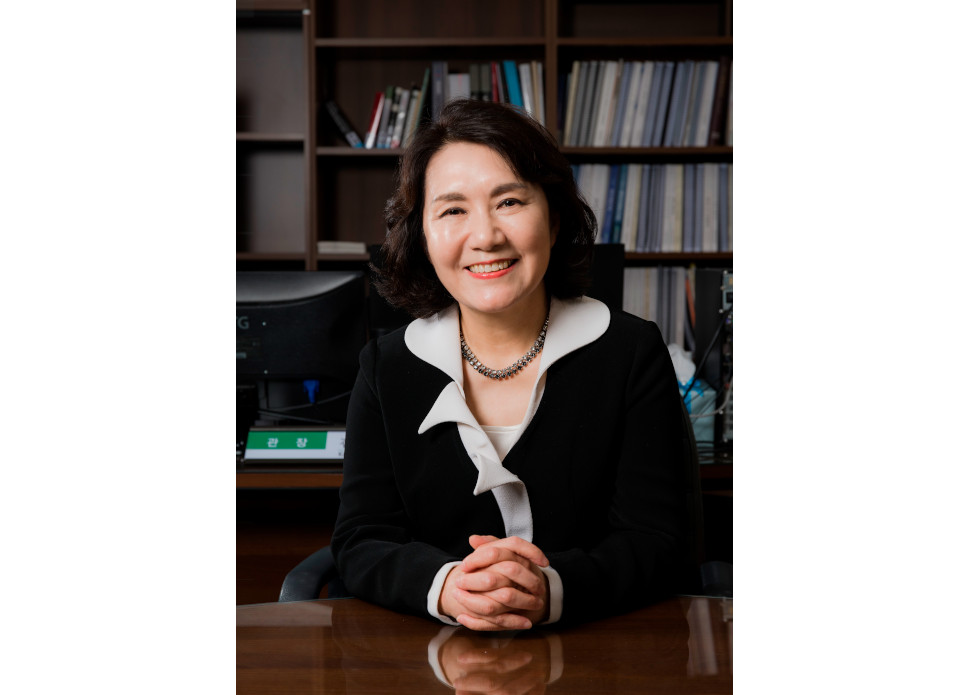
President Kim Deok-kyu (Photo by Daejeon Arts Center)
Congratulations on your appointment as President of Daejeon Arts Center! Can you share with us what you are looking forward to the most in this new role?
I think the most important part of this role is to support the development and branding of new cultural and artistic content unique to Daejeon. Art is a unique blend of literature, emotions, imagination, and technology. We are living in an era of digital revolution, but this is not something limited to the domain of science and technology. New paradigms also need to be adopted in the field of art. Boundaries that traditionally separated genres are being whittled down with the convergence of technology and cultural phenomena, and the general public can engage in the arts like never before thanks to the rise of new forms of media. The continuous evolution of the market has brought with it an era of limitless global competition between creators. Daejeon Arts Center will also need to play a role in embracing traditional values and creating new future values.
The AAPPAC Conference in 2013 was held in Daejeon Arts Center, more than 10 years ago! What were some major changes or breakthroughs that the centre has experienced in these past few years?
Over the past few years, much has taken place at Daejeon Arts Center. For example, we have planned seasonal performance programmes, launched marketing campaigns to attract a wider audience pool, established an online system so that audience members can easily find information about performances and purchase tickets on their devices, and developed various educational programmes such as the Young Talent Academy. During the pandemic, we launched new projects to support local artists and revive their creative spirit. We held a competition where artists could submit 10-minute-long performances of any format or genre that could be enjoyed by people of all ages, and we selected 10 teams from the contestants. DJAC widened its spectrum from mainly showcasing traditional performances like classical music and operas to presenting more contemporary genres like jazz, dance, and acapella music. Through this project, we were able to showcase innovative and unique works to the citizens of Daejeon in real-time through online platforms. We are also planning to introduce 3D technologies in the future to provide citizens with more unique and realistic experiences when watching online performances.
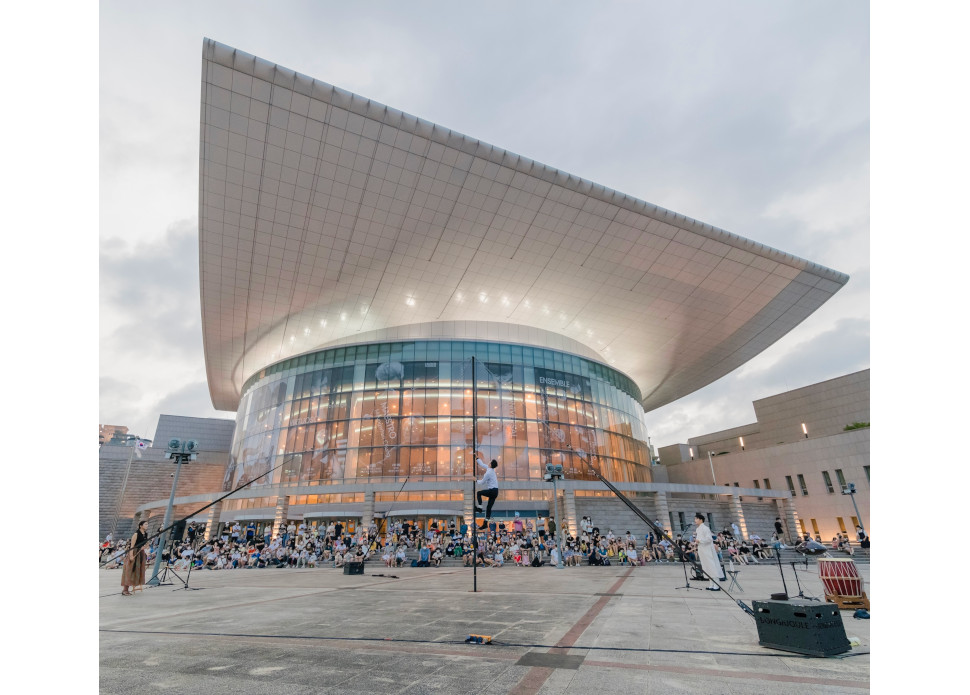
Photo by Daejeon Arts Center
Daejeon Arts Center celebrates its 20th Anniversary this year! Tell us more about how the centre is celebrating this major milestone!
Everyone at DJAC is preparing for our 20th Anniversary with great excitement. From 2-15 October, we will celebrate our anniversary with what we call our ‘Happy Birthday Week.’ During this period, we will invite renowned Korean violinist Kyung-Wha Chung, popular actor and Daejeon native Suk-Ku Son, and world-class jazz vocalist Youn-Sun Nah for special performances. We will also be publishing a book titled “20 Years of Daejeon Arts Center” that will look back on our history and milestones. Additionally, we have various events planned, such as a forum to establish our long-term visions moving forward and an outdoor concert that can seat over 5,000 Daejeon citizens.
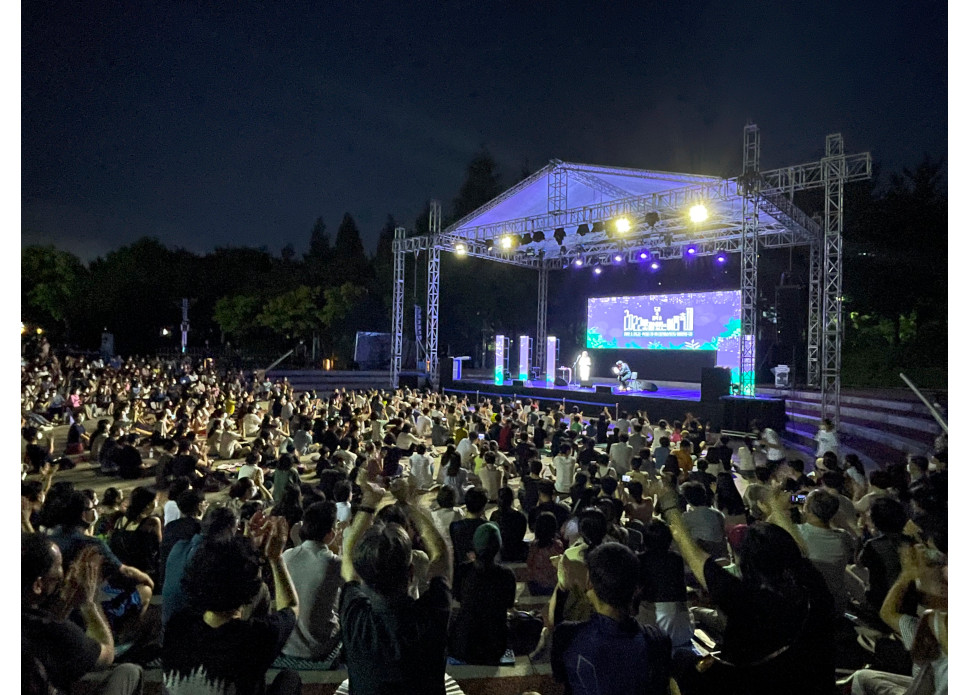
Summer Festival at DJAC (Photo by Daejeon Arts Center)
You believe very much in both the value of the arts as well as science and technology – what part do you think an arts centre can play in integrating the two and what can we hope to achieve from it?
Daejeon is known as the city of science. Starting with the science and technology-centered Daejeon International Expo in 1993, Daejeon has seen tremendous growth in its science and technology sector. The Daedeok Innopolis is home to 26 national research institutes, and Daejeon also has outstanding universities like KAIST and many successful venture companies. I believe that one of DJAC’s roles is to provide these institutions and scientists with opportunities where they can freely enjoy and draw inspiration from the arts. Our short-term goals include organising ‘outreach concerts’ to help the science sector become more familiar with the performing arts, while our long-term objectives involve working closely with these institutions to discover ways to integrate science into the arts. As an example, we collaborated with researchers from the Graduate School of Culture Technology at KAIST to organise a classical concert featuring no human pianist and only an AI piano. We also implemented special lighting equipment that responded to the sounds produced by opera singers. Ultimately, our goal is to realise ‘the theatre of the future’ with AI robot technology. By consistently sharing our creative inspirations with scientists, I believe that our endeavours can help educate and train the next generation.
As an established music conductor and arts educator, what is one piece of advice you would give to young musicians and artists?
My advice to young musicians and artists would be to ‘stick to the fundamentals’! An artist must be diligent in honing their core fundamentals if they hope to move the hearts of many and leave a lasting impression on audiences. Improving upon one’s basics is like developing strong wings – you can fly on your own accord, unlike a balloon that can only float with the help of the wind or some device to grant it lift.
Share with us one major challenge you faced in your career and how you overcame it.
In 2014, I was serving as the Dean of the College of Arts at Joongbu University. Due to Korea’s rapidly declining population, the school’s departments and majors had to be reduced in size since fewer students were enrolling each year. The situation was so bad that, as the Dean, I was faced with making the difficult decision to close down certain departments within the College of Arts. The faculty and students of these departments in jeopardy vehemently protested, and I remember the immense struggle of trying to persuade them. Despite the pushback, I persevered and tried to convince the faculty and students that ‘the school needs to survive if we all want to survive’. At the same time, I also did my best to voice their opinions to the university’s upper management to seek common ground. The capacity reduction and department closures were inevitable. Fortunately, after much patience and persuasion, all parties reached an agreement to establish new departments that were better suited for current trends, marking a successful conclusion to the university’s restructuring plan. This was made possible through the mutual efforts of both parties to foster understanding and persuasion driven by the spirit of coexistence.
What three words best describes the city of Daejeon?
Daejeon is a city with unrivalled “science,” “stability,” and “centrality.”
It is located at the centre of the Korean peninsula, making it highly accessible to citizens of neighbouring regions. It is also a transportation hub that connects the capital area with the southern provinces. In Korea, Daejeon is well-known for being a ‘great city to live in’ with its calm and peaceful atmosphere.