
Global Megatrends: Shaping Culture to 2040 – Highlights of the AAPPAC 2023 Conference
by Jacklyn Ho, AAPPAC Secretary-General
The 26th Annual Conference of AAPPAC was hosted by the Queensland Performing Arts Centre (QPAC), in the creative city of Brisbane, Australia from 5 – 7 September 2023. Coinciding with the vibrant Brisbane Festival, close to 140 delegates and speakers (88 of which are AAPPAC Members) from Asia Pacific and beyond were treated to three days of invigorating conversations, performances, breakout discussions and workshops. The conference, themed Global Megatrends: Shaping Culture to 2040, sought to explore how arts and culture could intersect with megatrends set to influence the world in the coming two decades.
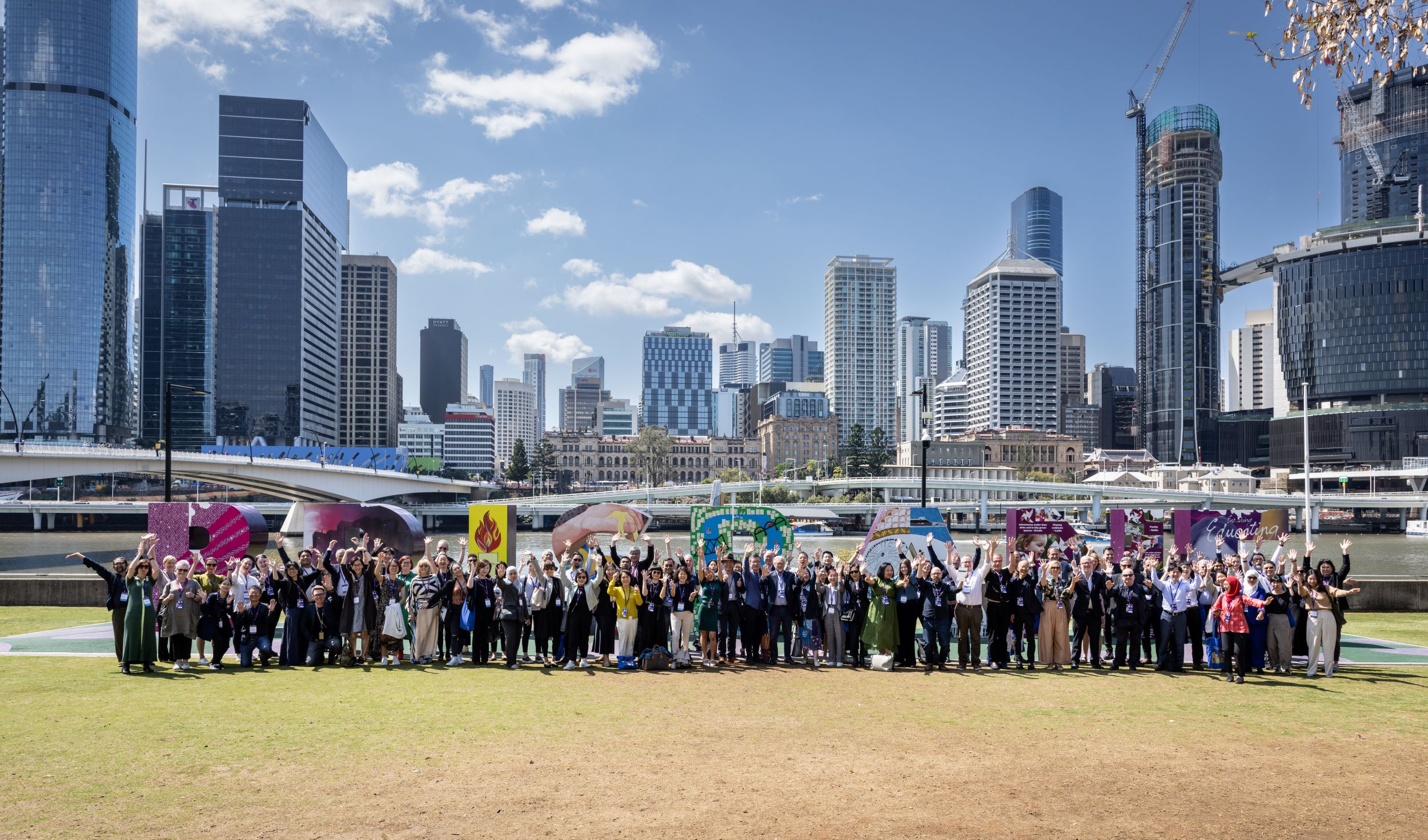
AAPPAC 2023 Delegates (Image by David Kelly)
Day One of the conference commenced at the Cremorne Theatre, QPAC with a beautiful Welcome to Country and Smoking Ceremony led by Tribal Experiences. The ceremony is meant for the Traditional Owners of the land to warmly invite visitors into their home-ground and to protect their well-being while they are here. This was followed by an opening welcome address by AAPPAC Chair, Douglas Gautier AM, and QPAC’s Chief Executive, John Kotzas AM, both of whom highlighted the significance of the network and the value of the conference in bringing people together to build connections that will strengthen the resilience of the arts community in an ever-changing world.
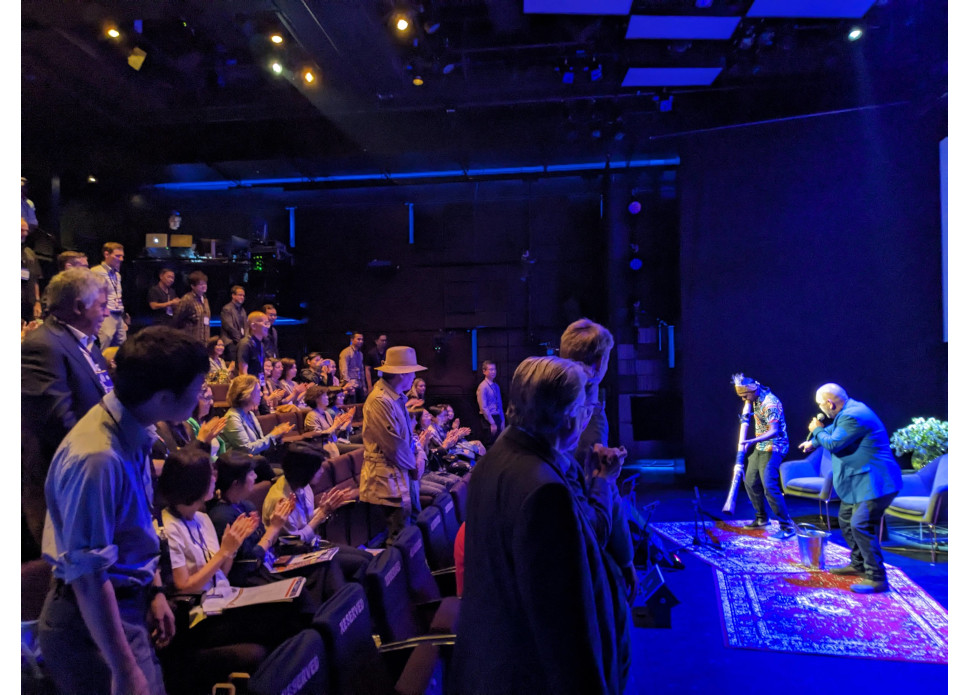
Welcome to Country and Smoking Ceremony by Tribal Experiences
Keynote Speaker Dr Stefan Hajkowicz, Principal Research Consultant at Data61, Commonwealth Scientific and Industrial Research Organisation (CSIRO) took the stage to introduce us to seven global megatrends identified in the CSIRO’s Our Future World report. His riveting presentation continued into an interactive workshop where delegates were asked to consider the impact of these trends on our work as artists and arts centres, and what possibilities and solutions could arise from there. Through two questions – “what if” and “so what” – dreamlike, almost unthinkable situations surfaced – from a world where arts programmes are allowed to be cut by half so that artists can really focus on arts making, daily personalised Artificial Intelligence (AI) created digital performances, to a world where every human being is prescribed an “arts doctor” to follow them through life to improve their wellbeing. The workshop gave delegates the opportunity to explore futures and ideas we never once ventured into, shining some light on what the arts could like for us in years to come.
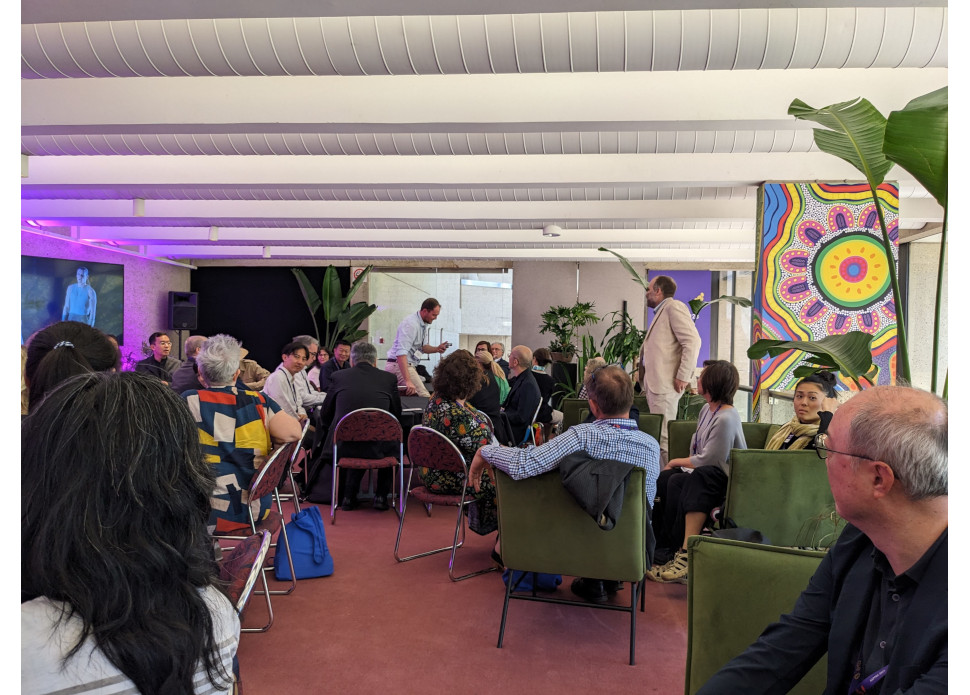
Interactive Workshop on Global Megatrends
Post lunch on Day One, Mr Kenneth Fok, Chairman of Hong Kong Arts Development Council presented the latest news in the Hong Kong Arts Scene, including the upcoming Hong Kong Performing Arts Expo set to take place in 2024. The afternoon panels which followed focused on two key trends – the first session titled Geopolitical Shifts brought together Asia Society Policy Institute’s Richard Maude, National Taichung Theater’s Joyce Y. Chiou, Australia Council for the Arts’ Adrian Collette AM, and was skilfully moderated by Esplanade – Theatres on the Bay’s Yvonne Tham. The session highlighted the importance of the artists and arts centres in empowering marginalised voices, fostering greater understanding between people, and finding commonalities in a world rife with tensions and polarity.
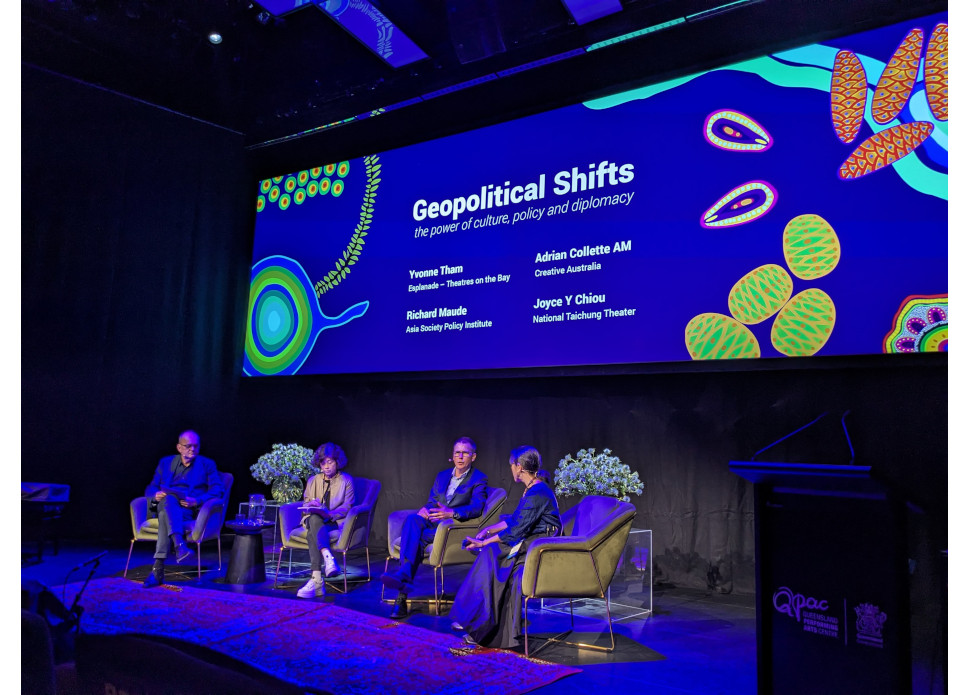
Panel Discussion – Geopolitical Shifts
The second session – Increasingly Autonomous | Diving into Digital was much anticipated by the conference delegates, many of whom were grappling with how to manage the ethics and opportunities surrounding the rise of AI in today’s world. The panel was led by Professor Marek Kowalkiewicz of Queensland University of Technology who was joined by Clarence Ng from Yamaguchi Center for Arts and Media, Lizzie O’ Shea from Maurice Blackburn Lawyers and Digital Rights Watch, and Professor Angie Abdilla from Old Ways, New. Amidst the uncertainties and horror stories behind data collection and privacy breaches, the panel underscored the fact that AI continues to be a tool for the arts, and it is for us to discover new ways of working and creating with these evolving technologies.
On Day Two of the conference, we delved right into one of the most crucial issues of our time with Adapting to a Changing Climate | Leaner, Cleaner and Greener led by award-winning artist, ecological designer, and creative researcher Dr Tanja Beer from Griffith University in conversation with Austin Wang from Taipei Performing Arts Center and Ang Xiao Ting from Practice Tuckshop and The Theatre Practice in Singapore. The panel shared their own approaches in creating narratives to reshape the relationships that their communities have with the environment – inspiring change and building awareness through their work for the climate crisis. Following this, a Traditional Song Workshop led by Torres Straits Islander Elder Uncle Charles Passi and Giaan Jordan provided a much-needed break from the heavy conversations of the earlier part of the day. The song titled Ad Asor (God Hear My Cry) brought the voices of over 100 people in the room together and created space for delegates to reconnect with themselves, and each other through music.
In the second half of the day, we shifted focus on the people we serve in the arts – our audience and communities. The panel session titled Unlocking the Human Dimension explored ways in which we can build communities of trust within the arts sector. Leading industry thinker Steven Wolff from AMS Planning & Research Corp was joined by artists Laura Harris from Ilbijerri Theatre Company, Terence Tan from Artsolute, and Head of Programming Fiona Winning from Sydney Opera House who generously shared their challenges and successes in engaging and building relationships with their audiences. Their journeys from being outsiders, to being one with the community through their work spoke a lot about the potential of the arts in building public ownership and providing space for people to belong in.
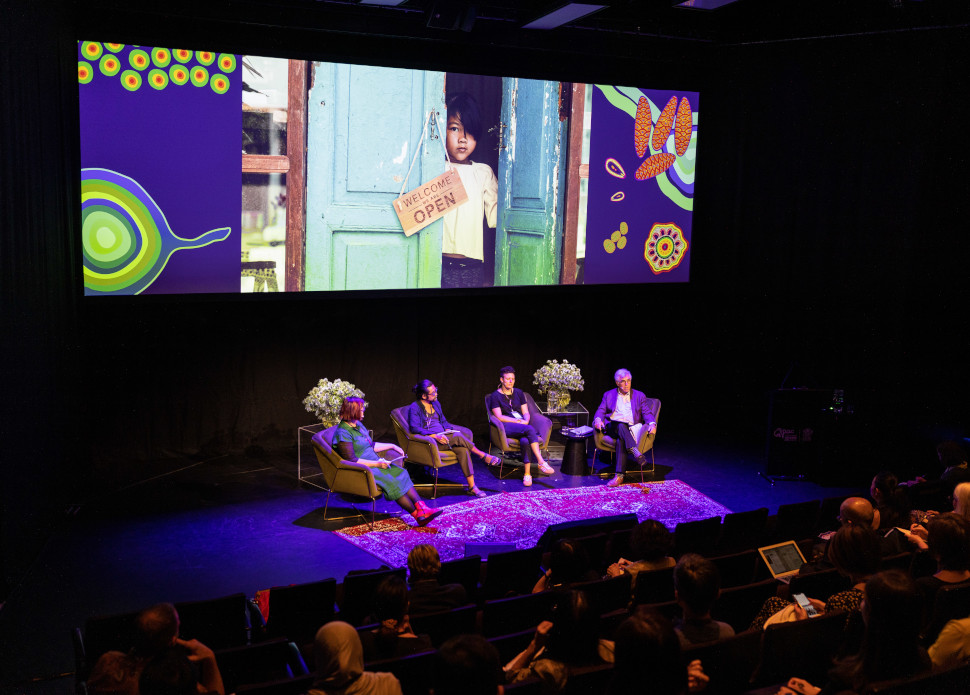
Panel Discussion – Unlocking the Human Dimension
The last panel session of the conference The Escalating Health Imperative reminded us of the power of the arts in healing, empowering, and creating hope and connectedness even for the most isolated individuals. The panel comprised of Professor Naomi Sunderland from Griffith University, Linglin Shih from Taiwan Philharmonic, Dr Anthony Garcia from Sounds Across Oceans and was moderated by Health and Wellbeing Queensland’s Dr Robyn Littlewood. The stories of how the arts have positively impacted the lives of a multitude of people in society from seniors living with dementia to the everyday person on the street rounded off the day’s discussions on a reaffirming note – the arts can truly make a difference.
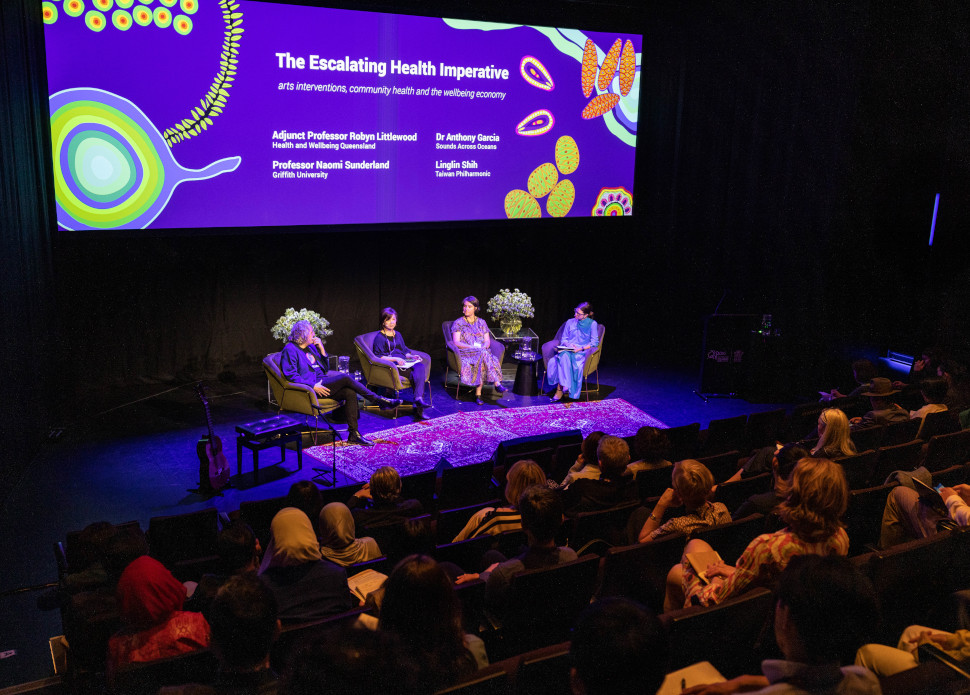
Panel Discussion – The Escalating Health Imperative
Closing off the day, we got a sneak peek into QPAC’s new venue with a presentation by Jayson Blight, Director of Blight Rayner, one of the key architects behind the new 1,500 seat theatre at QPAC scheduled to open in 2024. The design of the theatre honours the First Nations Peoples and carefully considers how to engage the performing arts with the public life of the city with a highly transparent façade that invites passers-by at the street level to interact with the artistic activity taking place within. This new addition will make QPAC the largest performing arts centre in Australia.
The final day of the conference gave delegates a chance to connect and share their own experiences and exchange ideas through two breakout sessions – Global Collaborations: creative development and international touring in a reset world facilitated by Georgia Hendy, Director of Programming at QPAC, and Cancel Culture: programming, audiences and outrage facilitated by Bernie Haldane, Creative Director of Auckland Live. After lunch, the delegates gathered back in the Cremorne Theatre for the fifth edition of the AAPPAC 2023 Connecting Series hosted by Paul Tam from West Kowloon Cultural District Authority (WKCDA). These seven selected works were presented at this year’s pitch session out of 29 entries received:
- PENDULUM by Lucy Guerin Inc
- Clockwork by CDP Theatre Producers
- My Self in That Moment by Chamber Made
- Gapu Ngupan by Kath Papas Productions
- Bright Day by West Kowloon Cultural District Authority
- How the Birds got their Colours by Cluster Arts
- Queers of Java by Monica Lim
AAPPAC thanks the esteemed selection panel Paul Tam from WKCDA, Daniel Clarke from Canberra Theatre Centre, Rajeswari Ramachandran from Esplanade – Theatres on the Bay and Liao Haoqing from Shenzhen Concert Hall for lending their expertise and time to the selection process this year. Information on the selected works can be found here.
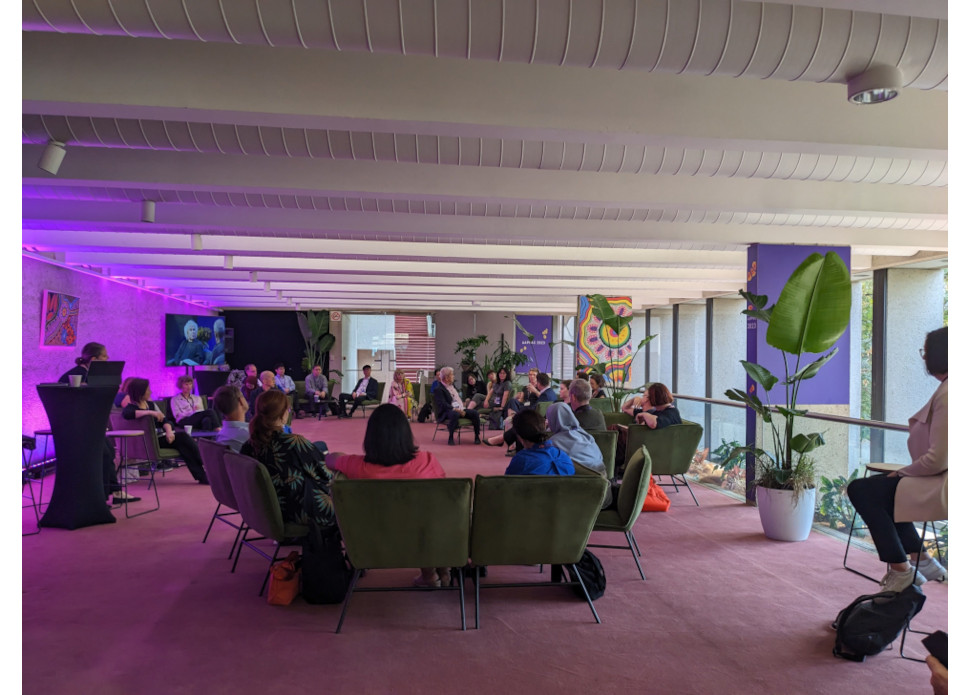
Breakout Discussions
In the final part of the conference programme, AAPPAC Chair Douglas Gautier AM, and Andrew Threlfall of CDP Theatre Producers shared views during AAPPAC Dialogue which reaffirmed the importance of the network and how AAPPAC members can work together more collaboratively. We ended the day with a glimpse into the future as Austin Wang, CEO of Taipei Performing Arts Center (TPAC) took the stage to invite everyone to 2024 AAPPAC Taipei Conference from 4 – 6 September and gave an impressive and humorously candid sharing of the newly opened centre. Themed MIND THE GAP, the conference will coincide with the Taipei Arts Festival and the Taipei Fringe Festival.
Over the three days, the conference had the pleasure of having Producer, Writer, and Political Enthusiast Jo Dyer join us as Conference Rapporteur, skilfully navigating through the rich and complex discussions and summarising key takeaways for the delegates at each day’s end with her own brand of humour and wit. From Climate Change to AI – we were reminded throughout the conference that it is the relationships we have with each other and the ones we take time to nurture that will fuel us forward as we encounter the uncertainties of the future together.
It was celebrations, more laughter, and plenty of drinks on the final evening of the conference when QPAC generously hosted a dinner reception at Happy Boy. John Kotzas gave a beautiful speech expressing his most heartfelt thanks to his team at QPAC, the AAPPAC Executive Committee (Exco), AAPPAC Secretariat and the rest of the network for making the conference at Brisbane a deeply memorable one.
This year’s conference welcomed close to 140 participants comprising of 64 Full Members, 24 Business Circle Members, and 55 speakers and representatives from the local arts community in Australia. We thank all delegates and members for your active participation and continued support for the network over the years. It is through the continued exchange of ideas, open discourse and learning from each other that we can foster new collaborations and connections that would take us a step closer to establishing the Asia-Pacific region as a leader in the performing arts.
The AAPPAC Exco and Secretariat would like to thank the brilliant people at QPAC, in particular Rebecca Lamoin, Director of Public Engagement for leading a wonderful team in putting together an inspiring and thoughtful programme, and for providing delegates with the warmest hospitality and welcome. Special thanks also to Home of the Arts (HOTA) for hosting a lovely tour of their beautiful centre on the Gold Coast for our delegates.
Recordings of selected sessions of the AAPPAC 2023 Conference are free to view on QPAC’s Digital Stage.
We look forward to seeing you in Taipei in 2024!