
Five Minutes with Puan Zubaidah Binti Mukhtar – Our Newly Appointed EXCO Member
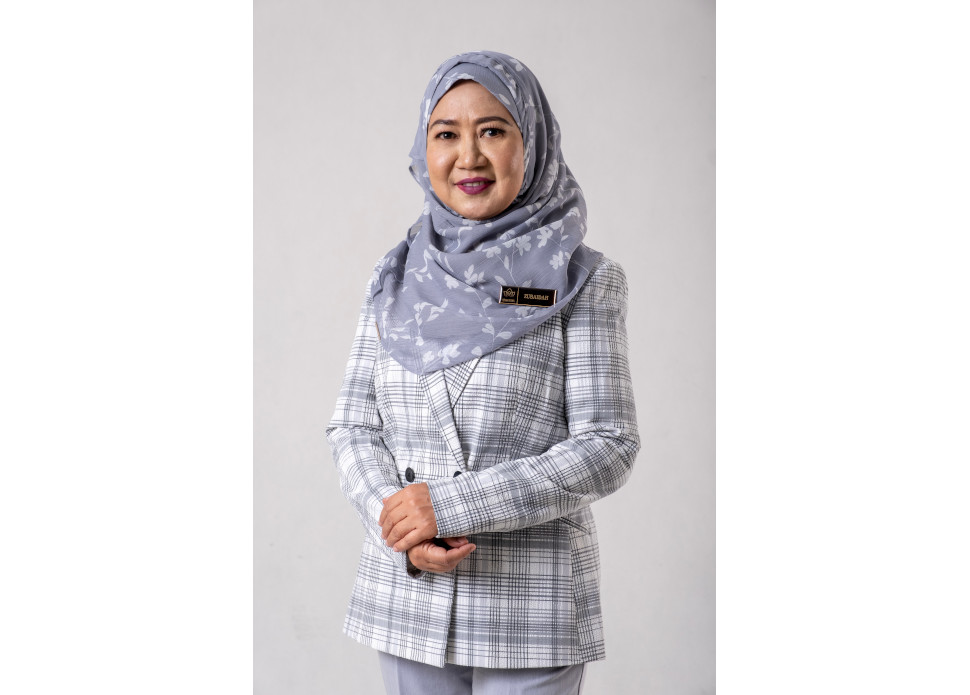
Istana Budaya’s Director General, Zubaidah Mukhtar
Congratulations on your AAPPAC EXCO appointment! Briefly share with us more about yourself and Istana Budaya.
On 3 Oct 2022, a historic occasion occurred for me when I began my employment at Istana Budaya, accepting the tremendous responsibility of being the 7th Director General. Istana Budaya is extremely dear to my heart. I felt nervous at first, but I have a tremendous sense of belonging at Istana Budaya, a well-known performing venue on a national and international level.
My appointment as an Assistant Secretary on 1 Sept 1992, marked the beginning of my career in the Malaysian Civil Service following my Bachelor of Arts in Anthropology from the University of Alabama in the United States (1991). My working career includes international cultural relations, managing tasks related to the ASEAN Committee on Culture and Information (ASEAN-COCI), providing advisory services on the policy of culture, arts, and heritage to NGOs and arts activists, strategising smart partnerships with external parties, managing venue bookings, performance scheduling, and box office collections, as well as planning policy and research programmes in line with the National Development Plan.
From Assistant Secretary on 1 Sept 1992, to Director General on 3 Oct 2022, I feel blessed and honoured to have been promoted three times and equipped to be a better leader to manage a world-class performing arts facility like Istana Budaya. After more than three decades in the public sector, I am thankful to the top management of the Ministry of Tourism, Arts, and Culture (MOTAC) and the Public Service Commission (SPA) for entrusting me with the duty of Director General of Istana Budaya. My guiding philosophy is ‘no one left behind,’ which ensures that employees’ welfare rights are always acknowledged, and the organisation works efficiently, allowing the department to operate properly and equitably. With my skills and experience, I will ensure that the National Theatre continues to provide delight and amazing experiences to all performing arts enthusiasts.
What do you think is unique about Malaysia’s Arts and Cultural Scene?
Malaysia’s arts and cultural scene is unique due to its rich tapestry of influences, which reflect the country’s diverse heritage and multi-ethnic society. Malaysia is home to three major ethnic groups; Malays, Chinese, and Indians alongside various indigenous communities like the Orang Asli, Iban, and Kadazan-Dusun. Each group contributes distinct traditions, festivals, and artistic expressions and this is one of the reasons Istana Budaya established Orchestra Traditional Malaysia (OTM).
OTM was formed in 2010 out of the need for development of the traditional music industry in Malaysia. Led by the conductor, Yazid Zakaria, OTM bears the identity of the multiracial society of the country. OTM is a combination of various traditional musical instruments representing races and ethnicities in Malaysia. The goal is to make the diversity of Malaysian traditional musical instruments on par with the symphony orchestras of western countries. The harmony of music and rhythm through OTM reflects the spirit of unity among Malaysians of various races.
You have had a wealth of experience supporting and nurturing organisations and projects to enable the younger generation and women. Share with us one of your proudest achievements to date involving these communities.
My best experience dealing with young people came when I was appointed Senior Principal Assistant Secretary at the Culture Division of MOTAC. I had the opportunity to advocate for and empower the Cultural Council of Malaysian Universities (MAKUM) in carrying out its cultural activities. I provide guidance and assistance on securing funds, giving talks, and disseminating information on how to execute projects or programmes effectively, regardless of their scope.
In addition, I wholeheartedly support and enthusiastically engage in activities concerning the empowerment of women, particularly through serving as Secretary of the MOTAC Association of Civil Service Spouse and Female Employees (PUSPANITA MOTAC). For five years, I managed numerous activities focusing on education, health and welfare other concerns via initiatives that empowered women.
My contribution to the civil service has led me to win numerous awards, such as the Excellence Service Award 1996, 2004, and 2015, and received MAKUM Sponsorship Initiative Award (2015) from the University of Sultan Zainal Abidin, Terengganu.
During my advocacy, I also successfully contributed to and witnessed winning the best PUSPANITA MOTAC award among all ministries in the year 2015. I was also honoured for my biggest achievement in empowering women as the Excellence PUSPANITA Member Award, which I received in the same year by the President of PUSPANITA.
Our AAPPAC Taipei Conference theme this year is “Mind the Gap, Lead the Path” – what gaps do you currently feel exist within your own arts community, and how do you see Istana Budaya leading the way in addressing them?
As we all know, majority of arts organisations operate as Non-Profits and are constrained by fund allocations, cost effective and efficient strategic decision making. One major challenge for cultural arts organisations is to balance all the economic issues and constraints with the importance of meeting artistic and cultural missions. These issues are in conflict in both practices and research fields. Non-profit sectors (government funding) have forced all non-profit oriented organisations to adopt more commercial business models. Performing arts organisations must compete in a more complex arena of entertainment including productions like movies and commercial concerts involving popular artists which makes authentic cultural performance have a lower demand amongst the new generation. Performing arts organisations must re-strategise and understand their consumers attitude towards their services and make strategic decisions based on consumer feedback and choice. These issues make art organisations struggle to retain markets and grow.
As a newly appointed EXCO Member, what hopes do you have for arts venues and centres within the Asia Pacific region, and how do you see a network like AAPPAC enabling that future?
Istana Budaya has been introducing its “Gerak” campaign tour series since 2023, which travels various states in Malaysia to showcase the Istana Budaya productions in music, dance, and musical theatre. This is one of the most exquisite opportunities for Malaysians and tourists to get into the arts on a more profound level.
To organise performances both domestically and abroad, Istana Budaya also takes advantage of the “Gerak” campaign and continues to be open to collaborations, partnerships, and smart partnerships with a variety of sectors, including corporate, private, Government Linked Companies (GLCs), or government agencies. Through these relationships, it is envisaged that more creative and outstanding artistic works would be created and be able to reach a global audience through platforms such as AAPPAC.
Working with venues and organisations that will have a big influence on the entertainment and cultural sectors is something else I’m excited about. My goal as a recently appointed EXCO Member is to create a performing arts association that will disseminate information about Istana Budaya and venue provider information globally. I also plan to bring the National Symphony Orchestra (NSO), Orchestra Traditional Malaysia (OTM), and Istana Budaya Dance Troupe (ARTISTANA) out of the region to build awareness of Malaysia’s multi-racial culture, music, and humanity.
What are three things you enjoy doing over the weekend?
I normally spend the weekend with my family. We enjoy sightseeing and take a quick stroll around the lake or other recreational park.
Describe AAPPAC in one sentence!
AAPPAC, in my opinion, replicates new knowledge by engaging in varied creative sustainability approaches, which opens up new horizons for thought leadership and exploration.