
Five Minutes with Damien Boyle – Our Newly Appointed EXCO Member
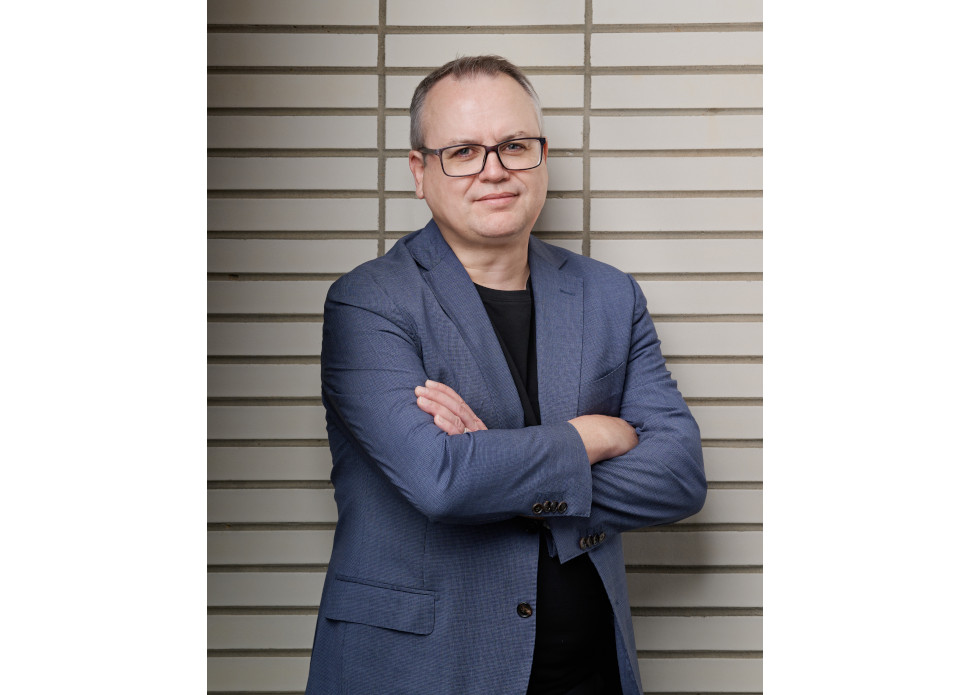
General Manager of Monash University Performing Arts Centres, Damien Boyle
Congratulations on your AAPPAC EXCO appointment! Briefly tell us about yourself and the work you do at Monash University Performing Arts Centres.
Following a Bachelor of Music at the University of Melbourne, I commenced my professional career with Musica Viva Australia in an operations role and then relocated to London for 12 years with international classical music management agency Harrison/Parrott. I managed and delivered international orchestral tours and projects to venues and music festivals globally, collaborating with acclaimed pianist and conductor Vladimir Ashkenazy, and orchestras including the Philharmonia, Royal Concertgebouw, Cleveland, Czech Philharmonic and Sydney Symphony Orchestras.
Returning to Australia in 2010, as General Manager of Monash University Performing Arts Centre (MPAC) I delivered a major restructure to support the $53 million Ian Potter Centre for Performing Arts capital project on Monash University’s flagship performing arts facility which opened in 2019.
At MPAC working closely with Professor Paul Grabowsky AO, our Executive Director, my primary role is to lead and oversee our annual venue operations, programmes and delivery of 500+ events across 5 venues on 2 campuses across Melbourne. This brings over 250,000 non student visitations to Monash University each year.
As a Performing Arts Centre that sits within Australia’s largest tertiary institution, what do you think your centre’s role is to the various communities that you serve?
MPAC serves and nurtures strong relationships with many communities – the university staff and students, schools and other community organisations, a growing local audience who attend our curated program, and the relationships we have forged with key Australian and international performing arts organisations. The centre is a meeting place for the performing arts – we are a centre of creativity with an active commissioning program, and a place where our top-class facilities can be hired. We also present weekly shows in our jazz club, The Count’s, and are proud to host the performing arts across all genres – in any one week we will be presenting theatre, recitals, orchestral performance and a jazz ensemble. For MPAC, welcoming a local school for their annual concert is as important as welcoming leading professional artists to our top-class facilities. The team at MPAC loves this diversity and we realise the important role we play in providing quality experiences for audiences and artists alike.
With the rapid expansion of digital technologies and the way we all work and communicate, the importance of coming together for a shared creative experience has never been more important. MPAC’s recent renovations have provided the opportunity to refresh and grow the relationship with all our audiences and creative stakeholders, which included being the first performing arts centre in Australia to install Meyer Sound’s Constellation active acoustic systems.
MPAC acts as a research body within the university, reaching into the extraordinary community of thinkers and experts at Monash and linking them to artists and researchers to create a range of outcomes. We are aware that many artists feel the challenges that the planet currently faces and believe that we can provide opportunities that empower both artists and experts from all fields. By linking them together we can generate new art works, new ways of communicating ideas and new thought paradigms.
Being part of such a distinguished university where learning, exploration, research and innovation are part of everyday life provides us with a vibrant context, great support and endless opportunity. We are just beginning to optimise this potential and is why I am so passionate about MPAC and my role leading a group of like minded professionals.
Our AAPPAC Taipei Conference theme this year is “Mind the Gap, Lead the Path” – what gaps do you currently feel exist within your own arts community, and how do you see your organisation leading the way in addressing them?
There are several key opportunities that we have identified in our own arts community. Three strategic areas we are focusing on in the immediate period ahead include: First Nations engagement, commissioning collaborations, and strengthening our technical capacity.
Monash University’s commitment to First Nations is primary to MPAC’s work. We see this as a long-term commitment and an ongoing dialogue with First Nations communities, staff and audiences. To lead and embed this work we recently appointed proud Gunditjmara man Tom Molyneux as our Senior Producer, First Nations. He is currently leading the planning for a major international First Nations gathering that will take place at Monash in late 2026.
We are committed to the development of new work and support the creativity of our small to medium companies. As part of our commitment to commissioning we have forged partnerships with leading organisations including Circa, Back to Back and we commission a new short Australia orchestral work each year performed by our own Monash Academy Orchestra. Ensuring new work is being developed and has the opportunity to be performed is primary in our strategic goals.
Finally, COVID had a major impact on the technical and related workforce across all performing arts centres in Australia. The post COVID context, along with rapid advances in venue technology means the feeder pool of skilled and experienced technical staff needs urgent strengthening. In my role on the executive committee for peak body the Victorian Association of Performing Arts Centres, VAPAC is lobbying state and federal governments supporting Arts Centre Melbourne’s lead in expanding its highly sought after technical trainee programme, providing an essential qualification and experience to rebuild that pool of knowledge and experience – without it arts centres and major events in Australia in the future will suffer.
As a newly appointed EXCO Member, what hopes do you have for arts venues and centres within the Asia Pacific region, and how do you see a network like AAPPAC enabling that future?
There has never been a more important time for active dialogue, sharing of knowledge and collaboration. AAPPAC is a vibrant network of talent and experience and the opportunity for information sharing, collaboration and exchange is enormous. We view our ‘near neighbours’ as critical in the discussion as we all face challenges in a changing context. I am passionate about ensuring that we maintain a commitment to open dialogue, ensuring we talk about the ‘right issues’ that bring change and impact. I also hope that we can be comfortable to share our successes and seek advice across the network in more challenging times. As Aristotle said ‘The whole is greater than the sum of the parts’!
You have had an outstanding and multi-faceted career in the arts – share with us how your experiences have shaped you as a manager and leader.
When I landed my dream job as a tour manager with Harrison/Parrott in London in the late 90s, I had no idea of the impact this would have on my development as a manager and leader in the arts. I went from Aussie backpacker in Europe to tour manager in a matter of months! I travelled the globe for 12 years and was immersed in a world of amazing musicians, festivals, venues and performances. This included managing orchestra concert tours with the great Vladimir Ashkenazy conducting the Philharmonia Orchestra, Czech Philharmonic, NHK Symphony Orchestra Tokyo, Australian Youth Orchestra, and then finally the Sydney Symphony before I returned to Australia in 2010.
Coincidentally, I bought the first international symphony orchestra to perform at The Esplanade Singapore at its Opening Festival in 2002, presenting the Philharmonia Orchestra conducted by Ashkenazy. That tour travelled from London – Sydney – Melbourne – Brisbane – Sydney – Taipei – Singapore – London in just 11 days. It was so exciting to be bringing a world renowned orchestra and conductor to perform at Hamer Hall in my hometown, and for just 24 hours. I only had time to see my Mum backstage at the concert!
Planning and running symphony orchestra tours was a complex and demanding job – usually 100 people, a conductor, soloist, piano selections, hotels, per diems, transfers, foreign countries and languages, 10 tonnes of cargo, customs clearances, sick musicians, lost passports, delayed flights, demanding local promoters – and everything must somehow synchronise so we can perform a concert that evening at any time between 7pm (Tokyo) to 9.30pm (Barcelona). Everyone looks to you when things go wrong, and so very early on I had to develop a calm and strategic approach to problem solving and an even thicker skin.
If there is one thing that shaped me as a leader from those experiences, it is to trust the skills and experience of the people you work with in your team.
I recall on many occasions I would tentatively knock on the door of Ashenazy’s dressing room while on tour to explain a major issue with the next day’s schedule. He and his wonderful wife Dody would say, “Damien, Damien, come in, sit down!” sensing some concern on my face. Dody, my adopted Icelandic ‘mother on tour’ would ask whether I had eaten yet today and before I could answer, would hand me something to eat. I would calmly explain the issue and my proposed solution and Vova would always say: “Damien, you’re a pro. I trust you” and pat me on the shoulder. I never thought I was a “pro” at that job. It gave me enormous confidence and shaped my growth as an emerging arts leader.
This experience has also highlighted the importance of mentoring and coaching our next generation of arts leaders.
What are three words you would use to describe your personality today.
Engaging, inclusive, calm
Describe AAPPAC in one sentence!
A unique and powerful network of professionals passionate about the performing arts with a commitment to working together to innovate, explore and celebrate the arts.