Interview with our upcoming Daejeon Conference Host – Ms Kim Deok-Kyu
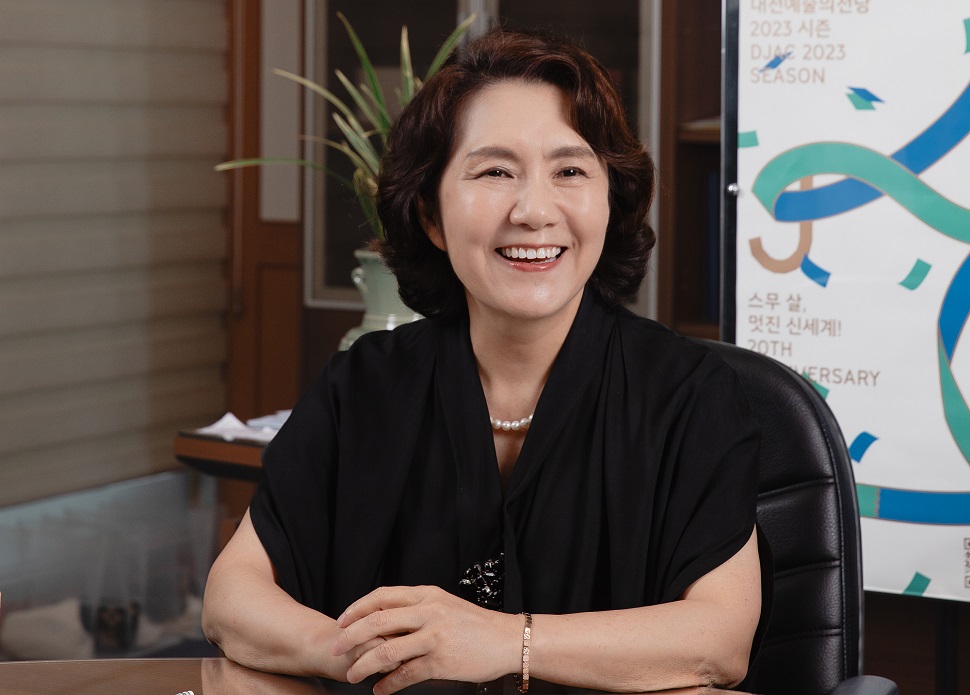
Ms Kim Deok-Kyu, The President of Daejeon Arts Center
The theme of this year’s conference is “From Local Inspiration to Global Influence” tell us more about the motivations behind this theme.
We are living in a time of radical change where humanity is evolving and reaching new heights thanks to new tools and technology. Throughout history, diversity has been fostered through local traditions, shaped through language, climate, food, and culture. This diversity has, in turn, been a source of creativity and innovation for human civilisation.
Imagine what the world might look like in the 30th century, a thousand years from now. Many avant-garde movements of the distant past remain relevant even today, demonstrating the enduring power of ideas. At the heart of this cycle are two essential elements: ”people“ and ”places,“ with a particular emphasis on cities. Upon these foundations we have constantly sought creativity and sustainability, and this pursuit has continually opened up new possibilities and helped shape what we call glocalism.
The theme of this conference, “From Local Inspiration to Global Influence,” aims to explore how we can shape the future cultural and technological landscape. We want this landscape to remain deeply human, and so we must draw insights from unique, local human cultures and traditions. In a transformative era driven by the convergence of technology and art, it is time for us to seek ways to seamlessly interweave these two fundamental aspects of life.
Apart from the panel discussions and keynote session, what else can members look forward to at this year’s conference?
Daejeon Arts Center (DJAC) is located in Dunsan Grand Park, a landmark area designated by the city of Daejeon as a hub for cutting-edge science, culture, and tourism. One highlight you won’t want to miss is the Venue Tour, which takes you through this expansive park. You’ll have the chance to enjoy cultural experiences at the Daejeon Yeonjeong Korean Traditional Music Center, which was established to preserve and promote Korean music, as well as at the Hanbat Arboretum, the largest urban arboretum in Korea. The walking tour begins at our center and takes you on a pleasant journey through the various art museums and the arboretum. The course concludes at the Hanbit Tower, one of Daejeon’s most iconic landmarks. In my opinion, there is no better way to experience the city’s unique charm!
In addition, we will be organising two special showcases. The Wukumchi Theater Company, which is based in Daejeon, will perform a Madanggeuk, a traditional Korean outdoor theatre genre reinterpreted in a modern style. Also on the schedule is X-Space, a special programme that highlights the convergence of performing arts and technology. This showcase is a collaborative project between DJAC and KAIST—a world-renowned research-oriented university located here in Daejeon. Art-technology fusion projects such as X-Space reflect Daejeon’s identity as a city of science and innovation. Don’t miss the chance to experience such unique content designed and produced here in Daejeon, the city of science.
The AAPPAC Conference was last held in Daejeon in 2013. How has the city and its local arts community changed in the last twelve years?
DJAC has firmly established itself as a performance venue that focuses on working closely with local artists to produce original works. Since 2004 (when our centre was only a year old), we have produced and showcased at least one opera or theatrical performance every year. Even during the height of the COVID-19 pandemic, we successfully organised productions that were shared to audiences nationwide through online channels. Every one of our productions has involved supporting and collaborating with emerging artists in Daejeon. Perhaps as a result of this commitment, our focus shifted from showcasing classics such as La Bohème and Rigoletto to creating new and original operas. Some of these works are set in our city, and we have even featured AI robots in leading roles! This evolution has been made possible by the trust we built with our local artists, the accumulated production know-how, and the development of a strong community of artists over the years.
Beyond music, DJAC also partners with schools, museums, and other institutions to consistently provide artists with opportunities to perform in diverse formats and settings.
You have had an illustrious career in the arts, particularly with classical music. Tell us more about how music influenced your life, and what you hope it can do for Daejeon.
To me personally, music has been a savior, constantly lifting me to greater heights. In times of suffering, it taught me comfort, resilience, and the value of harmony. It has always led me toward beauty, a force I believe has the power to save humanity. As a university professor, I’ve always held a firm belief in the power of music to transform people’s lives. Therefore, I did my utmost to offer guidance to my students as they took their first steps toward achieving their potential.
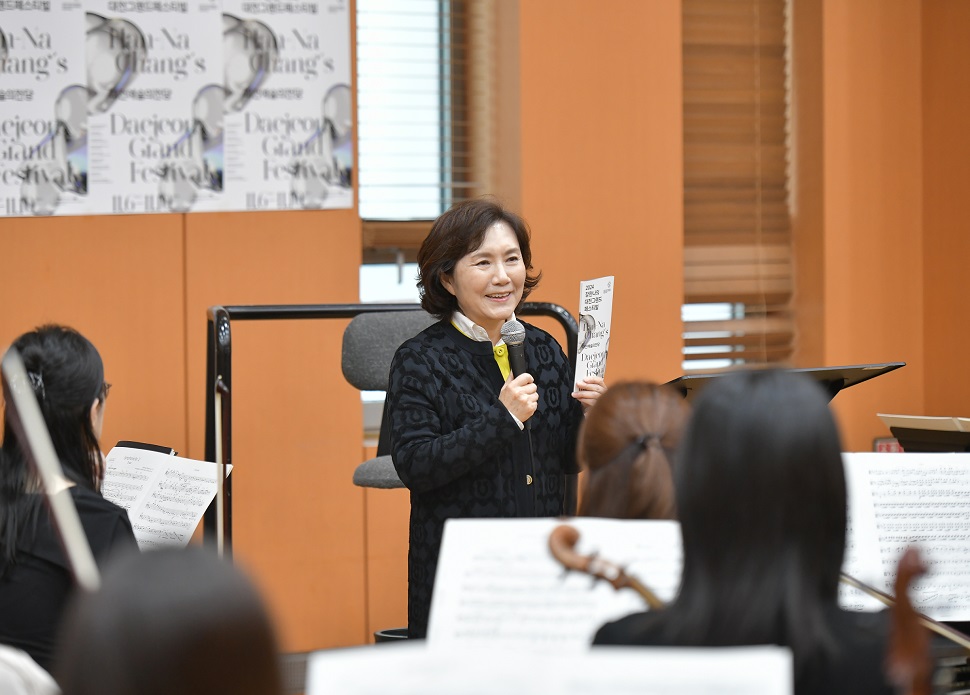
As a choral conductor, I was passionate about achieving “two parts in unity”—refining both voice and spirit so that many can come together as one. Now, as President of Daejeon Arts Center, I am constantly thinking about how the arts can transform a community’s way of life. It is my goal to make DJAC a place where performers are inspired and audiences are moved by unforgettable experiences. For example, we invited world-renowned conductor Han-Na Chang to serve as artistic director as we launched the Han-Na Chang’s Daejeon Grand Festival, which was inaugurated last year. This festival not only showcases the passionate performances of young musicians but also features a variety of programmes that engage local students and residents so that they too can participate in the festivities. We will continue to enrich the lives of our citizens through music, and I hope our efforts will help Daejeon become a thriving cultural hub.
Recommend some activities to do or places to visit in Daejeon!
1) Gapcheon River (갑천)
Gapcheon, the longest river in Daejeon, is lined with clean and scenic walking trails and dedicated bike paths. You can also cross the Expo Bridge for a fantastic view of the river. The night scenery is especially stunning. The Gapcheon area is home to a well-preserved natural ecosystem and features a watersports center.
2) Yuseong Foot Spa (유성온천 야외 족욕체험장)
Supplied with natural hot spring water at a soothing 40°C, the Yuseong Foot Spa is a great place for visitors to enjoy a relaxing hot spring experience. The spa is maintained by the local district office to ensure pristine water quality and clean facilities. Open year-round and free to use, the spa includes canals, fountains, and other convenient amenities.
3) Gyeryongsan Sutonggol Valley (계룡산 수통골)
This valley is part of Gyeryongsan National Park, and it is the place to visit if you enjoy immersing yourself in the beautiful natural scenery of Korea’s forests and mountains. Located close to the city, the valley features gentle slopes and is a popular destination for walking and trekking.
4) Sungsimdang (성심당)
Last but not least is Sungsimdang, a beloved local bakery that was founded in 1956. Featured in the Michelin Guide, it is one of the most well-known bakeries in Korea, offering a wide variety of delicious breads and desserts at reasonable prices. It is a must-visit spot in Daejeon.
If someone is on the fence about attending, how would you convince them to join the conference? Why is this an opportunity people won’t want to miss?
This year’s AAPPAC General Assembly at Daejeon will be a unique opportunity to experience not only in the performing arts scene of Daejeon, but also in the rich variety of Korean culture that has taken the world by storm. We look forward to welcoming you to Daejeon—a city where local and global, art and science, urban life and nature come intersect in harmony.