
From Local Inspiration to Global Influence – Highlights of the AAPPAC 2025 Daejeon Conference
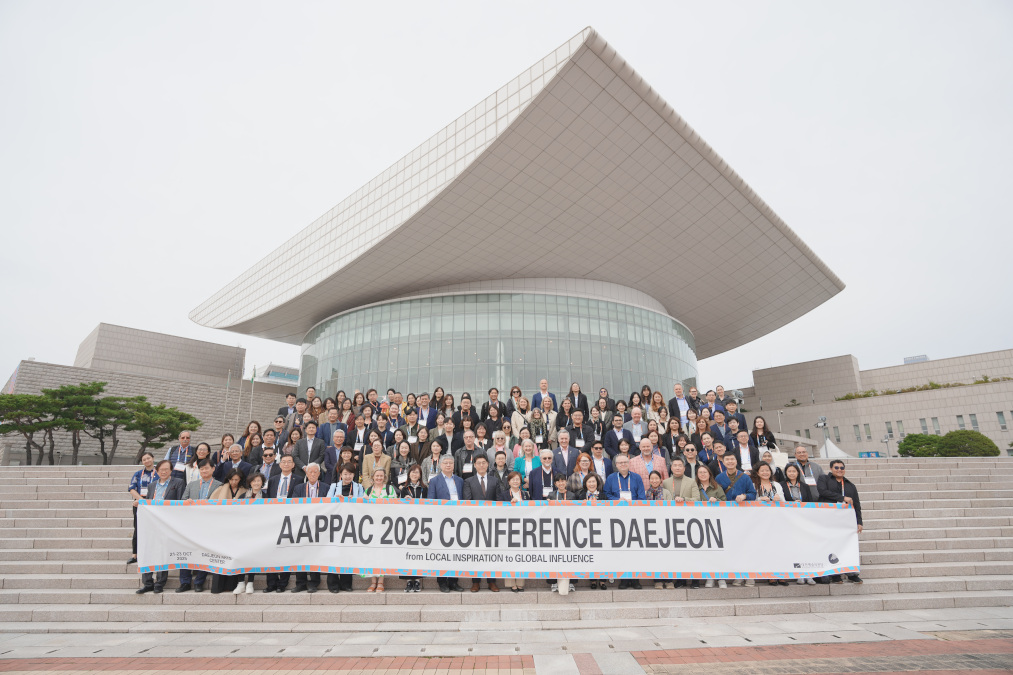
Photo credit: Daejeon Arts Center
Twelve years after its previous convening in Daejeon, the AAPPAC (Association for Asia Pacific Performing Arts Centres) Conference returned to the city in 2025 once again, hosted by Daejeon Arts Center. Held from 21 to 23 Oct under the theme From Local Inspiration to Global Influence, the three-day gathering took place at Daejeon Arts Center and other local cultural venues.
Since the 2013 conference, Korea’s cultural presence on the global stage has expanded dramatically. From K-pop and K-dramas to cuisine, film, and even democracy, K-culture has identified a universal emotional language that resonates with global audiences. This appeal lies in language-transcending rhythms and intuitions, sincere emotional expression, and participatory narratives co-created with fans. This year’s Daejeon conference sought to weave this globally resonant cultural code with the city’s identity as Korea’s leading science hub. The programme explored the driving forces behind K-culture’s success, showcased experimental science and technology-based performances that are unique to Daejeon, examined strategies for audience development in a rapidly changing era, and promoted the exchange of international collaboration ideas among performing arts venues. The agenda was complemented with a wide range of special showcases as well as venue tours across Daejeon, Gongju, and Seoul.
The 2025 AAPPAC Conference welcomed approximately 150 participants from 18 countries, including AAPPAC members and representatives of Daejeon Arts Center. Public events associated with the conference, including commemorative performances, attracted a total audience of around 1,400.
DAY 1
The first day opened with a performance titled Gainjeonmokdan (literally “Beautiful People Plucking Peonies”) by the Daejeon Yeonjeong Korean Traditional Music Group. Originating from royal court banquets of the late Joseon Dynasty, this elegant court dance depicts the vitality of nature through graceful movements performed around a peony vase where the dancers maintain a symbolic circular formation throughout the performance.
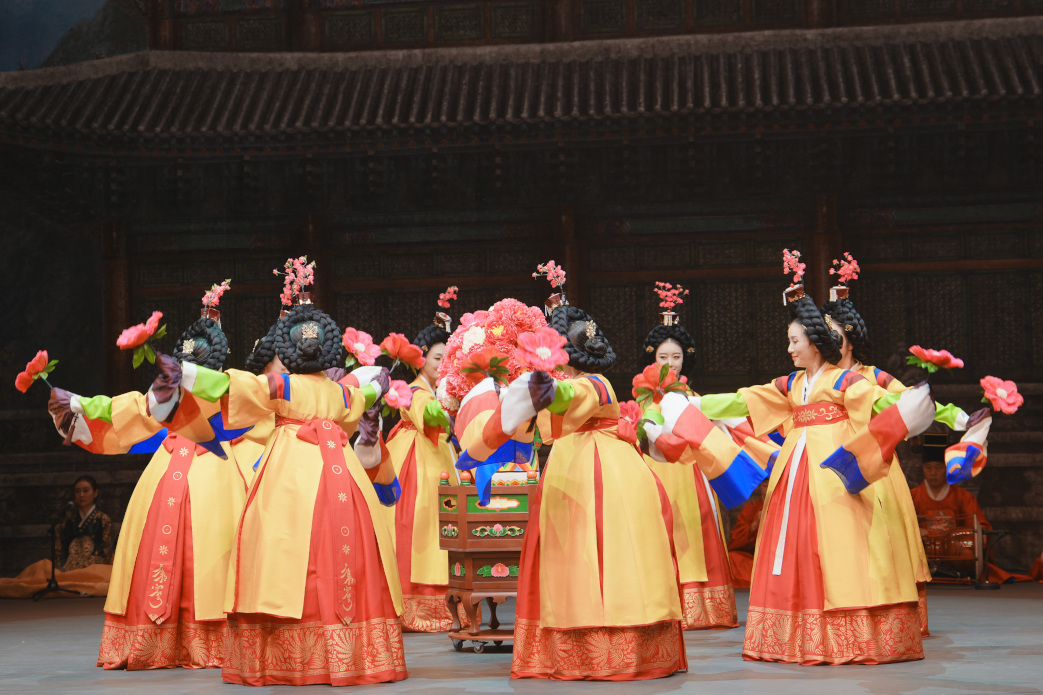
Photo credit: Daejeon Arts Center
The opening performance was followed by a keynote address by Han-Na Chang, Principal Guest Conductor of Symphoniker Hamburg (Hamburg Symphony Orchestra). Emphasising the importance of public engagement in ensuring a sustainable future for classical music, Chang shared her experience leading the Daejeon Grand Festival, where she performed alongside 260 musicians, 180 of whom were local citizens. She underscored the need to move beyond classical music as a passive listening activity and toward a shared, communal experience rooted in direct participation.
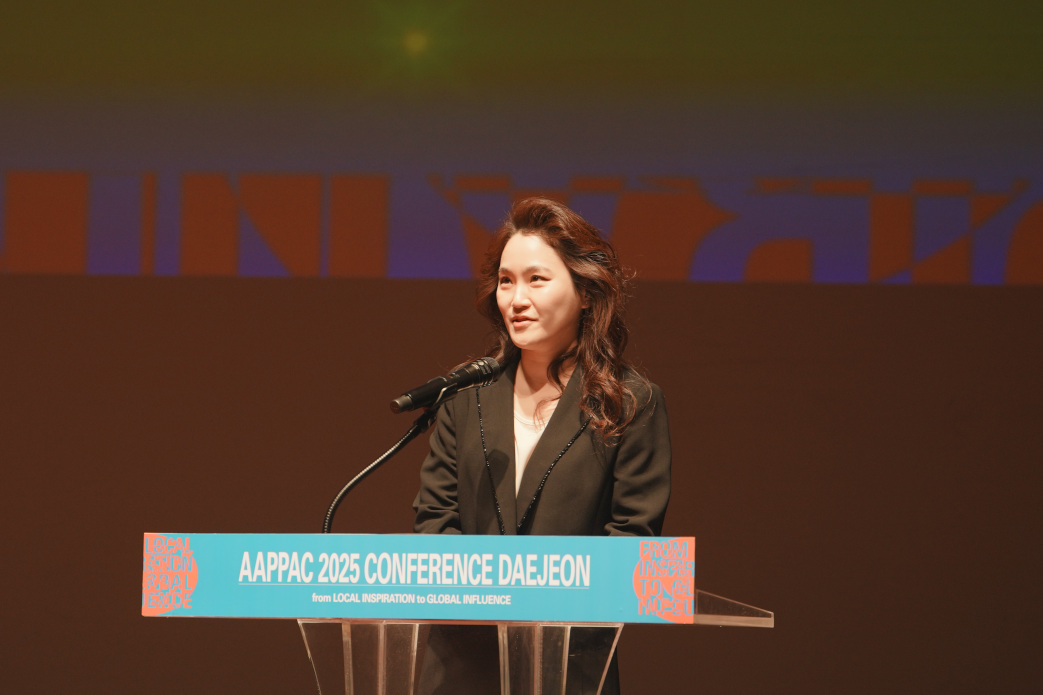
Photo credit: Daejeon Arts Center
The first session, titled The Global Influence of K-Culture, examined how Korean culture and art have grown into a global brand and how that momentum can be sustained.
Ho-sang Ahn (President of Sejong Center for the Performing Arts) noted that K-culture’s strength lies in “blending familiar aesthetics with traditional Korean elements, particularly in an era when Western art forms are being rapidly consumed.” He highlighted the effectiveness of engaging widely recognized artists as a way of bridging tradition and modernity.
Film director Jin Jang added that the next stage of K-culture must be its evolution into “K-life”—a reflection of Korean values and ways of life. While acknowledging Korea’s rising cultural status, he argued that it still exists largely in the realm of culture rather than art. For K-culture to be complete, he noted, Korean values, social structures, and lifestyles must reach a point where they earn global respect. He stated, “When Korean people’s emotions, thoughts, and social structures are revealed through films, dramas, food, and music, it is at that moment when our culture will go beyond being just an industry and become a respected way of life.”
Professor Min-pyo Kim described “K-classical music” as a new musical ecosystem rooted in European traditions but shaped by Korea’s education system and emotional sensibility. He noted that the success of artists such as Seong-Jin Cho and Yunchan Lim reflects not only exceptional talent, but also the strength of systematic music education and gifted training programmes. He added that expanding regional academies beyond Seoul, including in cities like Daejeon, would help strengthen the middle tier of classical talent and reinforce the long-term sustainability of K-classical music.
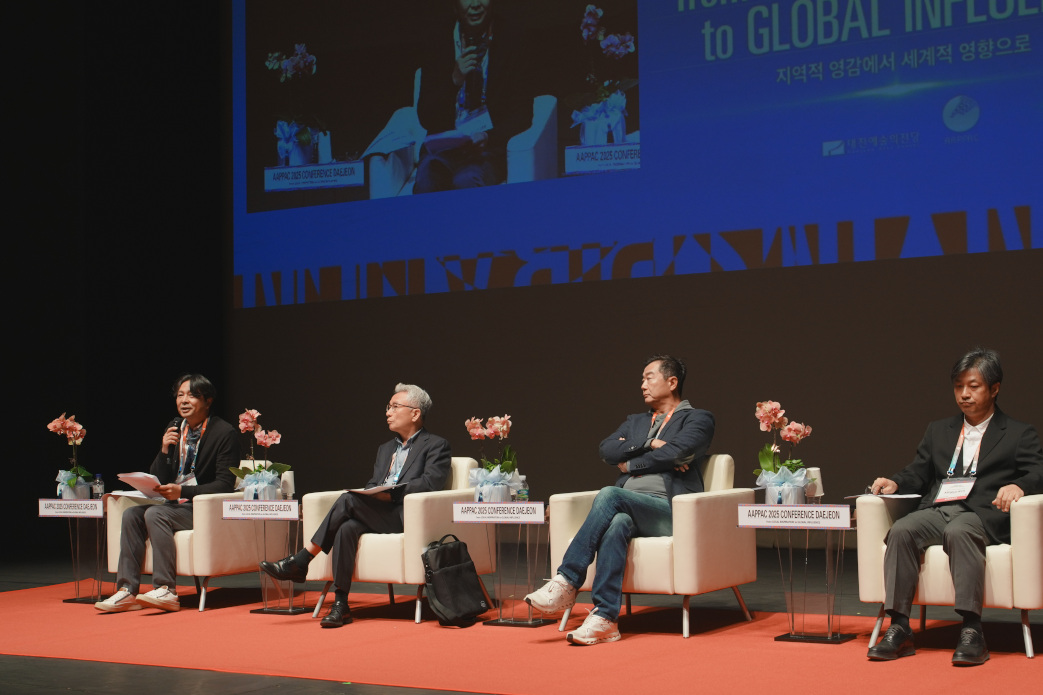
Photo credit: Daejeon Arts Center
Between major sessions, brief update sessions were held to share AAPPAC-related news. Lisa Freshwater (Executive Producer of Canberra Theatre Centre) and Georgia Hendy (Chief Executive Officer of AANT Centre) presented learning outcomes from the Programming Workgroup established in collaboration with the Global Cultural District Networks (GCDN), one of the AAPPAC Peak-Associate Members.
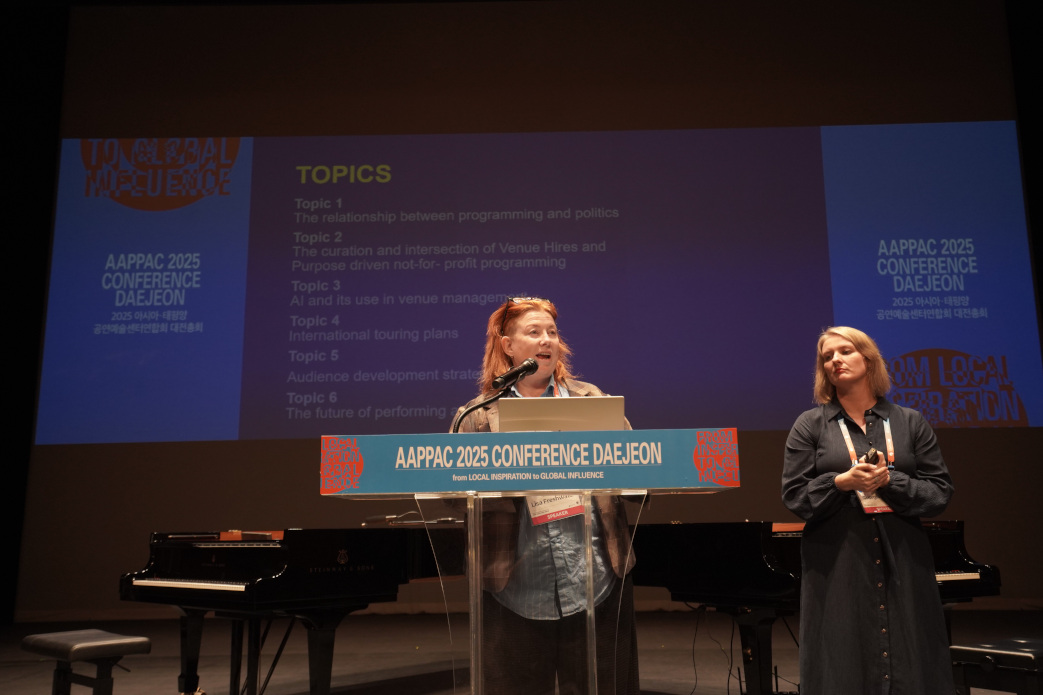
Photo credit: Daejeon Arts Center
The showcase performance and second session, Local Inspiration from the City of Science, Daejeon, explored the convergence of science, technology, and the arts, focusing on how artificial intelligence can expand emotional expression in performing arts.
Professor Ju-han Nam (KAIST Graduate School of Culture Technology) introduced the Re-sponse Adapter project, an AI-based performance system designed to learn from, respond to, and relate with a human performer’s emotional and musical interpretations in real time. “AI is not merely a playback tool, but a new artistic entity that interacts emotionally with humans and participates as an active element of performance,” said Professor Nam.
On stage, an AI-powered piano analyzed the tempo, dynamics, and articulation choices of a human pianist, creating a striking duet between human and machine enhanced by immersive 3D visuals. Professor Nam described the performance as “a performing arts experiment where a human performer and an AI model listen and respond to each other’s interpretations to engage in musical dialogue.”
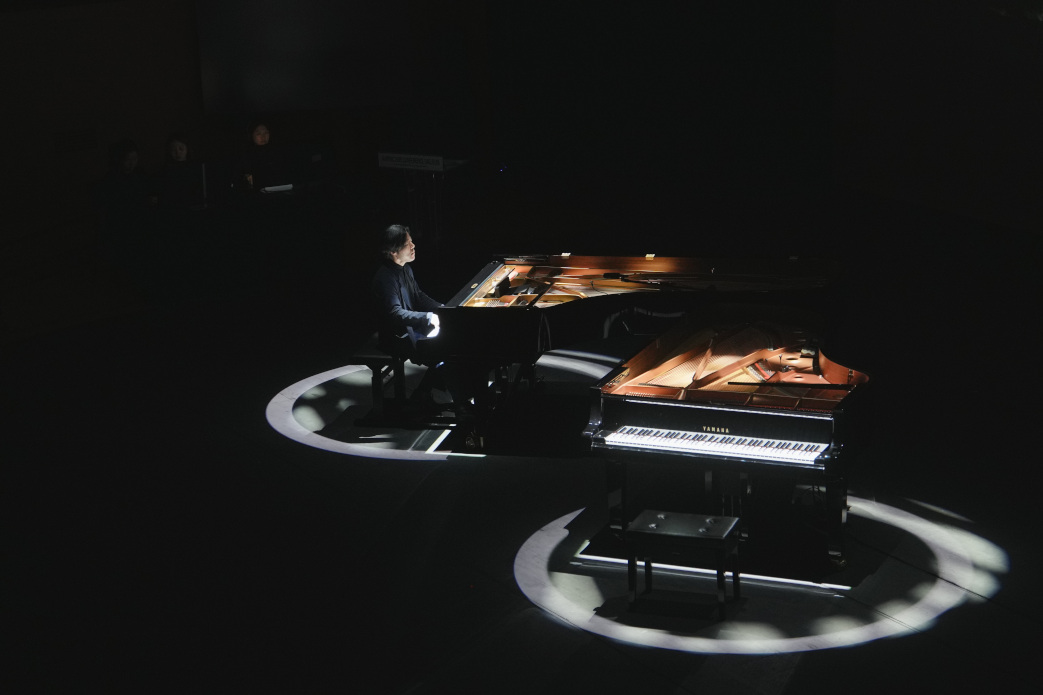
Photo credit: Daejeon Arts Center
The day concluded with a venue tour of cultural landmarks in Dunsan Grand Park, including the Daejeon Yeonjeong Korean Traditional Music Center (which also showcased a performance featuring traditional instruments), Lee Ungno Museum, and Hanbat Arboretum. In the evening, participants gathered for a welcome dinner hosted by the Daejeon Arts Center Patrons’ Association at a beautifully arranged outdoor venue, highlighted by a traditional magic performance by Joseon Magician Kyung-jae Lee.
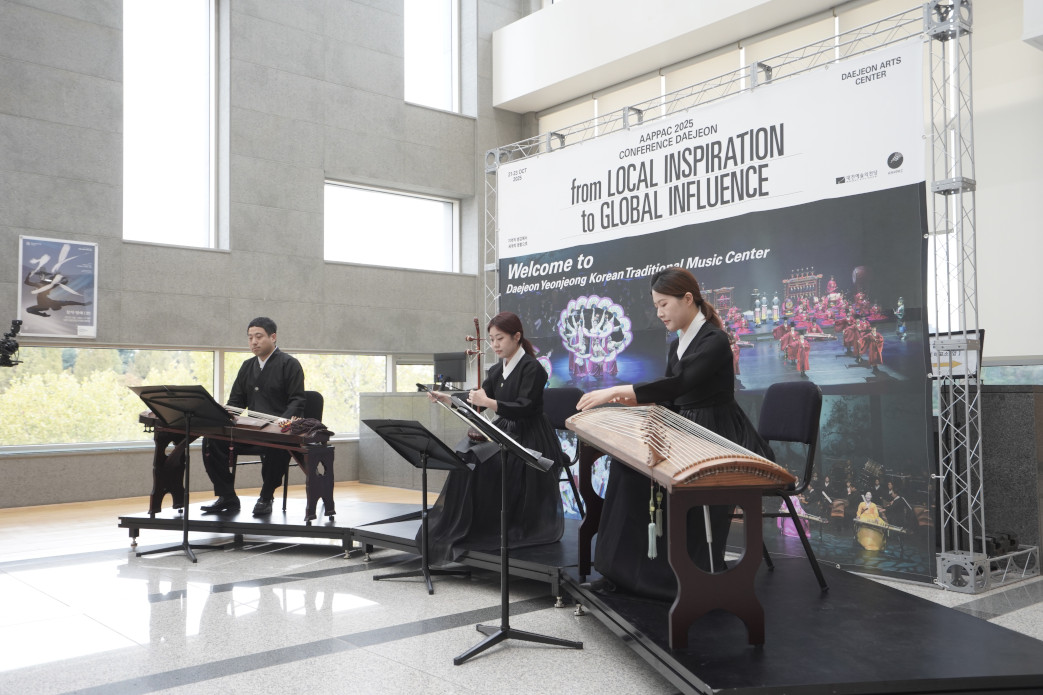
Photo credit: Daejeon Arts Center
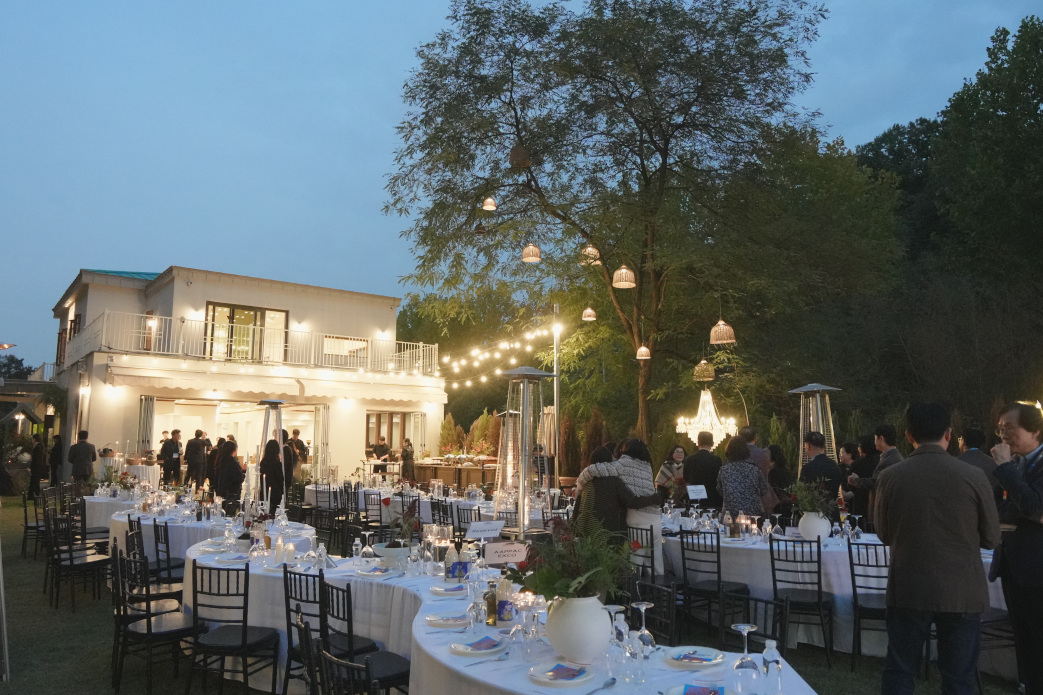
Photo credit: Daejeon Arts Center
DAY 2
The second day began with the AAPPAC Connecting Series, moderated by Christel Hon (Assistant Head of Music, Esplanade – Theatres on the Bay). The pitch session provided a platform for members and artists in the region to present new works and explore co-production opportunities, with the shared goal of extending the life cycle of performances and creating broader opportunities for artists.
The evaluation panel comprised of Christel Hon; Christie Anthoney (Head of External Affairs at Adelaide Festival Centre); Wei-Ling Wang (Manager of Programs & General Planning at National Taichung Theater); and Jaebum Yoo (Deputy Head of Programming at Daejeon Arts Center). Eight projects were presented, ranging from dance and theatre to interdisciplinary works:
Private View by Restless Dance Theatre
December Nite by National Taichung Theatre
Bridging Bridge by West Kowloon Cultural District Authority
The Rising World: Spirit of Water by Seoul Arts Center
8 Degrees of Freedom by Very Theatre
Travel of the Soul: Echoes after Time by Labora Terry Arts
Listening Acts by Chamber Made
Hero by National Center for Traditional Arts
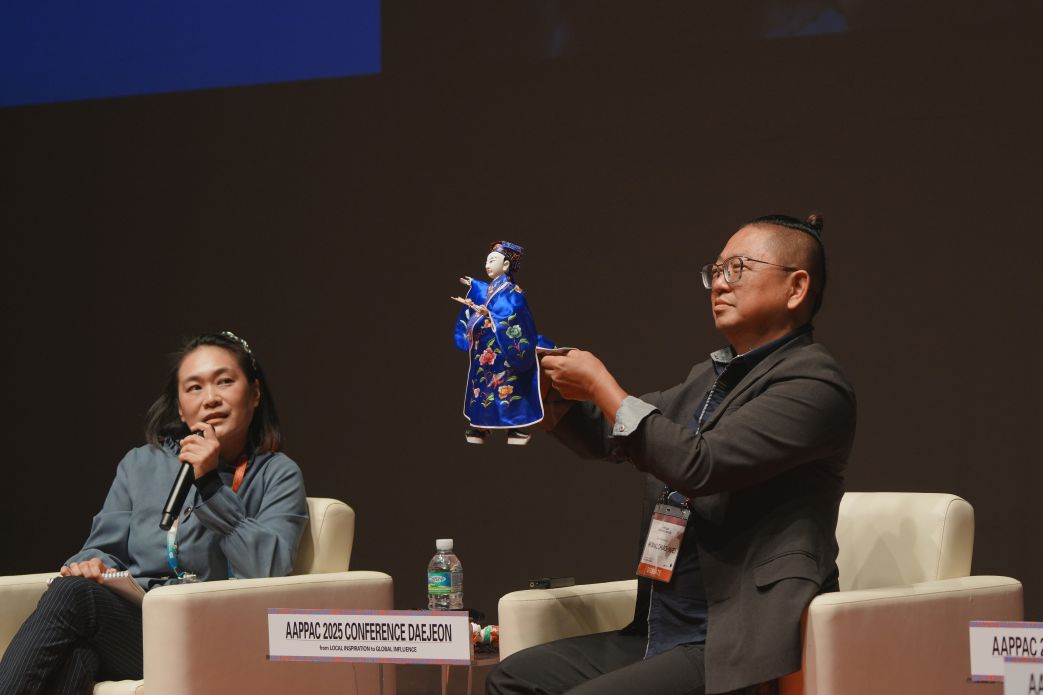
Photo credit: Daejeon Arts Center
This was followed by a second Update Session featuring presentations by representatives of new AAPPAC members: Douglas Gautier AM (CEO of Royal Arts Complex) and Gert Naessens (Business Development Director of the European Festivals Association). The two speakers shared updates from West Asia and Europe.
After a brief intermission, Daejeon’s acclaimed madanggeuk (Korean outdoor folk theater) troupe Wukumchi performed Indigo Twilight as a showcase performance. The work combines the vitality of traditional Korean performing arts with a contemporary taste, conveying the distinctive warmth and emotional depth rooted in Korean artistic heritage.
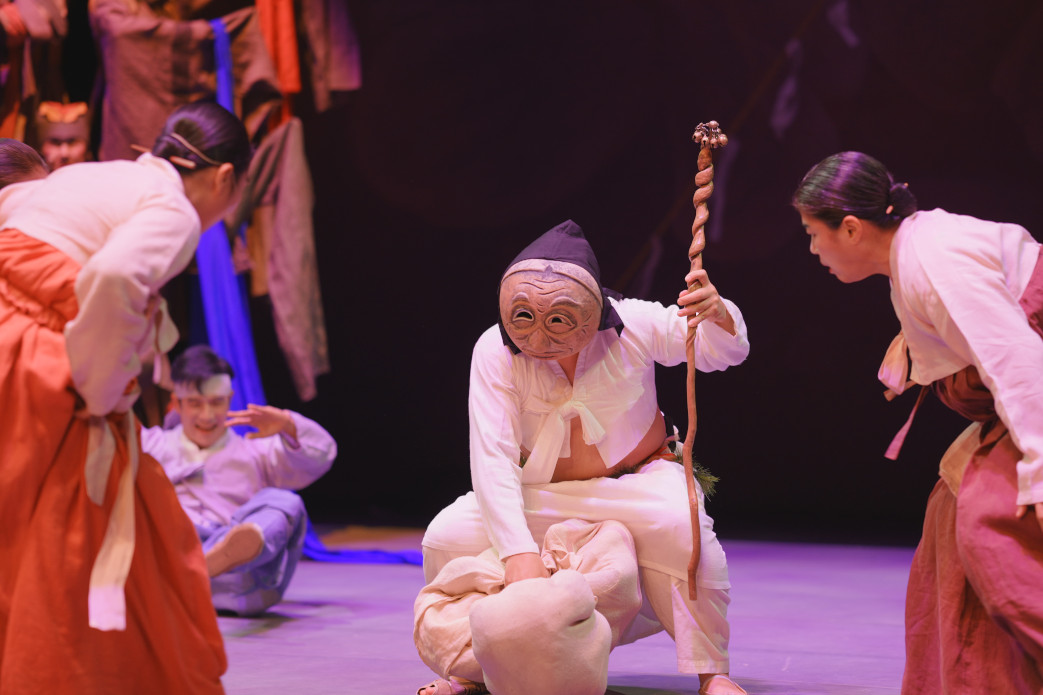
Photo credit: Daejeon Arts Center
The afternoon continued with a Breakout Session titled Changing Times and Evolving Audiences, which focused on audience development and marketing strategies for performing arts venues. Moderated by Daniel Clarke (Performing Arts Director of Auckland Live), the session began with successful programming case studies from Auckland Live and continued with lively group discussions where participants actively exchanged their insights and ideas.
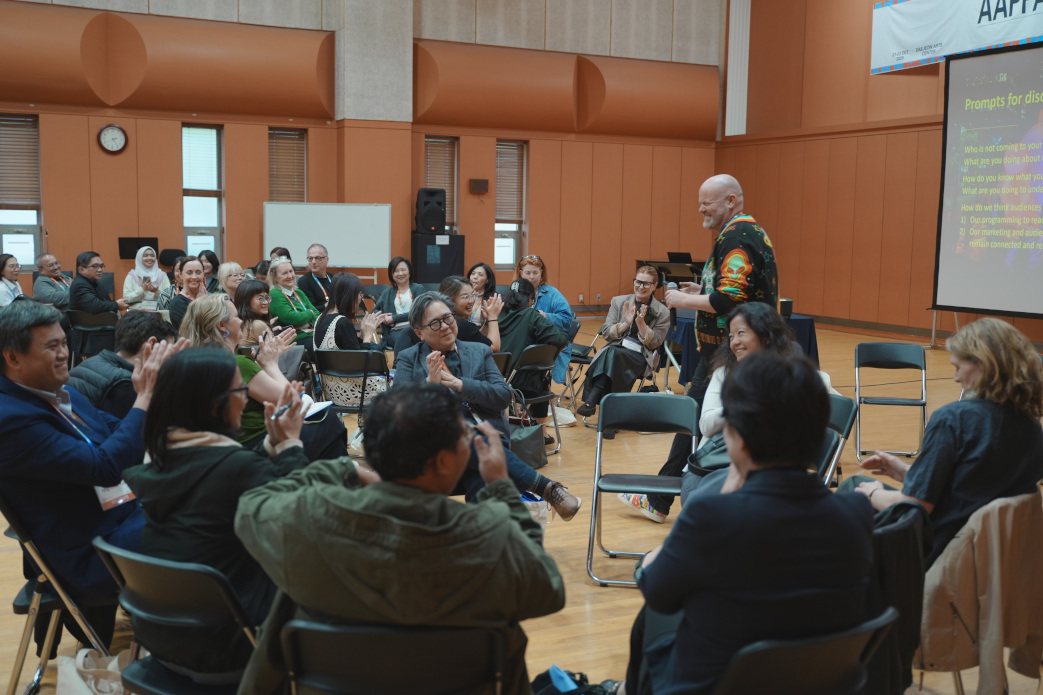
Photo credit: Daejeon Arts Center
Later that day, participants traveled to Gongju for the second venue tour, visiting Gongju National Museum and the UNESCO World Heritage Site Tomb of King Muryeong with professional guides.
The day concluded with an evening concert at Daejeon Arts Center’s Art Hall, where The National Chorus of Korea performed Haydn’s Mass in Time of War and Karl Jenkins’ The Peacemakers. Echoing the spirit of collaboration that defines Asia-Pacific performing arts, the powerful choral works conveyed a shared aspiration for peace.
DAY 3
The final day began with Update Session #3, where beneficiaries of the program were invited to share their experiences on stage. Yvette Tan from The Star Performing Arts Centre and Mark Jones Medina from the Cultural Center of the Philippines reflected on their valuable experiences during exchanges at each other’s centres, while Marika Niko from Aichi Arts Center shared insights from her exchange with Taipei Performing Arts Center.
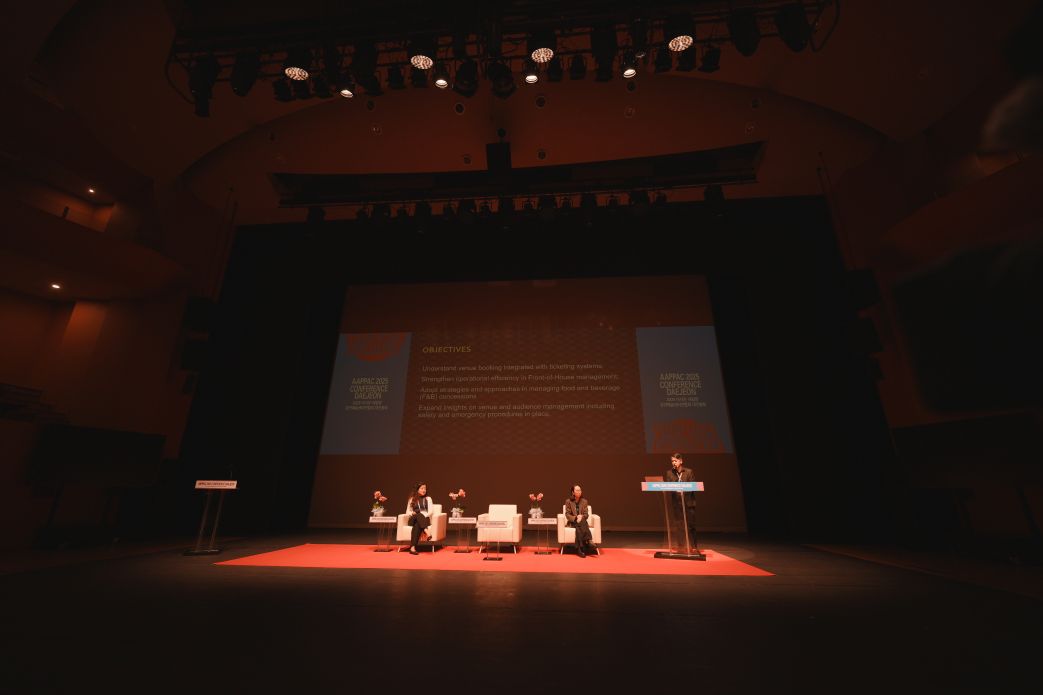
Photo credit: Daejeon Arts Center
The fourth session, Connecting the World through Performing Arts, focused on international collaboration in the performing arts scene and was moderated by Paul Tam (Executive Director of Performing Arts at WestK). Julie Moralee (CEO of Restless Dance Theatre) shared her experience collaborating with Korean dancers on a dance film project during the pandemic, highlighting how the work transcended disability, borders, and adversity to foster resilience, inclusivity, and human connection. Jinwoo Kim (Head of Artistic Planning at Daegu Concert House) introduced the World Orchestra Festival, hosted since 2013, and discussed how the festival has maintained its reputation as one of Asia’s leading symphonic festivals through thoughtful programming and marketing strategies.
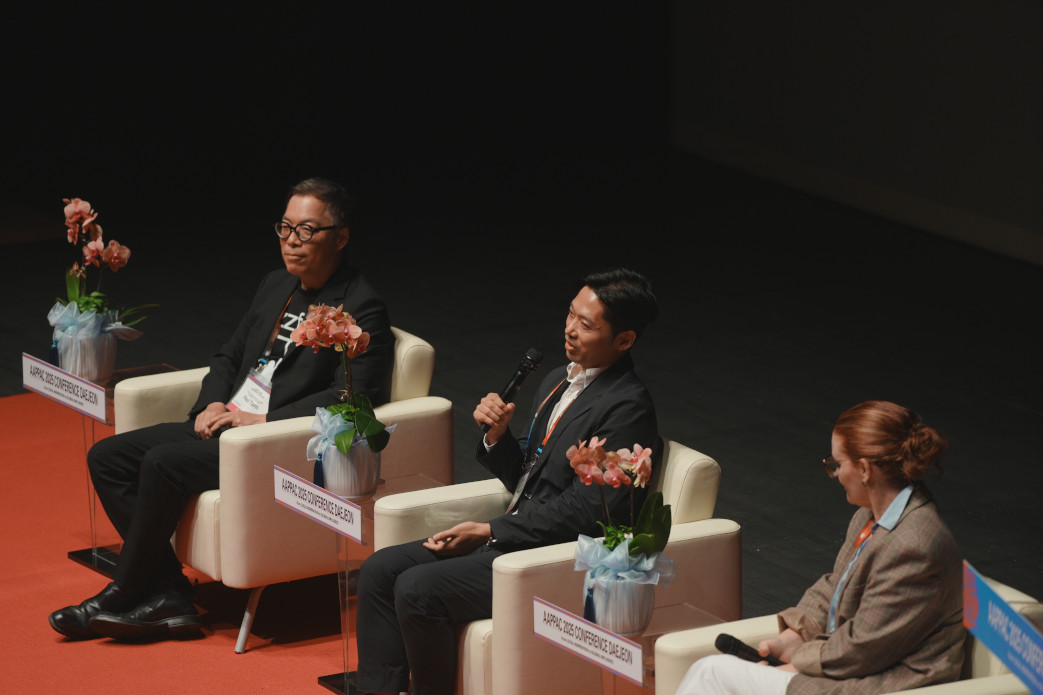
Photo credit: Daejeon Arts Center
During the AAPPAC Dialogue, Kylie McRae (Executive Producer and Co-CEO of Chamber Made) shared a comprehensive summary & feedback on behalf of the Associate Members. AAPPAC Chairperson Yvonne Tham reflected that the gathering showcased the strength of K-culture’s global reach and the dedication of artists behind its success. She noted that discussions on the intersection of art and technology in the age of AI made the conference especially timely, stimulating, and meaningful.
A special ceremony followed to honor former AAPPAC Chairperson Douglas Gautier AM for his long-standing service to the Asia-Pacific performing arts community from 2013 to April 2025. He shared memories of his appointment at the 2013 Daejeon Conference and expressed his gratitude to all member organizations across the region.
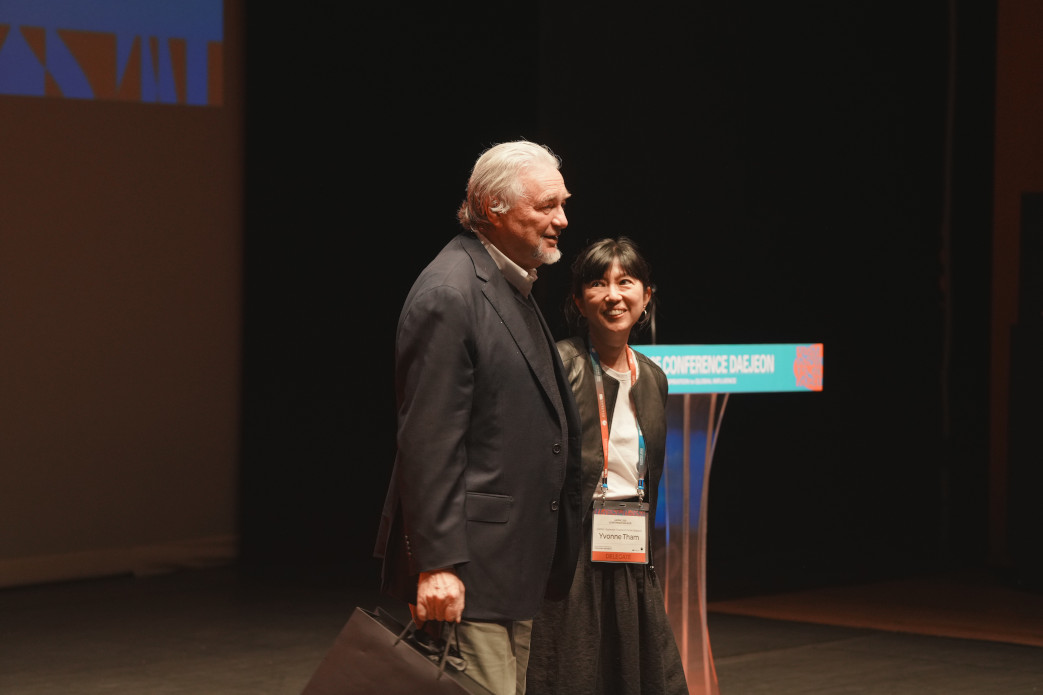
Photo credit: Daejeon Arts Center
Daejeon Arts Center President Deok-Kyu Kim remarked that the conference further reinforced Daejeon’s international standing as a future-oriented cultural city where science, art, and technology coexist. She emphasised that bonds and collaboration among AAPPAC members had grown stronger than ever and expressed confidence that Daejeon would continue to position itself as a key hub for global performing arts exchange.
The conference closed with a presentation by West Kowloon Cultural District Authority, host centre of the next AAPPAC Conference. With AAPPAC’s 30th anniversary coinciding with the anticipated completion of the WestK Performing Arts Centre, 2026 looks to be a milestone year for both the organisation and the network as a whole.
The official programme concluded with a farewell dinner in the lobby of Daejeon Arts Center. An optional tour on the following day took participants to LG Arts Center and Seoul Arts Center, where they were greeted with warm hospitality, behind-the-scenes tours, and in-depth discussions with venue representatives.
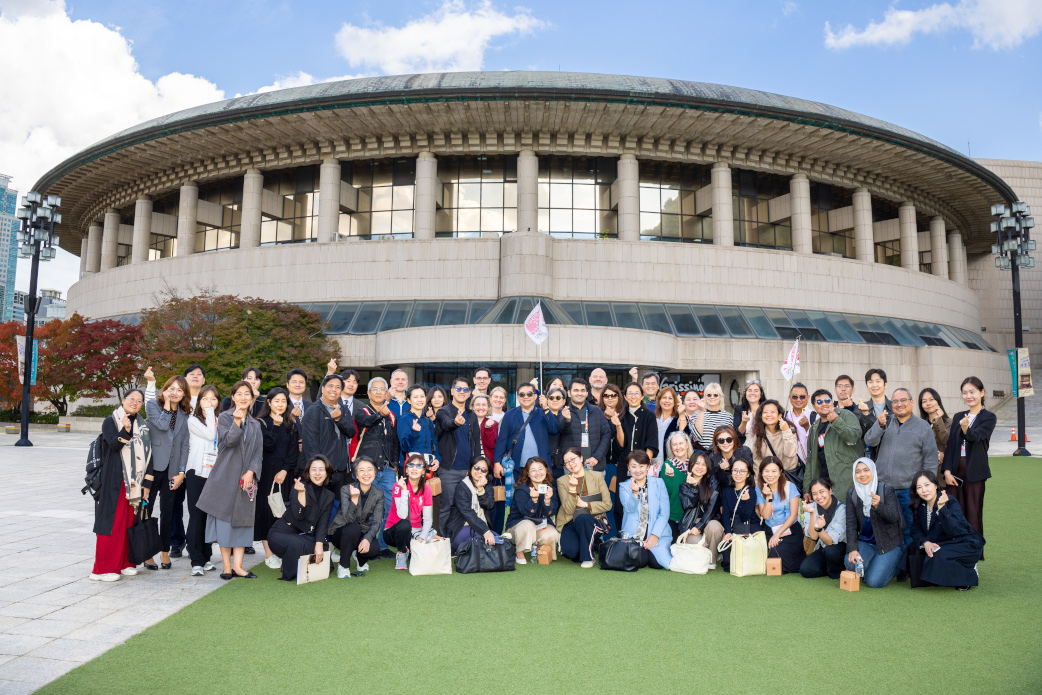
Photo credit: Seoul Arts Center