
Five Minutes with Clarissa Oon
The AAPPAC Singapore 2022 Conference hosted by Esplanade – Theatres on the Bay will feature an exciting line-up of activities and speakers over three days in October. We caught up with Clarissa Oon, Head of Communications and Content at Esplanade and Project Co-lead for the AAPPAC Conference to find out more!
Hi Clarissa! Tell us a little bit more about yourself and the work you do at Esplanade!
Clarissa: Every organisation has stories to tell and the arts is full of stories. I lead the team in Esplanade that pitches these stories to media organisations, and which also produces digital content for our own channels for all-age learning about and through the arts.
I was an arts journalist for many years before joining Esplanade six years ago, so the work I do is quite up my alley. And as a mother of two tweens, education is close to my heart. I enjoy working on the videos, podcasts and education resources on the arts that we produce for the Esplanade Offstage site, which serve as digital companions to the arts centre’s live festivals and programmes.
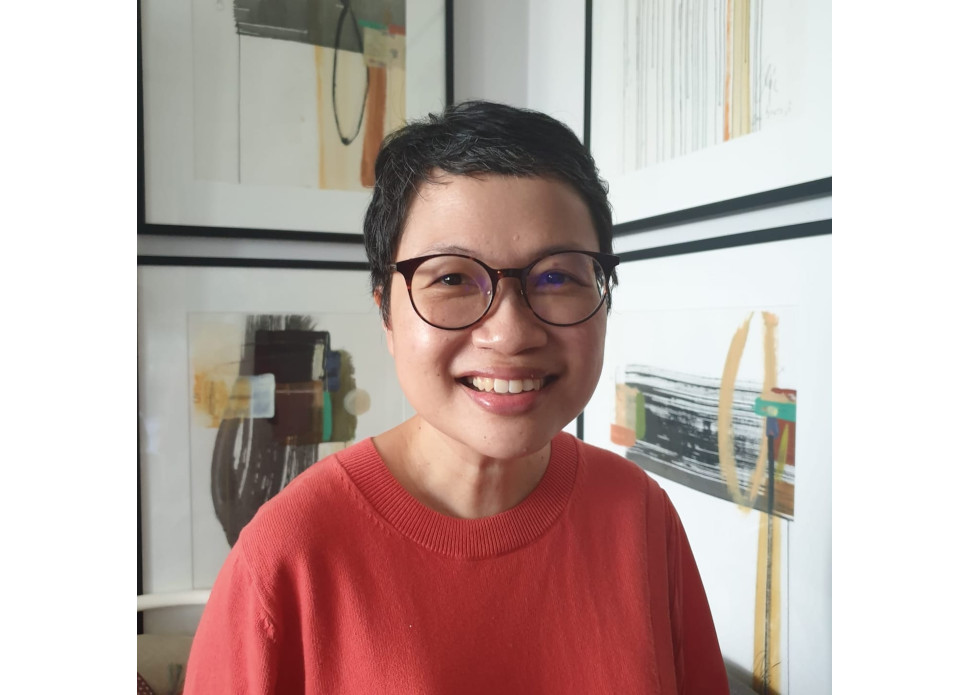
Clarissa Oon, Head of Communications and Content at Esplanade – Theatres on the Bay
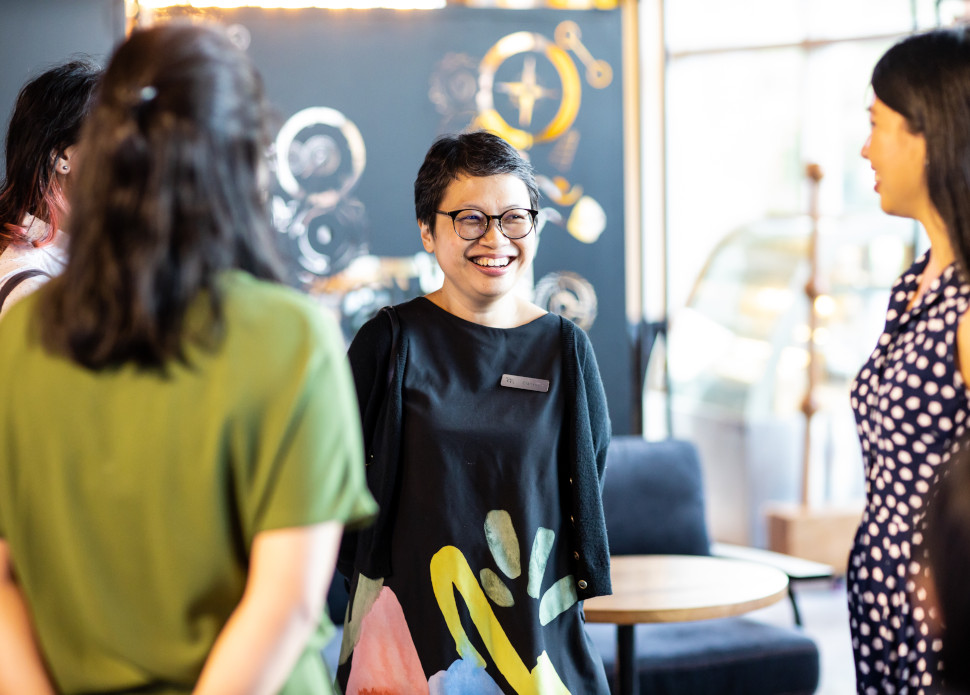
Clarissa Oon talking to members of the media at a dinner hosted by Esplanade CEO Yvonne Tham in 2019.
In what ways do you think the experiences/learning lessons of many arts organisations over these past two years shaped this year’s conference theme – FUTURE FORWARD?
Clarissa: We were all forced to pivot to digital to continue serving our audiences, but that was only the tip of the iceberg. New modes of knowledge and ways of being emerged that the arts have to reckon with, and questions of the sustainability and inclusivity of art making and distribution have never been more urgent. These were the larger concerns which shaped this year’s conference theme. We felt there was a need for the arts to respond to a changed world and confront these wider issues.
Apart from the panel discussions and keynote sessions, what else can members look forward to at this year’s conference?
Clarissa: There will be opportunities to explore Singapore’s diverse and vibrant arts landscape. Aside from Esplanade, the programme will take place at the city’s other multidisciplinary arts venues such as the Singapore Chinese Cultural Centre and The Star Performing Arts Centre.
There will be tours to artist studios at Stamford Arts Centre and Aliwal Arts Centre, as well as an opportunity to catch notable performance works such as acclaimed toy pianist Margaret Leng Tan’s award winning monodrama Dragon Ladies Don’t Weep and the Singapore Chinese Orchestra’s Daybreak, a new production specially commissioned for Esplanade’s 20th anniversary this year.
We hear this year’s conference will be a hybrid one, which is the first ever for AAPPAC! – How has the hybrid aspect of the conference affected your programming decisions?
Clarissa: Going hybrid allowed us to present a wider range of speakers, some of whom might not be able to physically travel to Singapore. It also meant that we had to maintain a balance between the number of in-person and online speakers on panels, to ensure a good networking experience for delegates travelling to Singapore for the conference.
What is your favourite memory in Esplanade to date and why?
Clarissa: After two years of mainly working from home and coming in infrequently to our socially distanced office, we returned to having the physical arts centre as our work base a few months ago. One day my work took me from the office to the backstage area, and before I knew it, I was suddenly on the stage of the 1,950-seat Esplanade Theatre, a cavernous space with an impressive fly system. I felt this frisson of excitement, and in that instance, I was reminded of why I do what I do.
What is your favourite place to visit in Singapore and why?
Clarissa: Aside from Esplanade, my other favourite cultural space is the National Gallery Singapore, housed in the City Hall and former Supreme Court, two beautifully conserved historic buildings in the heart of the city. It is home to a wonderful collection of Southeast Asian art. Like with Esplanade, which always has performances happening, I’m always assured that there’s something going on when I visit the Gallery.